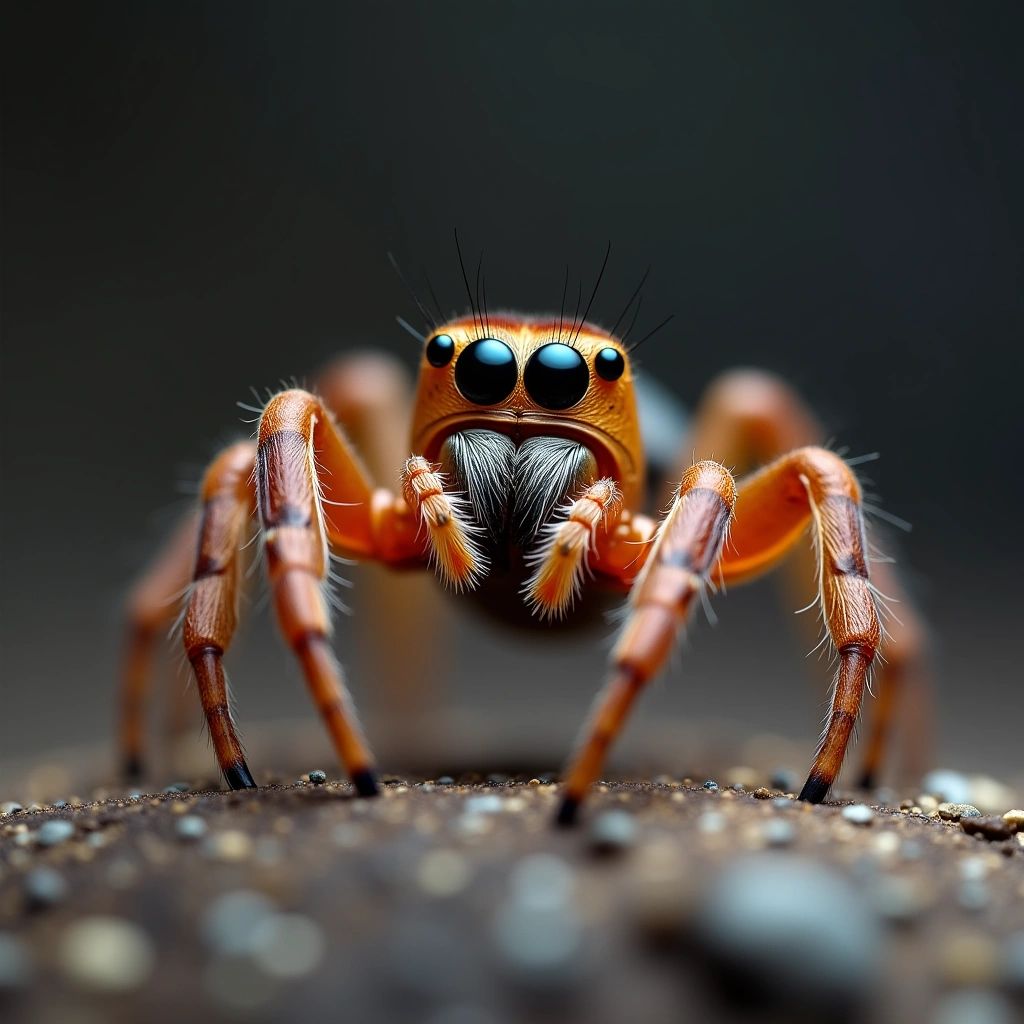
Have you ever looked at a jumping spider and thought, “Wow, that little guy is a genius!”? No? Well, you might want to start. These eight-legged wonders are not just masters of the hunt; they’re also inspiring some serious technological advancements in the world of 3D cameras.
Jumping spiders possess multiple retinal layers that capture images at different focal distances simultaneously, allowing their tiny brains to calculate depth by comparing sharpness differences. This bio-inspired efficiency bypasses the need for power-hungry light projection or complex multi-viewpoint comparisons used in traditional 3D cameras. Northwestern University engineers utilized this mechanism to create SpiderCam, a prototype that generates real-time 3D maps using less than one watt of power. By running a custom depth-algorithm on an energy-optimized FPGA chip, the device achieves 32.5 frames per second while consuming only 624 milliwatts, making it ideal for battery-constrained applications like wearables, drones, and assistive devices.
Let’s dive into the fascinating world of jumping spiders, or as I like to call them, the acrobats of the arachnid world. These critters are known for their incredible jumping abilities and unique vision. They possess eight eyes, with the pair in the middle being particularly adept at depth perception. This means they can judge distances like a pro, making leaps that would put Olympic long jumpers to shame.
Now, what does this have to do with 3D cameras, you ask? Well, researchers have taken a page from the jumping spider’s playbook to create a new type of 3D camera that mimics their vision. This camera uses a combination of multiple lenses and sensors to capture images in three dimensions, much like how a spider uses its numerous eyes to gauge the world around it. It’s like having a superhero sidekick that can see in all directions at once—what a time to be alive!
The efficiency of this new camera is off the charts. Unlike traditional 3D cameras that can be bulky and complicated, this design is sleek and compact. Imagine being able to take stunning 3D photos without having to lug around a camera that weighs more than your pet cat. Plus, the technology could pave the way for advancements in various fields, from robotics to virtual reality.
But let’s not get too ahead of ourselves. While the jumping spider may be the inspiration behind this nifty invention, it’s important to remember that we humans still have a bit of a learning curve. After all, the last time I tried to jump like a spider, I ended up face-first in a bush. Not exactly the graceful leap I envisioned.
So, what’s next? As researchers continue to refine this technology, we can expect to see more applications that leverage the jumping spider’s unique vision. Who knows? One day, we might all be sporting 3D cameras that can capture images with the same precision as our eight-legged friends.
In conclusion, the next time you see a jumping spider, don’t just swat it away. Take a moment to appreciate its brilliance. After all, it’s not every day that an arachnid inspires the future of photography. And who knows, maybe one day you’ll be able to capture your own jumping selfies in 3D—just be careful not to end up in a bush!
Inspired by: “Jumping spiders inspire wildly efficient 3D camera” (r/technology)