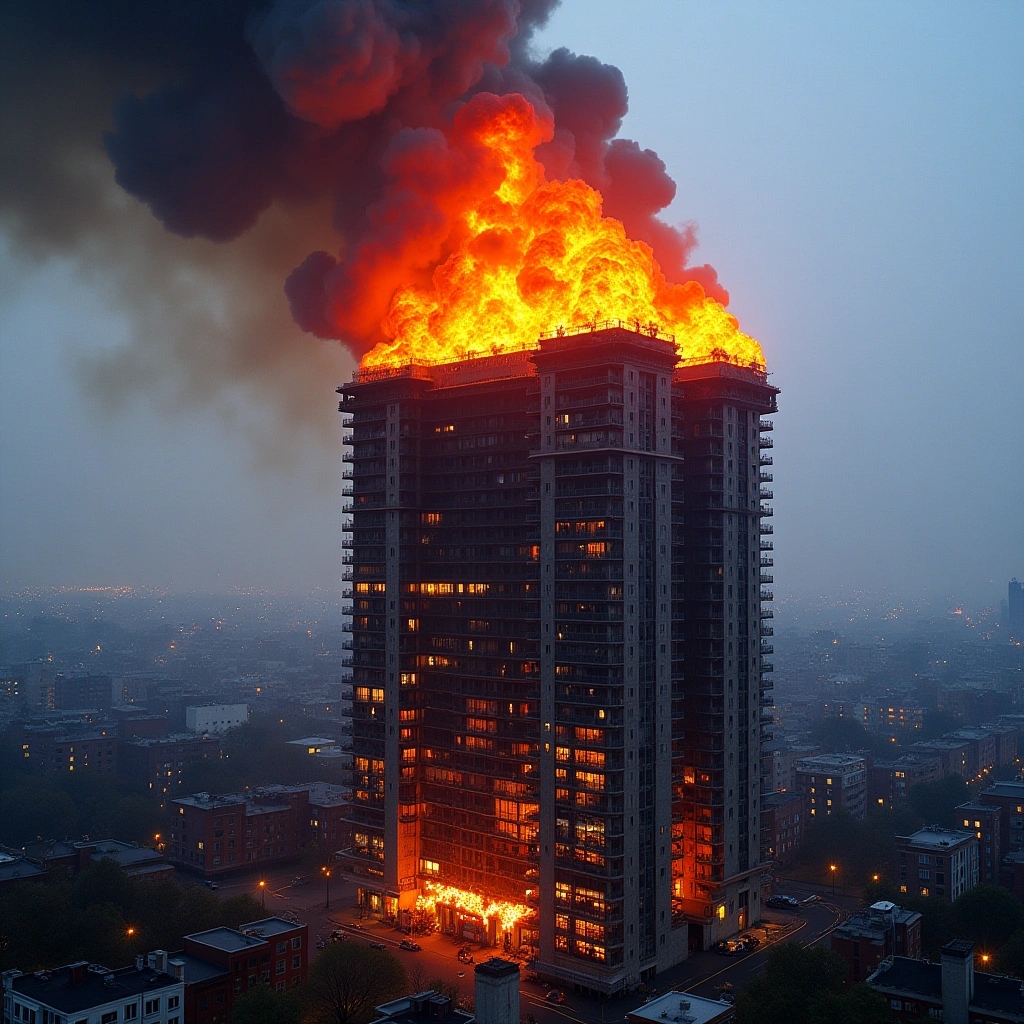
The fire at Grenfell Tower on 14 June 2017 that took 72 lives was a national tragedy. It was also a personal tragedy for those bereaved, the survivors who lost their homes, and the community of which they were all a part. On behalf of the government, the British state, and all those responsible – I am deeply sorry that we failed in our fundamental duty to keep the residents of Grenfell Tower safe. Sir Martin Moore-Bick and his team have uncovered and faithfully recorded evidence of failure after failure, year after year. The government and regulators failed to protect people. The Royal Borough of Kensington and Chelsea and its Tenant Management Organisation failed to listen to residents. The London Fire Brigade was unprepared for a fire like Grenfell. The companies that refurbished Grenfell Tower put profits ahead of safety – and, worse, some concealed how flammable their cladding and insulation products were, despite knowing they would be used on people’s homes. The Inquiry has laid bare the truth in painstaking detail, amplifying the demands and the need for justice. I understand that for many this means criminal charges. The government fully supports the Metropolitan Police in its investigation. We must face the stark reality that the failings that led to the events on 14 June 2017 were not unique to Grenfell Tower. Thousands of people are still living in buildings with combustible cladding across the country. The impact on their lives is completely intolerable and the speed at which this has been addressed has been too slow. I have heard from the community the need for government to respond fully to the Inquiry’s recommendations and to take further action to instil long-lasting change. The government accepts all the Inquiry’s findings and the problems that it highlighted need to be fixed. We are committed to taking forward the work required to address the Inquiry’s recommendations, and indeed to going further: we must embrace not only the specific findings, but their spirit. Anyone who lives in an unsafe home is one person too many. This must be the moment that we refuse to accept anything less than safe, quality homes for everyone. We must build a regulatory system that everyone trusts to deliver this. As well as responding to each of the Inquiry’s important recommendations, this publication lays the foundations for long-term reform that will create better, safer buildings. Today, we set out a vision to reset the relationship between the the government, the public, the housing sector, our fire and rescue authorities and their services. This means taking decisive action to put residents back at the heart of a system that truly serves and works for them. It means reforming our construction products system. We must ensure there are clear standards and expectations and clarity on roles, responsibilities and accountabilities across all professions involved in designing, constructing and maintaining buildings and those providing services to residents. At the same time, the government must improve its own organisation to drive forward this much needed change. We must also improve resilience, response and recovery, and modernise and reform our fire and rescue services. Achieving this will require profound change in culture and behaviour from those who develop, procure, design, build and manage buildings across the built environment, as well as the government, its bodies and wider institutions. I am under no illusion: this will take time and commitment. But we will bring about a generational shift in the safety and quality of housing for all. I thank Sir Martin and his team for their commitment to exposing the truth. It is now our duty to see that the tangle of political, corporate and individual failings exposed by the Inquiry is swept away and can never recur. Since I took on this job, I have been grateful to hear directly from the bereaved, survivors and immediate community who live near Grenfell Tower. I pay tribute to them for their determination, and for the great personal cost they bear in continuing to make their voices heard: we are in their debt. I hope that the changes we will make, in their names and the names of those they love, can be a proud legacy for each of them. I will continue to support them to ensure what happened to their loved ones and their homes is remembered, including through a fitting and lasting memorial, to be determined by the community. And I will keep their voice at the heart of our work as we work tirelessly to deliver the change that the country deserves. The Rt Hon Angela Rayner MP Deputy Prime Minister and Secretary of State for Housing, Communities and Local Government
In a significant development in the ongoing tragedy of the Grenfell Tower fire, the Metropolitan Police have officially requested that the Crown Prosecution Service (CPS) consider manslaughter charges in connection with the incident that claimed the lives of 72 individuals. Yes, you heard that right—it’s been years since the fire, and they’re still figuring out who should be held accountable. Better late than never, I suppose.
For those who may have been living under a rock (or perhaps just avoiding the news for sanity’s sake), the Grenfell Tower fire occurred in June 2017 and quickly became one of the most devastating tragedies in recent British history. The inferno engulfed the residential tower in West London, leading to a catastrophic loss of life and raising serious questions about building safety regulations, fire safety protocols, and, let’s be honest, the overall competence of those in charge.
Now, let’s get into the nitty-gritty. The Met Police has handed over evidence to the CPS, which is like passing the baton in a relay race—except instead of running, we’re just hoping for justice to jog along at a decent pace. This evidence is crucial as it could determine whether those responsible for the fire will face charges, including, but not limited to, manslaughter. You know, the kind of charges that really make you sit up and take notice.
The request for manslaughter charges is not just a formality; it’s a signal that the authorities are finally starting to take this matter seriously. It’s a bit like realizing you’ve left the oven on after a week of neglect and finally deciding to turn it off before it burns the house down. The question remains: why did it take so long?
Critics of the investigation have long pointed out the slow pace of accountability. Every month that goes by without significant action feels like a slap in the face to the victims and their families. It’s almost as if the wheels of justice have been coated in molasses—thick, sticky, and not going anywhere fast.
In the meantime, public sentiment is a mix of frustration and hope. Many are eager to see justice served, while others are understandably skeptical about whether any meaningful action will actually result from this latest development. After all, it’s not the first time we’ve seen a high-profile case fizzle out like a damp firework.
The Grenfell Tower fire has sparked a broader conversation about safety standards, building regulations, and the responsibilities of those in charge of public safety. It’s a conversation that needs to continue, regardless of the outcome of these potential charges. Because let’s face it: if we don’t learn from our mistakes, we’re doomed to repeat them—possibly with even more tragic consequences.
So, as we wait with bated breath for the CPS to make a decision, let’s keep the conversation alive. Let’s ensure that the memories of those who lost their lives in the Grenfell Tower fire are not just footnotes in a history book, but a catalyst for real change. After all, true accountability shouldn’t be as elusive as the last slice of pizza at a party. Here’s hoping that justice, like that slice of pizza, is finally on the way.
Inspired by: “Met Police asks for manslaughter charges to be considered over Grenfell Tower fire that killed 72” (r/News)