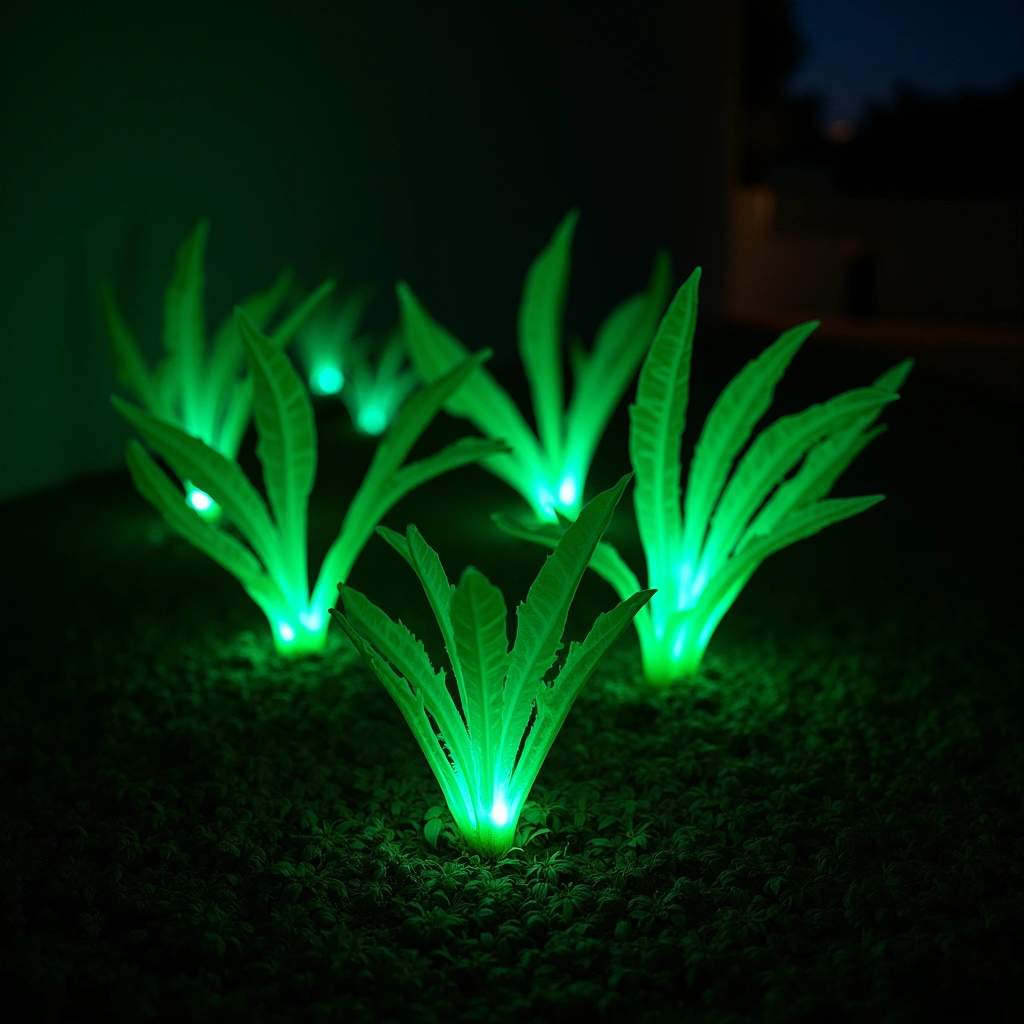
Instead of relying on the harsh, energy-intensive glare of municipal streetlamps, future cities could illuminate parks and walkways using bioluminescent plants that run simply on water and fertilizer.
Imagine strolling through a park at night, surrounded by vibrant flowers that light up like little lanterns, casting a soft glow on your path. Sounds like something straight out of a fantasy movie, right? Well, thanks to some brilliant (and probably slightly mad) scientists in China, this dream might soon become a reality.
Recently, researchers at a biotech company called Magicpen Bio decided that ordinary plants just weren’t flashy enough. They took a page out of nature’s book—specifically, the glowing tricks of fireflies and bioluminescent fungi—and genetically engineered over twenty different plant species to glow in the dark. Yes, you heard that right. We’re talking about glowing orchids, sunflowers, and chrysanthemums that don’t need a power source! Who needs streetlights when you can have a garden that lights your way?
Now, before you start picturing a scene from ‘Avatar’ with glowing flora lighting up every corner, let’s take a moment to appreciate the brainpower behind this. Dr. Li Renhan, the mastermind behind this glowing revolution, grew up fascinated by fireflies. As a kid in rural China, he spent his nights lying in a hammock, watching these little creatures light up the world around him. Fast forward a few decades, and he’s now injecting that childhood wonder into the hearts of plants.
Dr. Li and his team decided to play genetic matchmaker, introducing firefly DNA into the genomes of common plants. They were like, “Hey, why not let these flowers shine a little brighter?” And shine they did! The secret lies in bioluminescence, a chemical reaction that occurs when certain enzymes interact with light-emitting molecules. Think of it as a plant’s way of having a good time at a rave without the hangover.
So, how does this work in practice? The newly engineered plants can produce the necessary enzymes and molecules to glow continuously, making them self-sustaining little night lights. Imagine walking through a park lit up by a soft, natural glow instead of the harsh glare of streetlamps. It’s like nature’s way of saying, “Hey, we can be eco-friendly and pretty!”
Sure, this sounds amazing, but let’s get real for a second. Will these glowing plants actually replace streetlights? Probably not anytime soon. I mean, we still need to figure out how to stop people from picking them to take home as souvenirs. Plus, what happens when it rains? Do we have to worry about soggy, dim plants?
But the potential for cultural tourism and nighttime economies is certainly there. Picture a valley filled with glowing plants, attracting tourists and their Instagram accounts. Just imagine the hashtags: #GlowGoals, #PlantParty, and #NatureIsLit.
In the end, while we might not be ready to swap out streetlights for a glowing flower garden just yet, the idea is a fascinating glimpse into the future of urban living. Who knows? Maybe one day, we’ll be walking through bioluminescent parks, having deep conversations with our glowing plant friends. Until then, let’s just enjoy the fact that science is giving us a little more magic in our everyday lives.
So, here’s to the glowing plants of the future—may they light our way and make our nights a little more enchanting!
Inspired by: “Glowing Plants: The Future of Streetlights or Just a Really Cool Party Trick?”