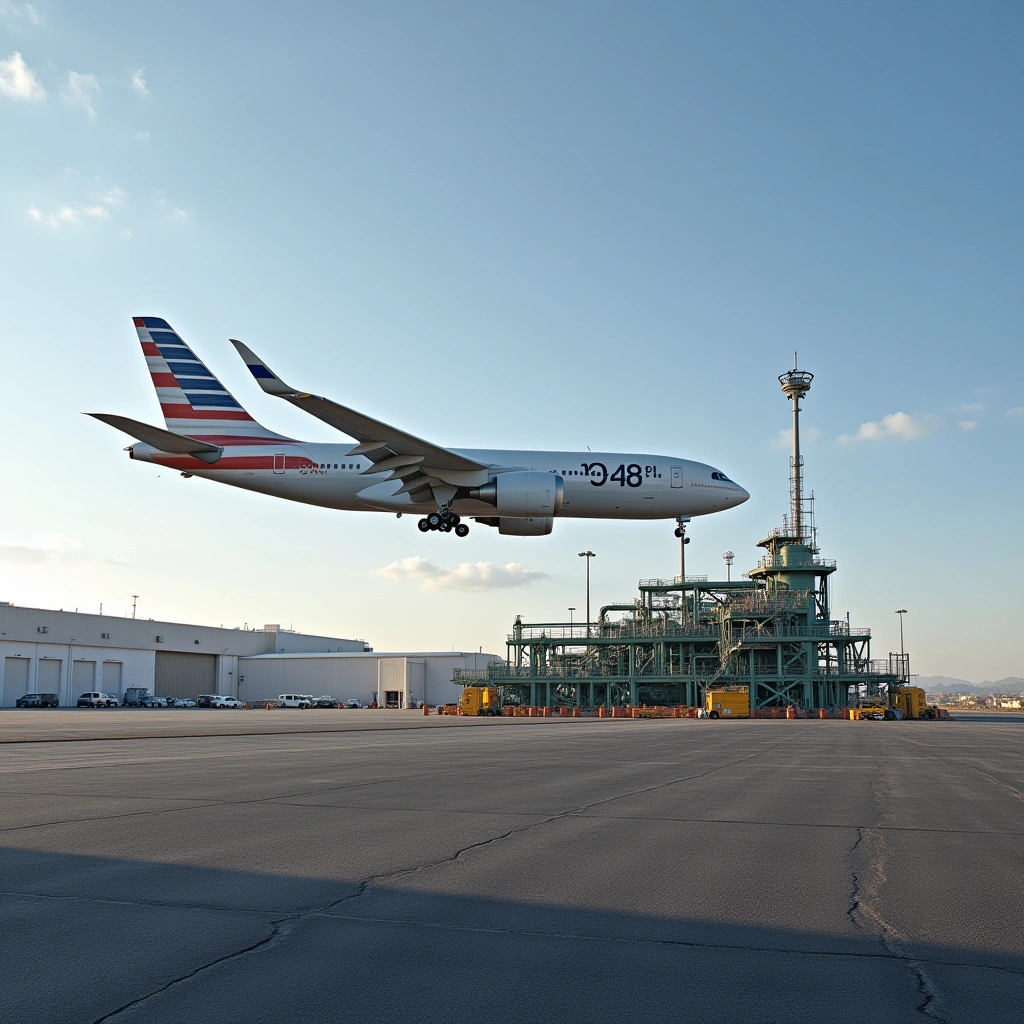
In a landmark achievement that sounds like something out of a sci-fi movie, the United States has officially completed the world’s first end-to-end conversion of biogas into jet fuel. Yes, you heard that right—biogas, the stuff that comes from decomposing organic matter, is now being transformed into fuel that can literally take us to the skies. Who knew your leftover pizza could one day help you fly?
Sustainable Aviation Fuel (SAF) produced from wet waste like food scraps, manure, and sewage offers a 165% reduction in net carbon emissions compared to fossil jet fuel by preventing methane release from landfills. Research led by the National Renewable Energy Laboratory (NREL) demonstrates that this waste-derived fuel meets ASTM standards for existing jet engines, enabling airlines to achieve net-zero-carbon flight through current infrastructure. With U.S. wet waste containing enough energy to cover approximately 20% of national jet fuel consumption, this technology provides a scalable, cost-effective pathway for the aviation industry to decarbonize rapidly.
Let’s break it down a bit. Biogas is produced from organic waste, including food scraps, agricultural residues, and even manure. It’s essentially the result of the natural decomposition process, which is a fancy way of saying that it’s what happens when you forget about that salad in the back of your fridge. Now, instead of just letting this waste sit around and stink up the place, scientists have figured out how to harness it and convert it into something useful—like jet fuel.
This groundbreaking process is not just about being eco-friendly; it’s about innovation and finding new ways to power our world. The technology involved in converting biogas to jet fuel involves several steps, including purification, conversion to synthetic gas (syngas), and then converting that syngas into liquid hydrocarbons that can be refined into jet fuel. It’s like a high-tech recipe that involves a lot of chemistry, engineering, and probably a few too many cups of coffee.
The implications of this achievement are huge. First off, it means that we can reduce our reliance on fossil fuels, which is something we should all be on board with—unless you’re a fan of oil spills and climate change, in which case, let’s have a chat. By using biogas, we can significantly cut down on greenhouse gas emissions. And let’s be honest, it’s kind of nice to think that our airplanes might one day be flying on something that was once a pile of compost.
Moreover, this could lead to a more sustainable aviation industry. For years, the aviation sector has been criticized for its environmental impact. Now, with the ability to utilize waste products for fuel, we might just be able to redeem ourselves—or at least make the skies a bit cleaner. Imagine boarding a plane knowing that your trip is powered by the remnants of last week’s barbecue. Talk about a conversation starter!
But before we all start planning our next trip powered by biogas, there are some hurdles to overcome. While this achievement is impressive, scaling up the technology to a level that can support commercial aviation is no small feat. We’re talking about a lot of biogas and a lot of infrastructure. Plus, there’s the small matter of regulatory approvals and the ever-present question of cost-effectiveness. Because let’s face it, no one wants to pay triple the price for a ticket just to feel good about saving the planet.
Still, this is a significant step forward in the quest for sustainable aviation fuel. It shows that innovation is alive and well, and that we can find solutions to some of our biggest challenges—even if it means getting a little bit messy along the way. So, the next time you’re at a barbecue, think twice before tossing that leftover burger into the trash. You might just be holding the key to your next flight!
In conclusion, the U.S. has taken a giant leap toward a greener future with this biogas to jet fuel breakthrough. It’s a reminder that sometimes, the best solutions come from the most unexpected places—even if it’s just a compost heap in your backyard. So here’s to flying high on waste, the future of aviation, and maybe, just maybe, making the world a little bit better one flight at a time!
Inspired by: “US achieves world’s first end-to-end conversion of biogas to jet fuel” (r/technology)