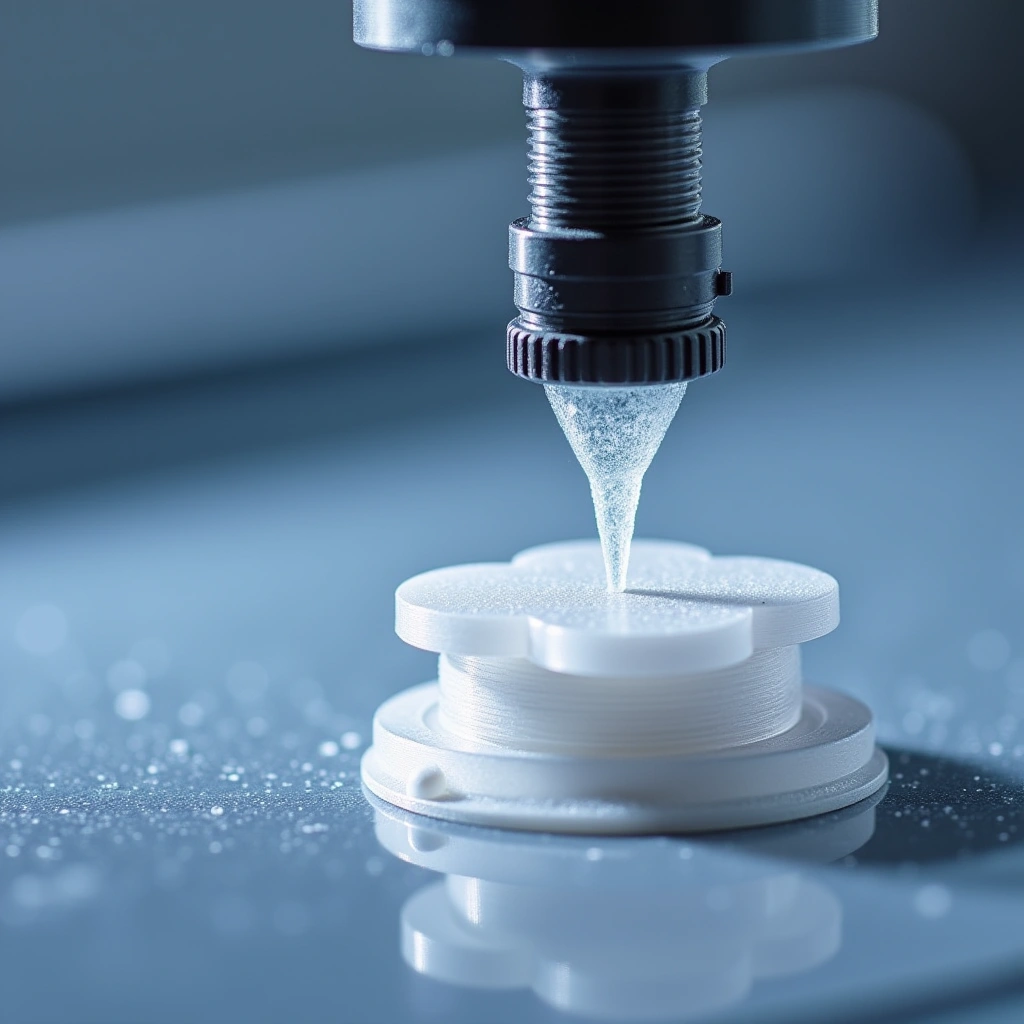
Hey there, tech aficionados and lovers of all things nerdy! Buckle up because we’re about to dive into the scintillating world of 3D printing and the groundbreaking news that MIT boffins have taken electrospray nozzles out of the sterile confines of the cleanroom and into the exhilarating realm of 3D printing. Yes, you heard that right! These brilliant minds are trading lab coats for 3D printer aprons, and I couldn’t be more excited!
Related reading: Original source
Now, you might be wondering, what in the world are electrospray nozzles? Well, let me break it down for you. Imagine a tiny garden hose that sprays out a fine mist of liquid, but instead of watering your ferns, it’s busy creating super-fine materials for cutting-edge applications. Electrospray nozzles use high voltage to create an electric field that pulls liquid into a fine spray, which can then be deposited layer by layer. It’s like a magic trick, but instead of pulling rabbits out of hats, these nozzles are conjuring up nanostructures!
But why, you ask, would MIT’s finest want to take these high-tech sprayers out of their sterile playpens? The answer is simple: they want to revolutionize 3D printing! By integrating electrospray nozzles into 3D printers, they’re aiming to create materials that are not only more precise but also have unique properties. Think of it as 3D printing on steroids—without the side effects, of course!
Picture this: you’re at a coffee shop, and instead of ordering your usual latte, you can now order a customized 3D-printed espresso cup, complete with electrosprayed nanostructures that somehow enhance the flavor. I know, I know, it sounds like something out of a sci-fi movie, but this could actually be a reality! With electrospray technology, we can print structures at the nano-scale, potentially creating stronger, lighter, and more efficient materials. So, say goodbye to boring old coffee cups and hello to your new nanotech barista!
However, let’s pump the brakes for a second. While this sounds fantastic, there’s an elephant in the room—who wants to drink out of a cup that was made using technology that sounds like it came from a mad scientist’s lab? I mean, if my coffee cup starts emitting a soft hum and glows in the dark, I’m not sure I’m ready for that level of commitment, no matter how trendy it is!
On a more serious note, the potential applications for this technology are enormous. Think medical devices that can be 3D printed in a sterile environment or aerospace components that are lighter and stronger than their predecessors. The future is bright, folks. But as with all good things, we must tread carefully. We don’t want to end up in a world where every product is a 3D-printed, electrosprayed version of its former self. Can you imagine a future where all our furniture is made of nanostructured plastic? I’m getting shivers just thinking about it!
In conclusion, MIT’s move to integrate electrospray nozzles into 3D printers is a thrilling development that could change the landscape of manufacturing and material science. Sure, it might sound a little kooky, and it might raise some eyebrows (and possibly a few coffee cups), but that’s what innovation is all about, right? So, here’s to the boffins at MIT—may your 3D printing dreams be as wild as your ideas!
Inspired by: “MIT boffins take electrospray nozzles out of the cleanroom, into the 3D printer” (r/technology)