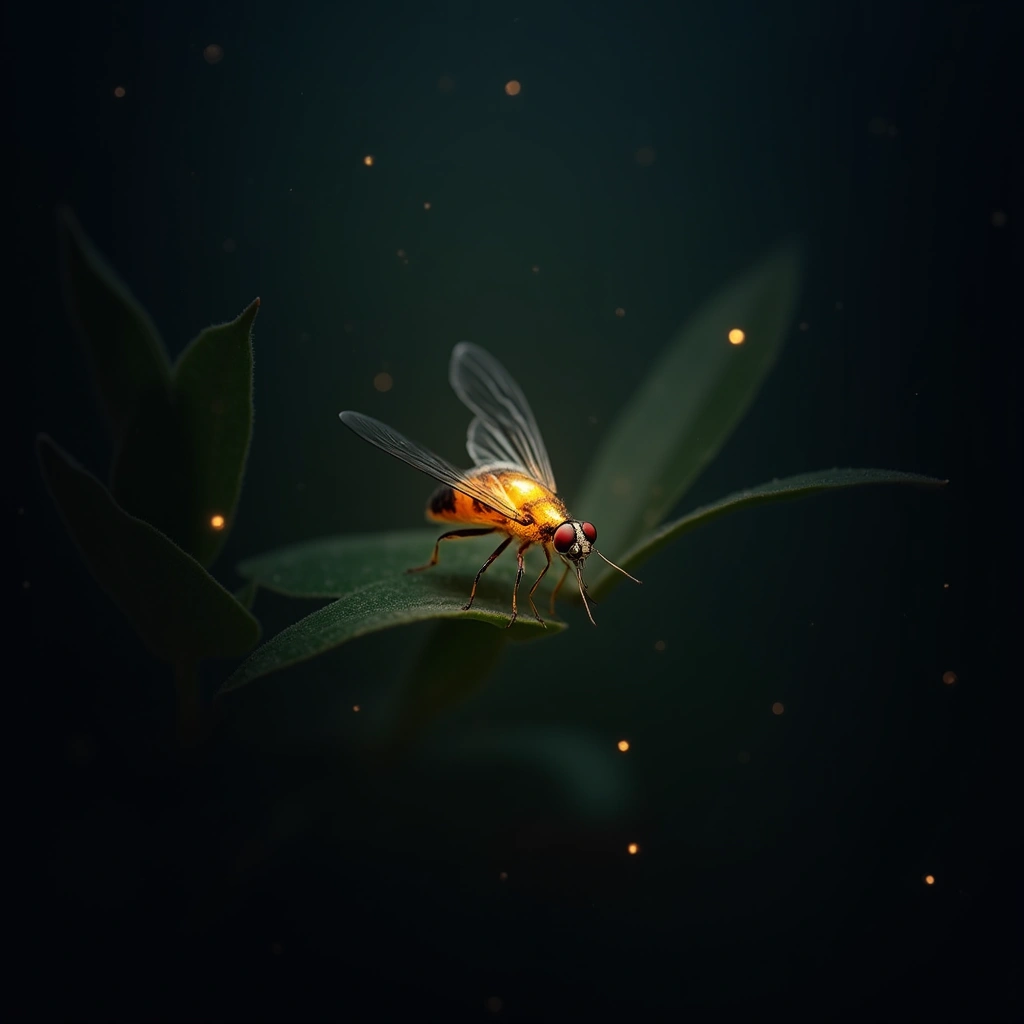
Fireflies control oxygen intake, and the interaction of this oxygen with calcium and adenosine triphosphate (ATP)—along with luciferin and luciferase—produces a “cold” light (which is good news, because any heat produced by process would …
Ah, fireflies. Those little glowing bugs that light up our summer nights, making us feel all warm and fuzzy inside, like we just watched the ending of a feel-good movie. But hold on to your glow sticks, folks! It turns out that scientists have been overestimating the brightness of these bioluminescent critters for over a century. Yes, you heard that right! While we were all busy admiring their twinkling lights, scientists were busy miscalculating how much glow these little guys actually produce.
For the last hundred plus years, the light output of fireflies has been tossed around in various scientific units, eventually landing somewhere in the realm of 10^13 to 10^14 photons per flash. Sounds impressive, right? Well, David Silver, a machine-learning researcher with Remiza AI, decided to take a closer look at these numbers, and what he found was shocking—like discovering that your favorite ice cream flavor is actually just frozen yogurt.
In his recent study published in the American Journal of Physics, Silver uncovered that the long-standing figure of firefly brightness was off by two orders of magnitude. That’s like thinking you’re getting a giant slice of cake and realizing it’s just a cupcake with delusions of grandeur. Silver’s research suggests that fireflies might only be producing about 10^11 photons per flash. Talk about a buzzkill!
To put this in perspective, let’s take a quick trip down memory lane. Back in 1912, American physicist William Coblentz was the one who first attempted to quantify firefly light. He described their light output in terms of “candles.” Yes, candles—because who doesn’t want to measure scientific brilliance in terms of something that can also set your house on fire? Coblentz estimated that the firefly’s light was about 1/50th to 1/400th the power of a candle. Fast forward to today, and we’ve moved on to slightly more sophisticated units, like milliwatts and photons. But alas, it seems we still need to double-check our math.
Silver’s experimental setup was as low-tech as it gets. Armed with a $30 lux meter (the kind you could probably find in your local hardware store), he ventured into a field to observe Malaysian fireflies. He recalculated the quantum yield of the luciferin-luciferase reactions, which, if you’re not familiar, is the fancy scientific way of saying how these little bugs produce their light. And what did he find? A significant discrepancy between what was previously believed and what the biochemistry actually showed.
Silver’s findings mean that we might need to reevaluate not just firefly brightness, but other long-standing scientific figures that have been passed down through the ages. I mean, if we’ve been off by that much for a century, what else are we getting wrong? Are we sure that the speed of light is actually constant, or is it just a really fast firefly in disguise?
In conclusion, while fireflies are still magical little creatures that bring joy to our summer evenings, it appears that their brilliance is a bit dimmer than we once thought. So next time you’re out catching fireflies, remember that their glow might not be as powerful as you believed, but it’s still pretty darn charming. And who knows? Maybe this revelation will spark some new research that will help us understand even more about these fascinating insects. Until then, let’s just enjoy the light show and try not to think too hard about the science behind it. After all, summer nights are for relaxation, not for math!
Inspired by: “Fireflies: The Glow That Wasn’t Quite So Bright After All”