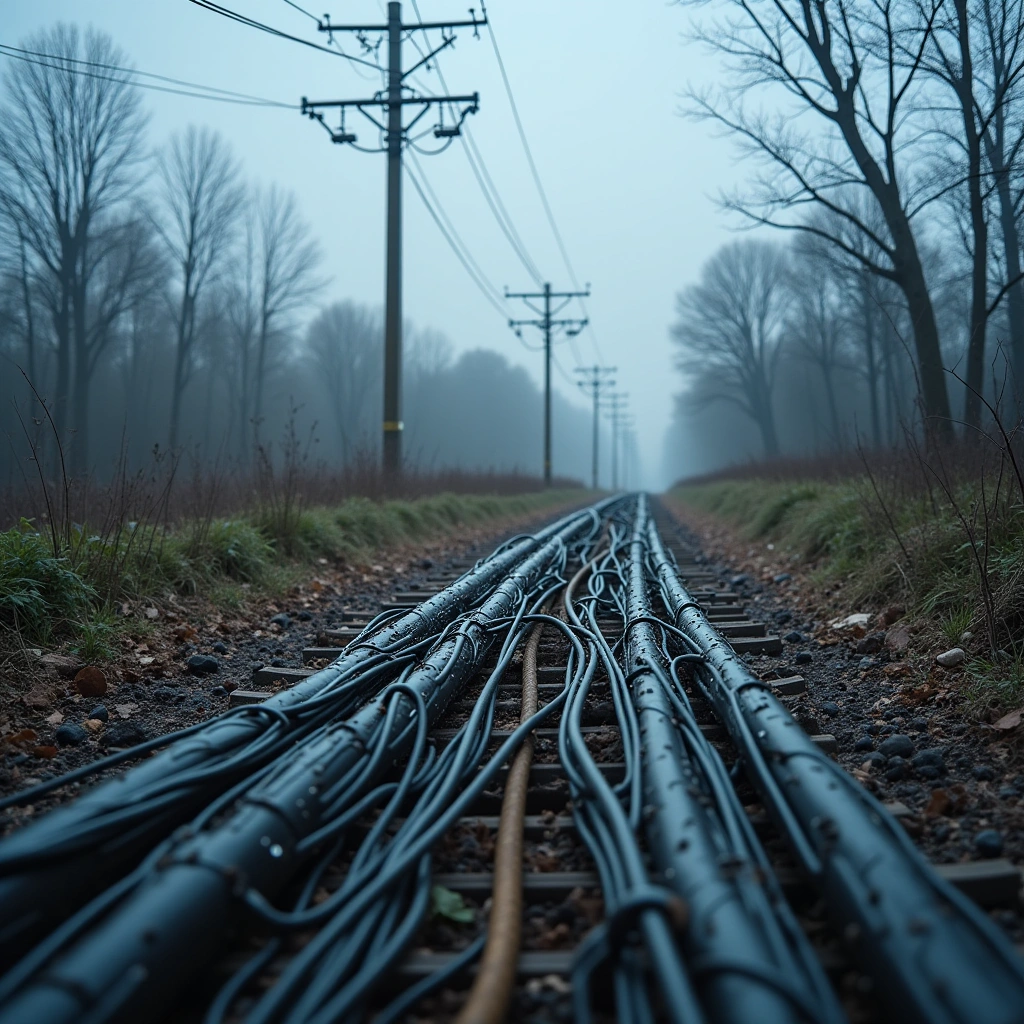
Hey there, my eco-conscious pals! Today, we’re diving into a topic that might sound like it belongs in the realm of sci-fi thrillers but, believe it or not, it’s happening right now in Ukraine. Yes, you guessed it—fiber-optic cables left scattered across the battlefield. It’s not just a tech issue; it’s a burgeoning kind of battlefield pollution that’s raising eyebrows and questions about our modern warfare tactics. So grab your popcorn, and let’s unpack this tangled web of cables!
Related reading: Optic Cables
First off, let’s talk about what these fiber-optic cables actually do. They’re like the blood vessels of the internet, carrying data at lightning speeds across vast distances. In a time of war, having fast communication can mean the difference between victory and a very, very bad day. But once the dust settles and the battles have subsided, what happens to these cables? Spoiler alert: they don’t just magically disappear.
Imagine a battlefield littered not only with the remnants of war but also with miles of fiber-optic cables. It’s like a dystopian version of a nature walk. “Oh look, honey, there’s a beautiful sunset, and over there is a lovely pile of unused cables! Isn’t that charming?” It’s easy to poke fun, but the reality is that these cables can become hazardous waste. They’re not biodegradable, and their improper disposal can lead to serious environmental issues.
Now, some might argue, “But what’s the harm? They’re just cables!” Oh my dear friend, this is where it gets interesting. These cables can leach chemicals into the soil, potentially contaminating local water supplies. Not to mention the physical hazards they pose to wildlife—imagine a confused deer trying to navigate through a maze of cables. It’s like a game of “Survivor: Forest Edition.”
In a world where we’re trying to tackle climate change and preserve our beautiful planet, the last thing we need is a new type of pollution that’s not only invisible but also the result of our own technological advancements. It raises some serious questions about how we approach warfare and the responsibility we have toward the environments we disrupt.
And then there’s the economic angle. Who’s going to foot the bill for cleanup? Is it the government, the military, or the local community left to deal with the aftermath? Because let’s face it, no one wants to deal with a fiber-optic cable cleanup while trying to rebuild their lives after a conflict. It’s like getting a flat tire right after you’ve been kicked out of your favorite restaurant.
So, what’s the solution? It’s clear that we need to start considering the environmental impact of our military decisions. Maybe we could come up with biodegradable cables? Just imagine a future where your internet connection is as green as your backyard! Or perhaps we need stricter regulations on how cables are laid down and removed after conflicts. The world is changing, and it’s high time our military strategies reflected that.
In conclusion, the presence of fiber-optic cables on the battlefield might seem like a small detail, but it’s a symptom of a much larger issue. As we advance technologically, we must also consider the environmental impact of our innovations—even in war. Because, let’s be real, if we’re not careful, we might end up with a battlefield that’s less about strategy and more about cleaning up our messes. And that’s a reality we can all agree is best avoided!
Inspired by: “A new kind of battlefield pollution: fiber-optic cables left across Ukraine” (r/interestingasfuck)