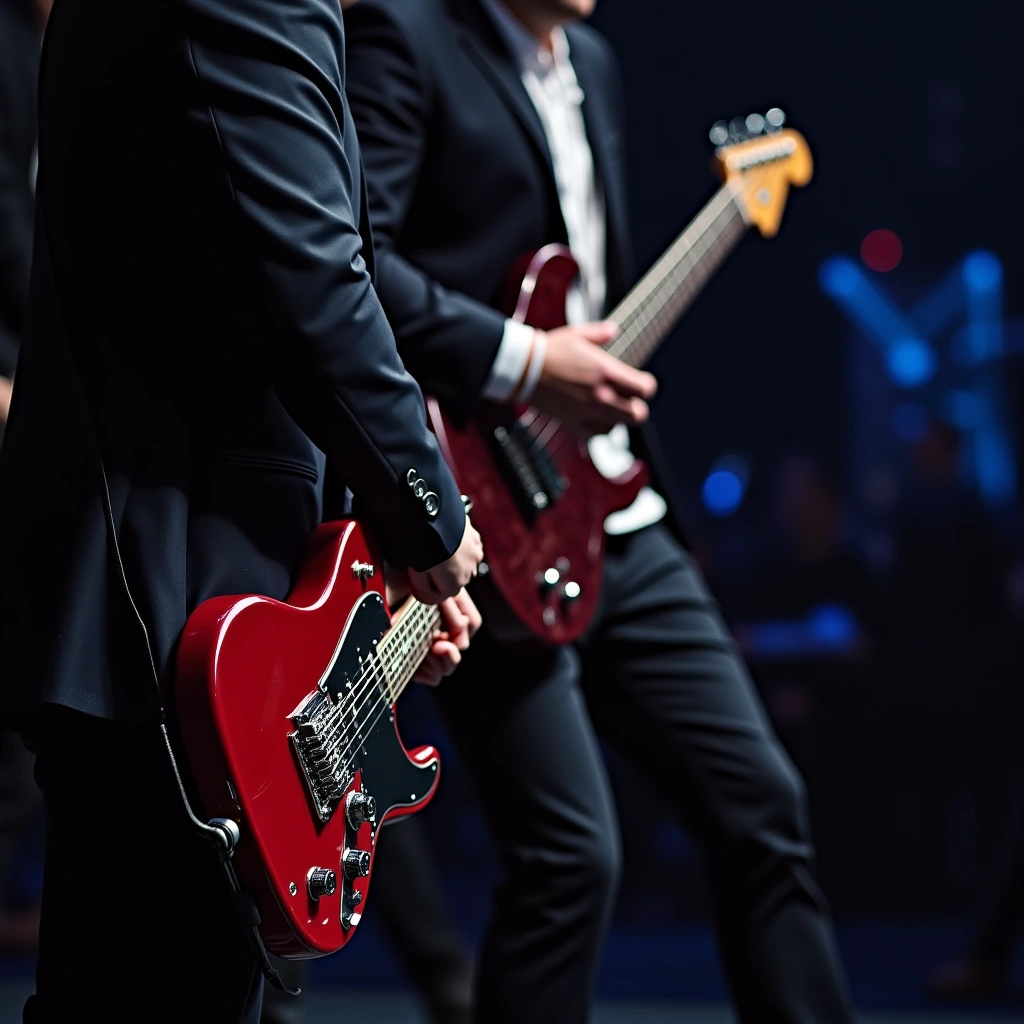
In a recent interview that has sent shockwaves through the music community, Fender’s CEO, Bud Cole, made some eyebrow-raising comments about musicians and their creativity. Specifically, he likened your bandmates to ‘analog AI’ and compared the process of learning cover songs to AI training data. Yes, you heard that right. Apparently, the next time you jam with your friends, you might as well be jamming with a machine—just one that requires pizza and a few cold ones to function.
Interview Highlights: Edward "Bud" Cole, CEO of Fender, discussed the company's 75th anniversary and shared insights on AI and music during an interview in Japan.
Now, before we dive into the depths of this comparison, let’s unpack what Bud Cole meant by ‘analog AI.’ The term itself is a bit of a contradiction, but let’s roll with it. In essence, he seems to be suggesting that musicians, especially those who play in bands, are essentially just repositories of learned information—much like how AI systems are trained on existing data. So, in his view, when you learn that iconic guitar riff from your favorite song, you’re just downloading a piece of someone else’s creativity and not contributing anything original. Ouch!
This comparison has sparked quite the debate online, and for good reason. Many musicians are understandably miffed at the idea that their hard work, practice, and unique styles could be reduced to mere data input. After all, learning cover songs is part of the musical journey—it’s how many budding artists find their voice. But according to Cole, it’s all just practice for a performance that’s already been done a thousand times over. Thanks, Bud, for the existential crisis!
Critics of Cole’s comments argue that while it’s true that musicians learn from each other, that’s the beauty of art. Musicians take inspiration from their predecessors and contemporaries, but they also infuse their own experiences, emotions, and quirks into their work. Just because you’re playing a cover doesn’t mean you’re a glorified parrot spitting out what you’ve heard. If that were the case, every karaoke night would be a technological marvel, and we all know how those usually turn out.
What’s more, the idea of musicians as ‘analog AI’ could be seen as a dismissal of the creative process. It’s not just about regurgitating notes; it’s about interpretation, emotion, and connection. When musicians collaborate, they’re not just blending inputs; they’re creating something new. If anything, they should be seen as dynamic, evolving entities—much more complex than any algorithm.
Now, let’s not forget that Fender, the iconic guitar manufacturer, has a vested interest in promoting the idea that creativity is somehow a formulaic process. After all, they want you to buy their instruments, don’t they? So, it’s a little convenient for them to suggest that learning and playing music is a straightforward path, rather than the messy, chaotic journey it truly is.
In the end, Bud Cole’s comments may have been intended to provoke thought, but they’ve certainly ruffled some feathers in the music community. So, the next time you pick up your guitar and play a cover song, remember: you’re not just an analog AI. You’re a unique musician with your own voice—and definitely more than just a data point in a neural network. Now, go out there and show the world that you’re not just a machine; you’re a rockstar in the making!
Inspired by: “Fender’s CEO seems to think your bandmates are just analog AI | Bud Cole also compared learning cov…” (r/technology)