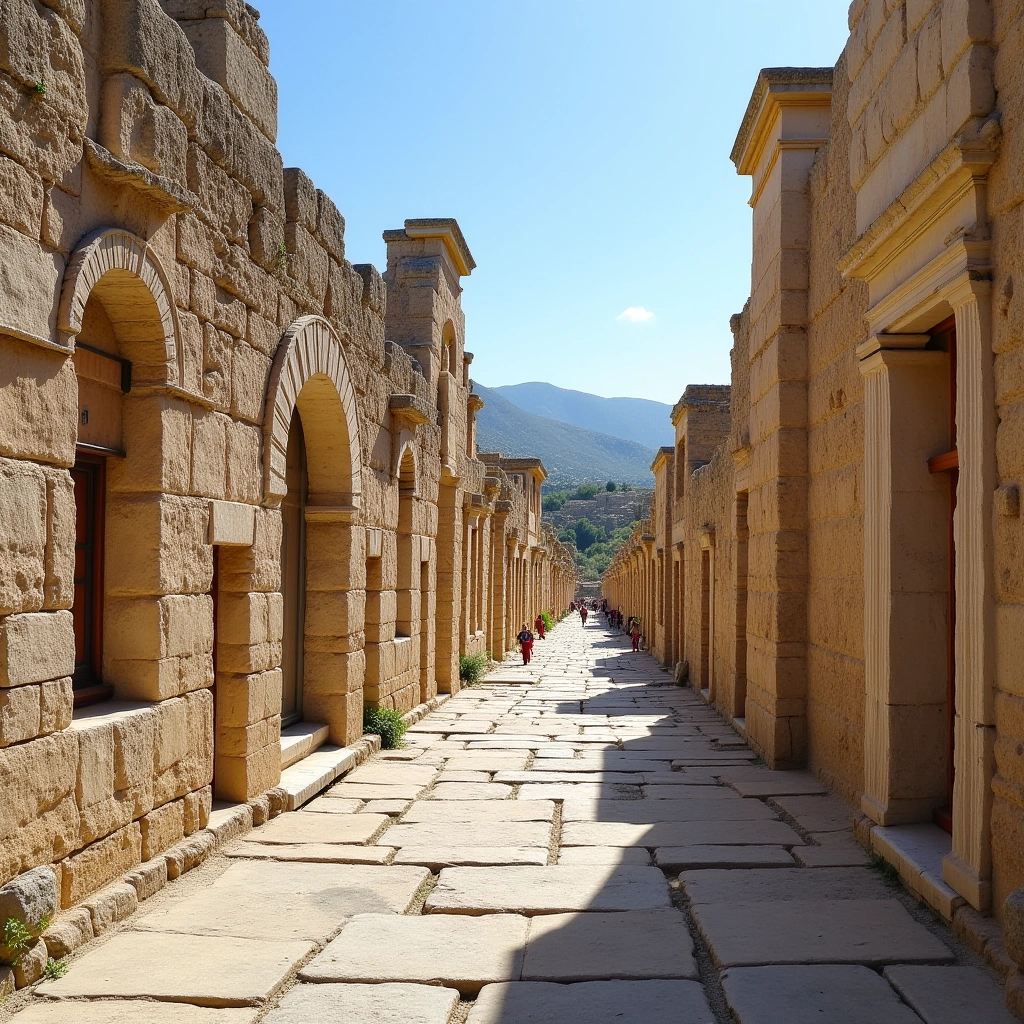
Ah, Ancient Greece! The land of philosophers, gods, and a whole lot of olive oil. But let’s not forget the architectural marvels that graced its streets, particularly in the buzzing city of Ephesus. Buckle up, my friend, as we take a wild ride down Curetes Street, a historical thoroughfare that was probably the ancient equivalent of a hot Instagram spot!
First off, let’s set the scene. Ephesus was not just your average ancient city; it was like the New York City of its time, bustling with trade, culture, and enough drama to make a soap opera look like a documentary. Imagine marble columns taller than your uncle at a family reunion, vibrant frescoes that would make Picasso weep, and crowds of toga-wearing citizens arguing over the best place to get a falafel.
Now, Curetes Street, named after the Curetes—those charming, dancing priests who apparently had a penchant for dramatic flair—was the city’s main artery. Think of it as the Champs-Élysées of Ephesus, but instead of high-end boutiques, it was lined with temples, fountains, and other architectural wonders that would make your jaw drop faster than a contestant on a reality show.
As you stroll (or rather, pretend to stroll in your imagination) down this ancient street, you’d encounter the Temple of Hadrian, dedicated to the Roman Emperor who, let’s be honest, probably had a solid Instagram game. The temple’s intricate carvings and towering columns would have been a sight for sore eyes—or at least for those tired of staring at the same old pottery in their living rooms.
And speaking of living rooms, let’s not forget the public toilets. Yes, you heard that right! Ancient Ephesus had communal toilets that were more social hubs than bathroom stalls. Picture this: you’re sitting on a marble seat, gossiping with your neighbor about the latest scandal involving Zeus and his many escapades. Talk about a throne of gossip!
But wait, there’s more! Clogged with tourists in modern times, Curetes Street also boasted impressive mosaics underfoot. These weren’t just any old tiles; they depicted everything from mythical creatures to scenes that would make you question the sanity of ancient artists. It’s like the ancient version of the Snapchat filter that turns you into a cat, only more artistic and less furry.
And let’s not forget the hustle and bustle of the marketplace! Merchants shouting about their wares—“Get your best olives here!”—and the irresistible smell of freshly baked bread wafting through the air. It sounds like a foodie’s paradise, doesn’t it? I can already hear the ancient version of a food blogger raving about the local delicacies, complete with a food rating system that makes Yelp look like child’s play.
So, what can we learn from all this? Well, for starters, ancient civilizations had it pretty good. While we’re busy scrolling through social media, they were building impressive structures and engaging in lively debates about philosophy and the best way to cook a goat. Maybe we should take a page out of their book—or at least try to replicate their streetscapes in our cities. Who knows? Maybe the Curetes would approve!
In conclusion, if you find yourself daydreaming about time travel, make sure to add Ancient Ephesus to your itinerary. Curetes Street is waiting to welcome you with open arms (and maybe a few friendly priests). Just remember to pack your toga and a good pair of sandals—you’re gonna need them!