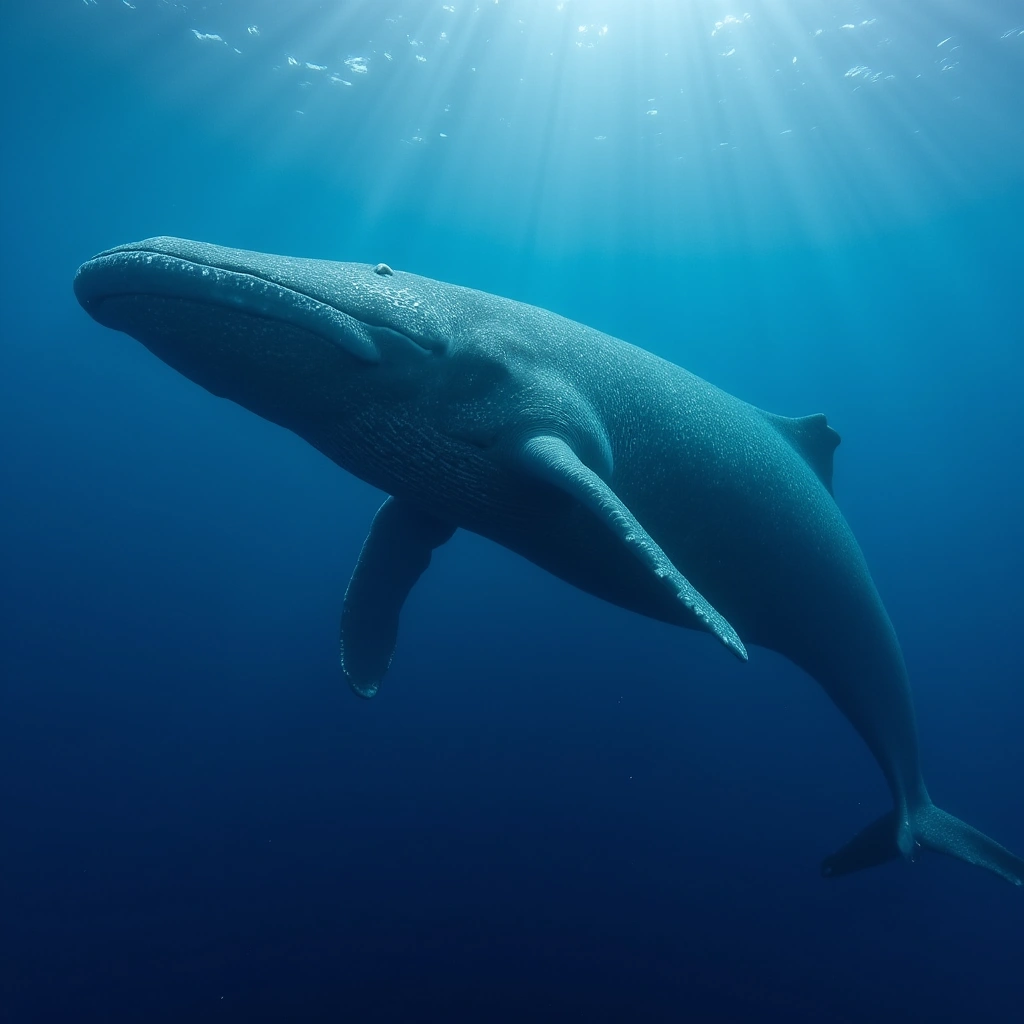
Ah, the blue whale! The gentle giant that makes us humans look like tiny ants at a picnic. If there ever was a contest for the biggest living creature on Earth, the blue whale would not only win, but it would also probably eat the trophy in one gulp. Standing tall—or should I say long—at lengths of up to 100 feet and weighing as much as 200 tons, these magnificent mammals are like nature’s version of a stretch limo, only with a tail and a penchant for krill.
Let’s dive a little deeper—pun absolutely intended—into the world of the blue whale. Imagine a creature so large that its heart is about the size of a small car (yes, you heard that right!). It pumps about 60 gallons of blood with each beat, which is quite the cardio workout if you ask me. When they surface for air, their spout can shoot water up to 30 feet in the air. Talk about a whale of a show!
Now, you might be wondering, what do these massive sea creatures eat? Well, brace yourself: blue whales are filter feeders. They consume tiny shrimp-like creatures called krill, and during feeding season, they can gulp down about 4 tons of krill in a single day. That’s like having a buffet where the main course is… well, a ton of tiny shrimp!
And let’s not skip over the romance—yes, blue whales get lovey-dovey too! Their courtship rituals are often serenaded by the deepest, most haunting songs that can travel for miles underwater. If you think your love life is complicated, imagine trying to find a date in the vastness of the ocean while singing in frequencies that humans can’t even hear. Blue whales are the original heartthrobs of the deep!
Now, let’s talk about their conservation status. These magnificent beasts were mercilessly hunted during the whaling era, leading to a serious decline in their populations. Luckily, thanks to international protection, their numbers are slowly recovering. But let’s be real—humans have a knack for messing things up, right? So, while they’re on the mend, we must keep our oceans clean and free from pollution. Remember, a clean ocean means happy whales!
In conclusion, the blue whale is not just the biggest animal on Earth; it’s a symbol of nature’s grandeur and resilience. If you ever get the chance to see one in the wild, consider it a privilege, because you’re witnessing a creature that has roamed the oceans for millions of years. And who knows, maybe you’ll even catch it breaching the surface, waving goodbye like the majestic diva it is! So let’s raise our glasses (or krill) to the blue whale, the true heavyweight champion of the sea.
Don’t forget to share this post with your fellow ocean lovers and keep the conversation going about how we can protect these incredible giants. After all, if we can’t save the whales, what’s next? Saving the jellyfish? Let’s not go there!