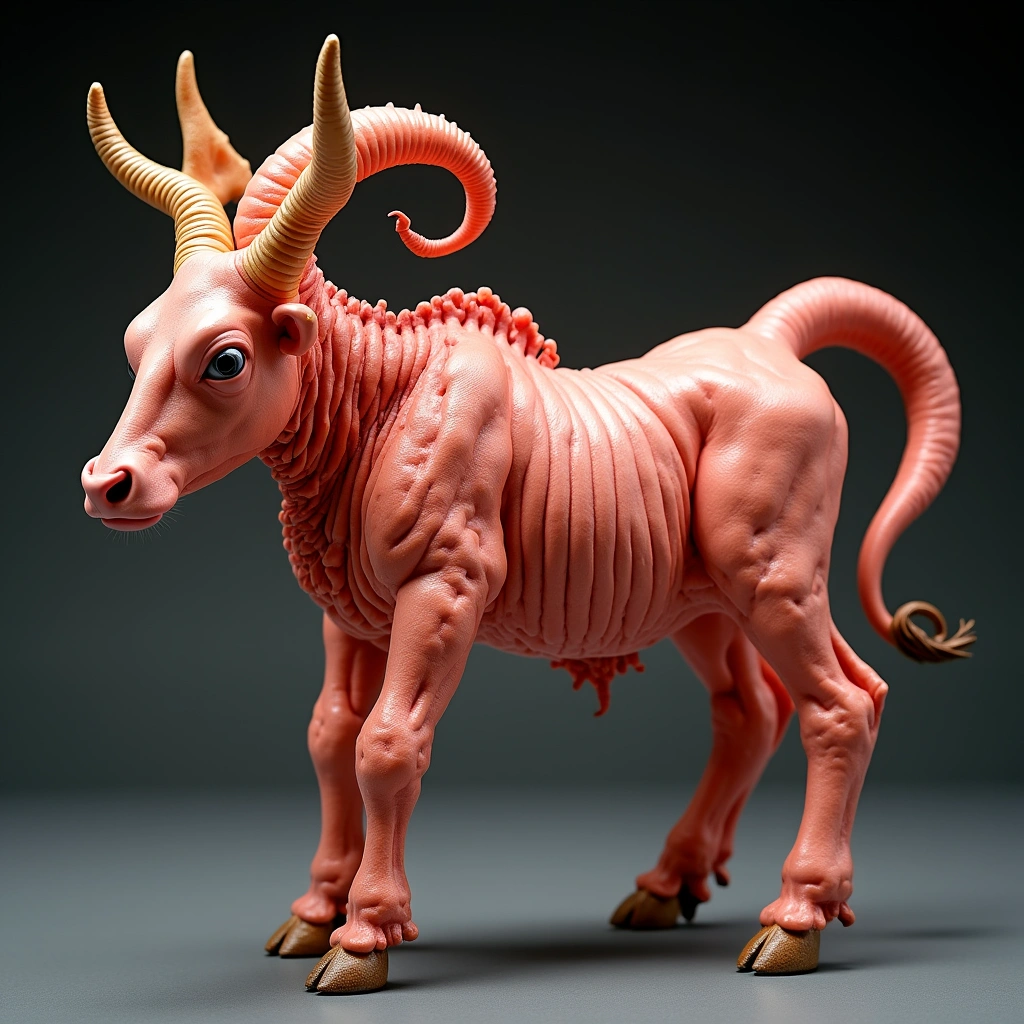
Alright, folks, buckle up because we’re diving into the wonderfully weird world of bovine fetal anomalies, specifically the mysterious and mind-boggling Amorphus globosus. Now, before you start picturing a cow with a head where its butt should be (trust me, that’s not what we’re talking about), let’s unravel this enigmatic phenomenon together!
First things first, what in the world is Amorphus globosus? Well, it’s a rare fetal anomaly in bovines that is as bizarre as its name sounds. In layman’s terms, it’s a deformed fetus that doesn’t quite resemble your average calf. Instead of being the cute bundle of joy you’d expect on a farm, it looks more like a blob – hence the name ‘Amorphus’, which means shapeless. Imagine a cow that skipped leg day and forgot to do any cardio; yeah, it’s that kind of situation.
The Science-y Stuff
Let’s put on our lab coats for a second and get into the nitty-gritty. This anomaly occurs during fetal development, often due to genetic abnormalities or environmental factors. It’s like Mother Nature took a day off and decided to play a prank on the bovine world. The exact cause is still a bit of a mystery, which makes it even more intriguing. Is it nature? Is it nurture? Or is it just a cosmic joke?
Why Should We Care?
You might be thinking, “Okay, so there’s a shapeless cow fetus out there. Why should I care?” Well, my friend, this anomaly can tell us a lot about cattle health and breeding practices! Understanding Amorphus globosus helps farmers and veterinarians identify potential genetic issues in their herds. It’s like a warning sign that says, “Hey, maybe don’t breed that bull with the wonky eye!”
The Controversial Side of Things
Here’s where it gets a bit spicy. Some folks argue that the increase in such anomalies might be linked to industrial farming practices. With the way we treat livestock these days, it’s no wonder that Mother Nature is throwing in a few curveballs. But before we go all conspiracy-theory on our farmers, it’s essential to remember that not every abnormality is a direct result of poor practices. Sometimes, it’s just bad luck.
Fun Fact Time!
Did you know that Amorphus globosus has been documented as far back as the 19th century? That’s right! This anomaly isn’t a new kid on the block; it’s been around longer than your grandma’s recipe for meatloaf. And while it’s rare, it’s still a fascinating part of veterinary medicine that keeps researchers scratching their heads and farmers on their toes.
Wrapping It Up
So, the next time you see a cute calf frolicking in a field, just remember that behind that adorable facade, there’s a whole world of bizarre anomalies lurking in the shadows. Amorphus globosus may be rare, but it shines a light on the complexities of animal health and the importance of responsible farming.
And who knows? Maybe one day, we’ll figure out the secrets of this shapeless wonder and put an end to the mysteries of bovine fetal anomalies. Until then, keep your eyes peeled and your minds open because you never know what Mother Nature is cooking up in her laboratory!
Let’s raise a glass (of milk, of course) to the weird and wonderful world of genetics! Cheers!