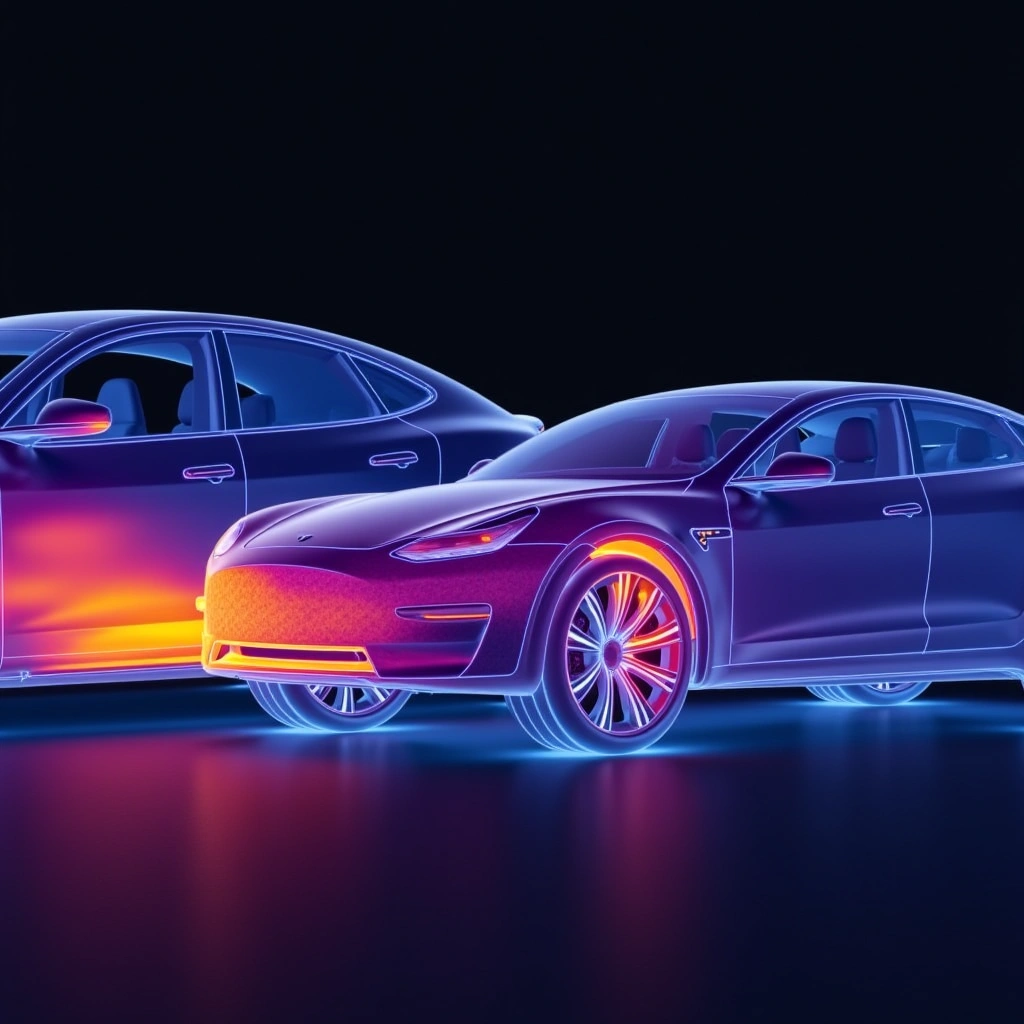
Hey there, car enthusiasts and curious minds! Buckle up as we dive into the sizzling world of thermal imaging and uncover the heated rivalry between electric cars and their combustion engine counterparts. Spoiler alert: it’s not just about the horsepower; it’s about how they look when things heat up—literally!
Now, you might be wondering, what in the world is thermal imaging? Well, imagine a superhero camera that can see the heat radiating off objects. Yeah, it’s like having X-ray vision, but without the spandex and awkward tights. Thermal imaging uses infrared technology to create images based on temperature differences. So, when we point this magical lens at cars, we get to see how hot (or not) they run!
Let’s break it down, shall we? Electric cars, those silent warriors of the road, are often touted as the eco-friendly alternative. They’re smooth, they’re quiet, and they charge up like your phone after a long day. But how do they perform under the thermal spotlight? Generally, electric vehicles (EVs) have fewer moving parts, which means less friction and, you guessed it, less heat! So, in a thermal image, they often appear cooler—literally. It’s like they’re saying, “Chill out, I’m saving the planet one silent drive at a time!”
On the flip side, we have our trusty combustion vehicles, the roaring beasts that have been around since the dawn of time (well, at least since the invention of gasoline). These engines are like a hot yoga class for cars—lots of intense activity, lots of heat. When you check out a thermal image of a combustion car, you’ll see those engine parts glowing like they just ran a marathon. It’s the heat generated from all that combustion, turning fuel into motion, and let’s be honest, it looks like a fiery dragon exhaling smoke. Talk about a hot mess!
But here’s where it gets spicy: while EVs are cooler, they can actually have their own heat management issues. Ever heard of battery thermal runaway? It sounds like a bad horror movie, but it’s a real issue! If an EV’s battery overheats, it can lead to catastrophic failures. So, while they may look cool on the outside, they need to stay cool on the inside, or things could get ugly.
Now, you might be thinking, “But wait! What about performance?” Well, dear friend, thermal imaging is just one piece of the puzzle. EVs often have quicker acceleration and better torque, all while being kinder to Mother Earth. Combustion cars, on the other hand, are like that friend who insists on taking the scenic route—they might be slower, but they’re still fun and loud!
So, what does this all mean for the average driver? If you’re in the market for a car, consider what’s important to you. Do you want to save the environment while enjoying a silent ride? Go electric! Or maybe you’re a fan of the raw power and sound of a combustion engine? That’s cool too! Just remember, whether you’re team electric or team combustion, we can all agree on one thing: we love our cars!
In conclusion, thermal imaging gives us a unique glimpse into the automotive world, revealing just how hot (and cool) our favorite rides can be. So next time you see a thermal image of a car, just appreciate the artistry of it all—because in the end, we’re all just trying to drive through life without overheating!