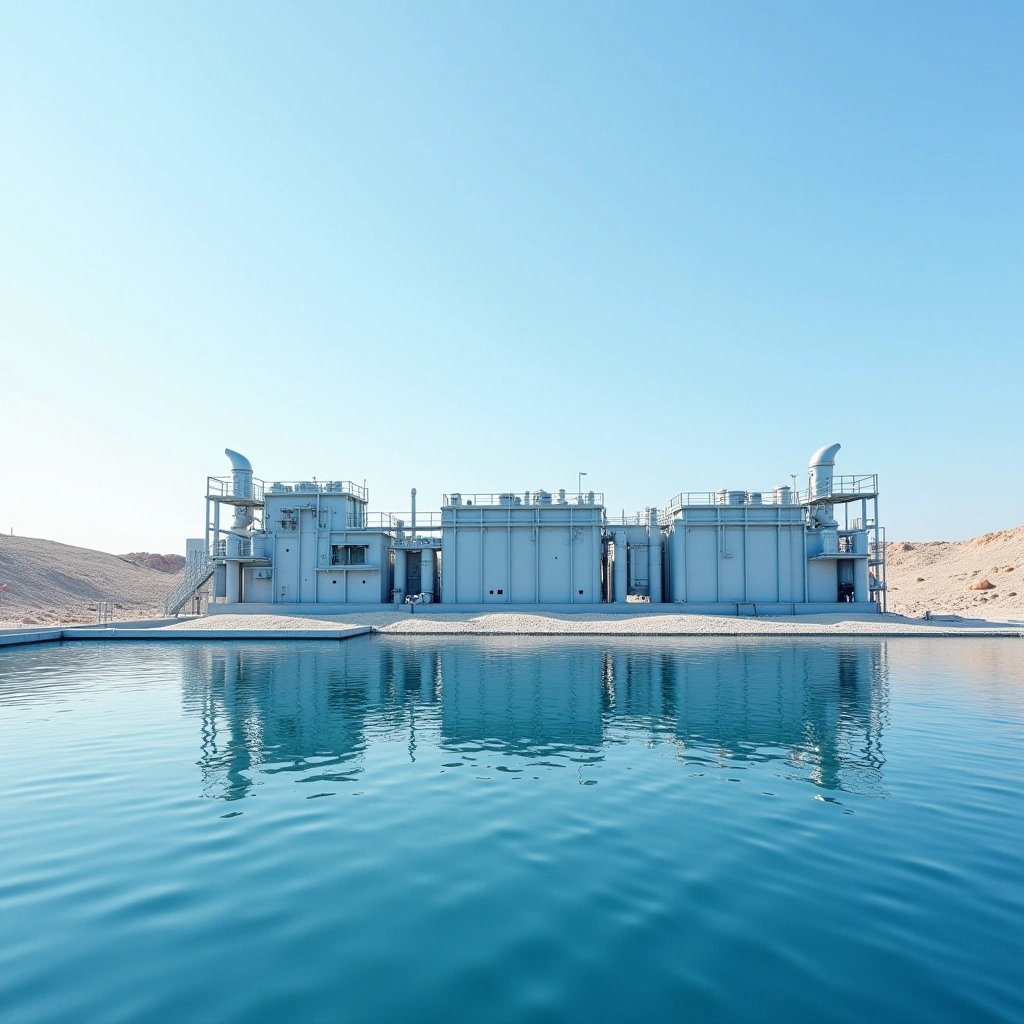
Have you ever thought about how much we pay for bottled water? If you’re like most people, you’ve probably shelled out a small fortune at some point for a fancy bottle of H2O that was likely sourced from a tap somewhere. Well, here’s a fun fact that might just make you choke on that overpriced Evian: Chinese tech is making desalinating seawater cheaper than producing bottled water. Yes, you heard that right!
Desalination is the process of removing dissolved salts from seawater to produce fresh water, a solution increasingly vital as climate change intensifies droughts and global water scarcity. While traditional methods like reverse osmosis are energy-intensive and generate environmentally harmful brine waste, recent innovations are leveraging renewable energy sources to improve sustainability. New technologies, such as wave-powered buoys and solar-heated passive systems, offer cleaner alternatives by utilizing natural ocean motion and sunlight, significantly reducing reliance on fossil fuels and minimizing ecological impact. These advancements aim to make freshwater production more affordable and scalable, particularly for regions facing severe water stress.
Now, before we dive headfirst into the salty sea of information, let’s clarify what desalination is. In simple terms, it’s the process of removing salt and other impurities from seawater to make it suitable for drinking. Think of it as giving the ocean a makeover so it can join the ranks of your favorite beverages.
So, why is this suddenly cheaper than slapping a label on a bottle of water? Well, thanks to advancements in technology—specifically in China—desalination processes are becoming more efficient and less costly. This is great news considering that about 97% of the Earth’s water is salty ocean water, and only a tiny fraction is fresh and drinkable. Talk about a missed opportunity for hydration!
The new methods being developed involve innovative filtration technologies, energy recovery systems, and improved membrane materials that can significantly lower operational costs. In layman’s terms, this means we can get fresh water from the ocean without needing to rob a bank. Who knew that the solution to our water crisis could be so… salty?
Imagine a world where instead of lugging home heavy packs of bottled water from the store, you could simply fill up your reusable bottle from a nearby desalination plant. Not only would that save you money (and the environment from all that plastic waste), but it could also help alleviate water scarcity issues in many regions.
Of course, this doesn’t mean that desalination is without its challenges. Critics often point out the environmental impact of salt brine disposal and energy consumption. But hey, if we can figure out how to make it more sustainable, we might just be sipping ocean-fresh water while lounging on the beach.
So, what’s next? As more countries look to invest in desalination technology, we could see a shift in how we source our drinking water. It’s like the new tech revolution, but instead of smartphones, we’re getting… ocean water?
In conclusion, the idea that desalinating seawater could become cheaper than producing bottled water is not just a quirky science fact; it’s a significant step toward solving global water issues. So, next time you’re tempted to buy that overpriced bottle of water, remember: you might soon be able to quench your thirst straight from the sea. Just don’t forget to thank the Chinese tech whizzes who made it possible! Cheers to that!
Inspired by: “Chinese tech makes desalinating seawater cheaper than producing bottled water” (r/technology)