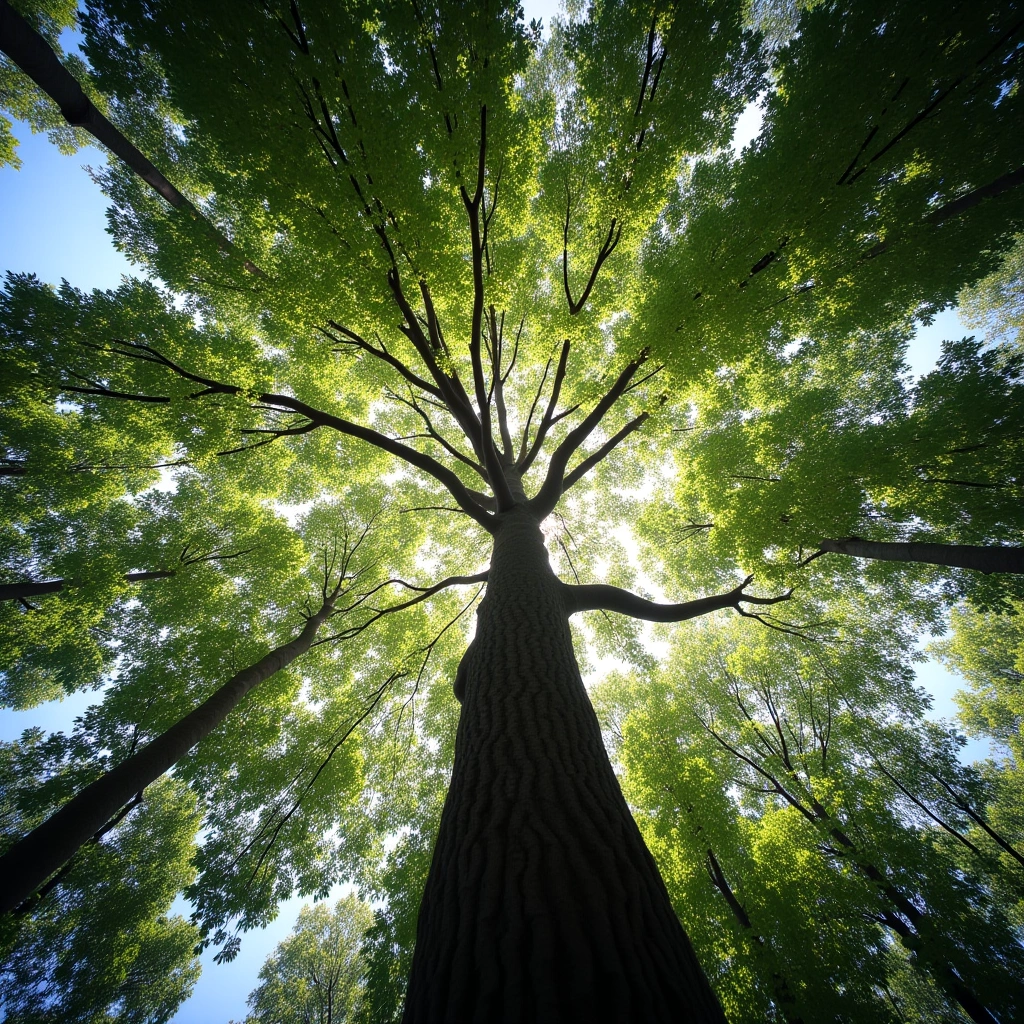
Hey there, fellow nature enthusiasts! Have you ever walked through a forest and noticed how some trees seem to have this unspoken agreement to keep their crowns apart? No, it’s not a case of arboreal personal space; it’s something way cooler known as crown shyness!
Now, before you start picturing trees engaging in awkward small talk to avoid touching, let’s dive into the science behind this fascinating phenomenon. Crown shyness refers to the phenomenon where the upper branches of trees avoid touching each other, leaving gaps in the canopy. This behavior has been observed in various tree species, and scientists believe it’s a strategic adaptation to ensure that each tree can thrive without getting overshadowed by its neighbors.
Imagine living in a crowded apartment complex where everyone decides to grow their plants in the same tiny living room. Sure, you all want sunlight, but if everyone’s branches are flailing around, it’s going to be a disaster! So what do these wise trees do? They develop a little etiquette—leaving gaps where their branches can peacefully coexist while still soaking up those delicious rays of sunlight.
Crown shyness isn’t just a quirky trait; it’s a survival mechanism. By avoiding direct contact, trees reduce the risk of injury from rubbing against each other, and they also minimize the chances of spreading diseases. It’s like the trees are saying, “Hey buddy, I love you, but let’s not get too close, okay?”
Now, here’s where it gets juicy—this behavior can vary dramatically between species and even individual trees. Some trees are naturally more social and will maintain closer proximity, while others are the introverts of the forest, keeping their distance. It’s like a tree version of the Myers-Briggs personality test, where some are extroverted oak trees, and others are classic, reserved pines.
But wait! There’s more! This crown shyness thing isn’t just about sunlight. Trees are also competing for other resources like water and nutrients. By keeping their crowns apart, they can maximize their access to these essential goodies without getting in each other’s way. It’s like a buffet where everyone is trying to get their fill without bumping elbows. No one wants to be that person who spills mashed potatoes on the nice silk shirt, right?
So, next time you’re out in the woods and you notice those gaps in the treetops, remember that it’s not just a pretty sight—it’s a lesson in cooperation, survival, and maybe even a little bit of tree politeness. The forest is full of drama, and crown shyness is just one of the many episodes in the ongoing saga of nature. Who knew trees could be so relatable?
In conclusion, crown shyness is a brilliant adaptation that showcases how trees can coexist in communities while still competing for resources. So let’s give a round of applause to our leafy friends for their diplomatic branch management! And who knows, maybe they’ll inspire us to keep our own social distancing in check—unless, of course, we’re talking about a good tree-hugging session!