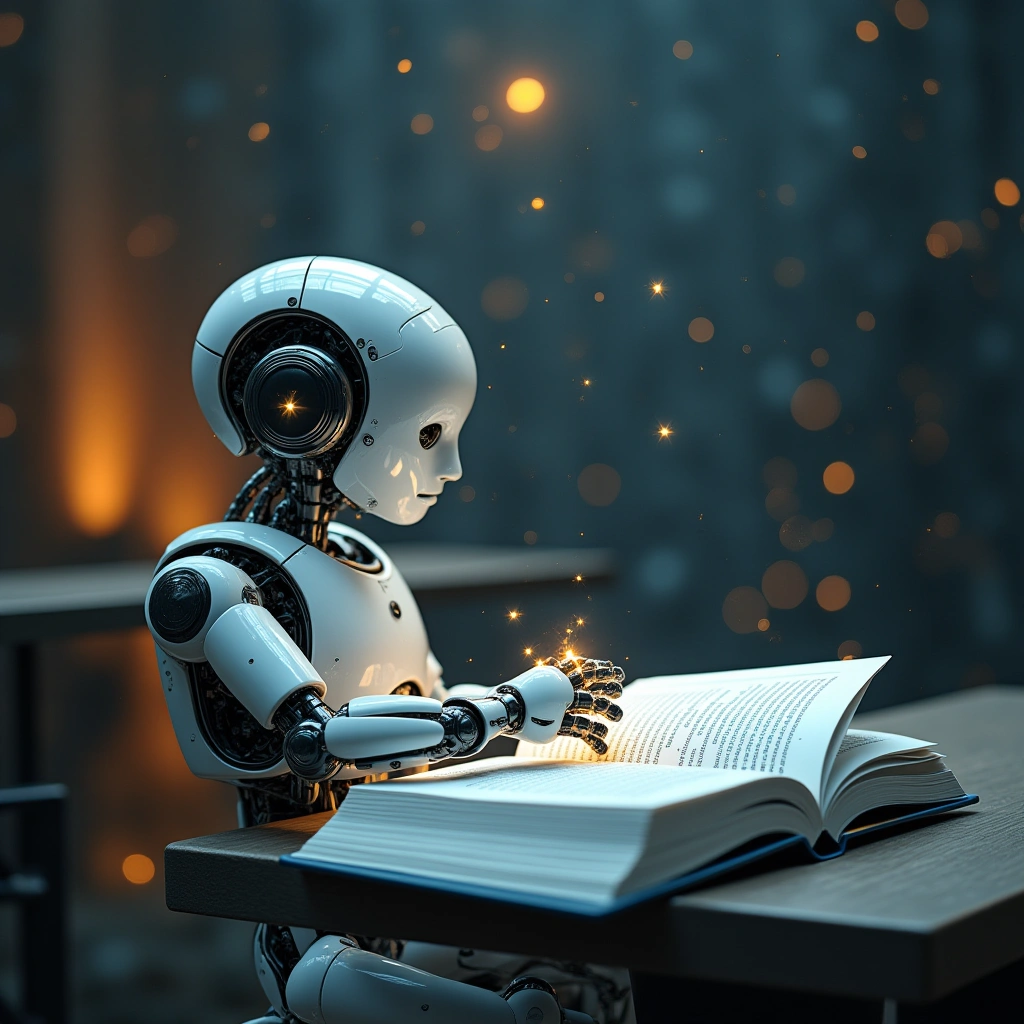
Ah, the age-old question: can a machine create art? Well, let’s dive into the world of artificial intelligence and see if it has what it takes to pen the next great novel. And before you roll your eyes and mutter, “Not another AI debate!” bear with me. This could be more entertaining than your last family gathering.
Could the same happen with literature? Will a machine-authored novel one day take its place among the 100 greatest of all time? Peter Stockwell, professor of literary linguistics at the University of Nottingham, thinks AI may be able to do the basics, but it can’t scale the heights.
First off, let’s acknowledge the elephant in the room: yes, AI can already write. I mean, have you seen those chatbots? They can churn out paragraphs faster than I can finish my morning coffee, which is saying something considering my caffeine addiction. But the real question is: can they write a novel that doesn’t make you want to gouge your eyes out?
To answer that, we need to consider what makes a novel ‘great.’ Is it the emotional depth? The character development? The ability to make you cry, laugh, or question your life choices? Or is it just a matter of clever wordplay and a few plot twists? If it’s the latter, we might be in trouble because AI is really good at stringing words together.
Recent advancements in AI, particularly with models like GPT-3 and beyond, have shown that machines can mimic human writing styles with impressive accuracy. They can analyze countless novels, learn patterns, and even generate ideas that sound like they came straight from the mind of a human author. But can they truly grasp the nuances of human experience? Spoiler: probably not.
Let’s not forget the classic trope of the tortured artist. You know, the one who spends sleepless nights wrestling with their inner demons, only to emerge with a masterpiece that changes the world? AI doesn’t have those demons. It doesn’t feel heartache, joy, or existential dread. It simply processes data. So, while it might be able to craft a gripping story, it might lack the soul that comes from human experience. And isn’t that what we really crave in literature?
Now, if we’re talking about genre fiction—think romance novels, thrillers, or even some sci-fi—AI might just be our new best friend. These genres often follow formulaic structures and tropes that AI can easily replicate. Imagine an AI writing the next big beach read: “Love in the Time of Wi-Fi”? Sure, why not! It could even throw in some quirky characters and a predictable plot twist. But the question remains: would you read it?
Let’s also consider the role of the editor. A human touch is often what separates a good story from a great one. An editor can refine, polish, and elevate a manuscript, adding layers of meaning or trimming the fat. An AI can certainly assist in editing, but can it understand what makes a story resonate? That’s debatable.
As we move forward, we should definitely embrace the potential of AI in the literary world. It could be a fantastic tool for brainstorming ideas, overcoming writer’s block, or even generating first drafts. But should we hand over the reins completely? Probably not. After all, who wants to live in a world where the next literary classic is written by a machine?
So, could the next great novel be written by AI? Sure, but it might need a little help from its human friends. And while we’re at it, let’s keep our eyes peeled for those AI-generated books. They might just be the next best thing to a guilty pleasure. Just don’t forget to check if it’s actually a human behind the curtain—or if it’s just a very clever algorithm trying to pass off as one.
In conclusion, the future of literature might just be a collaboration between humans and machines. And who knows? One day, your favorite author might just be a bunch of code. Now that’s a plot twist I didn’t see coming!
Inspired by: “Could the next great novel be written by AI (and would you even be able to tell)?” (r/technology)