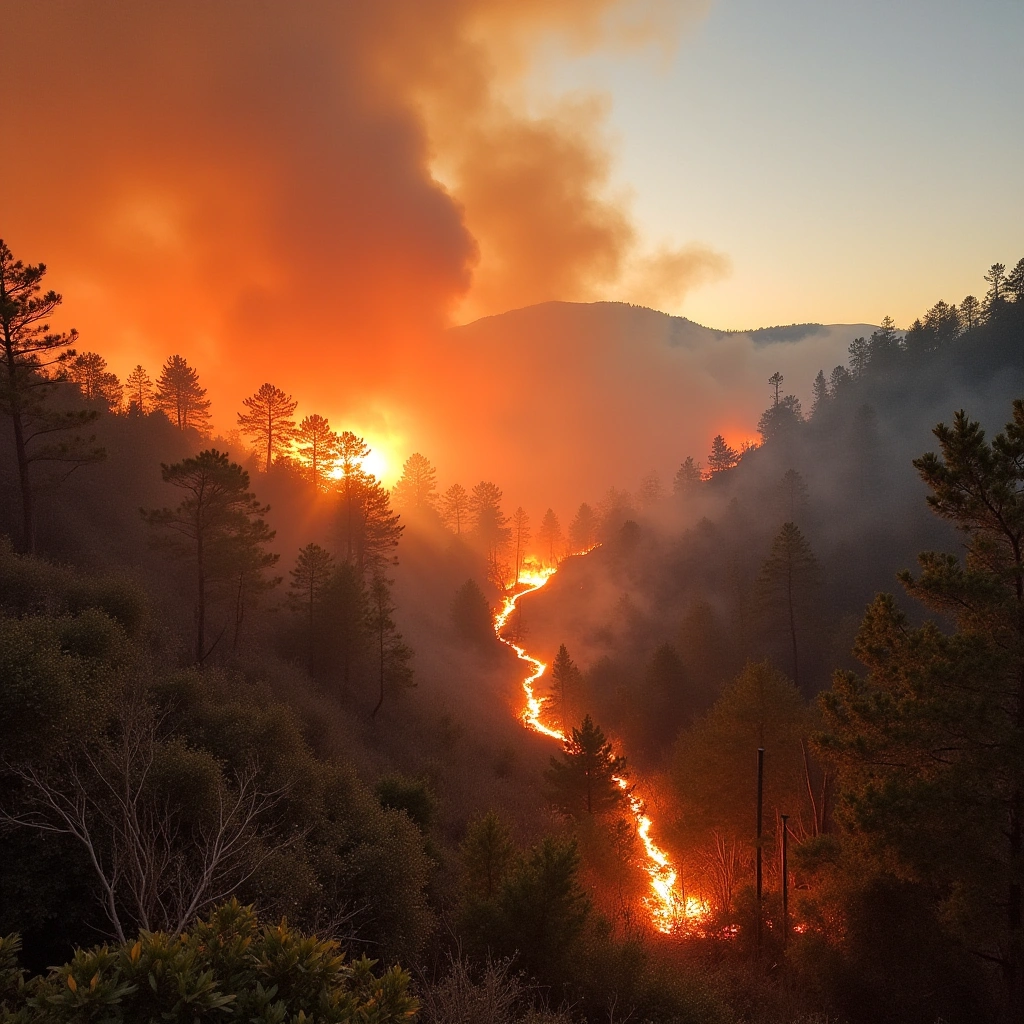
The wildfire smoke we once heard of out West and up north is now becoming a recurring summertime sight in our hometown – a sign that the Midwest is not immune to the consequences of a warming earth .
So, it’s Clean Air Day! A day where we all come together to celebrate the air we breathe, which, let’s be honest, has become a bit of a luxury item lately. As we high-five Mother Nature for her efforts, we also have to face some not-so-great news: extreme wildfire smoke events have tripled globally since the 1990s. Yes, you heard that right—tripled! If air quality were a stock, we’d be looking at a major downturn.
According to a recent bulletin from the World Meteorological Organization (WMO), our beloved air quality models might be underestimating the deaths caused by these wildfires by a staggering 93%. That’s not just a typo; that’s almost like saying your favorite pizza joint undercooked your pizza by 93%—not exactly what you want to hear.
Now, before you start furiously Googling ‘How to breathe in smoke,’ let’s unpack this alarming data. Wildfires, once seen as something that only happened in remote areas far from our cozy homes, are now becoming the uninvited guests at our backyard barbecues. They’re not just affecting the locals; they’re sending smoke signals to everyone within a thousand miles. And let’s not forget how the smoke can travel thousands of miles away, like that one friend who just can’t take a hint to leave the party.
The increase in wildfire smoke events can be attributed to a combination of factors, including climate change, land management practices, and the sheer joy of living in a world that seems to be on fire—literally. As temperatures rise and droughts become more common, forests that were once healthy and green are now more like tinderboxes waiting for a spark. And when that spark happens, well, let’s just say the results are not pretty.
Now, back to those air quality models. You’d think they’d be the experts on this, right? But it turns out they might be a bit like your friend who insists they can cook but always burns the toast. The WMO bulletin suggests that many of these models fail to account for the full impact of wildfire smoke on public health. So, while you might be thinking you’re safe indoors, you could still be breathing in smoke particles that are more dangerous than that questionable takeout you had last week.
So, what can we do about this? Aside from holding our breaths (which, let’s be honest, isn’t a sustainable strategy), we need to advocate for better land management practices, support policies that address climate change, and maybe invest in some air purifiers. Or, you know, just move to a bubble where the air is always fresh—because that sounds like a solid plan.
In conclusion, as we mark Clean Air Day, let’s remember that clean air is not just a nice idea; it’s a necessity. And with wildfires on the rise, we need to take action now before our clean air celebrations turn into a smoke-filled reality. So, breathe in that fresh air while you can, folks—because if we don’t act, we might just be celebrating Clean Air Day with a side of wildfire smoke in the not-so-distant future.
Inspired by: “As the world marked Clean Air Day today, extreme wildfire smoke events have tripled globally since…” (r/climatechange)