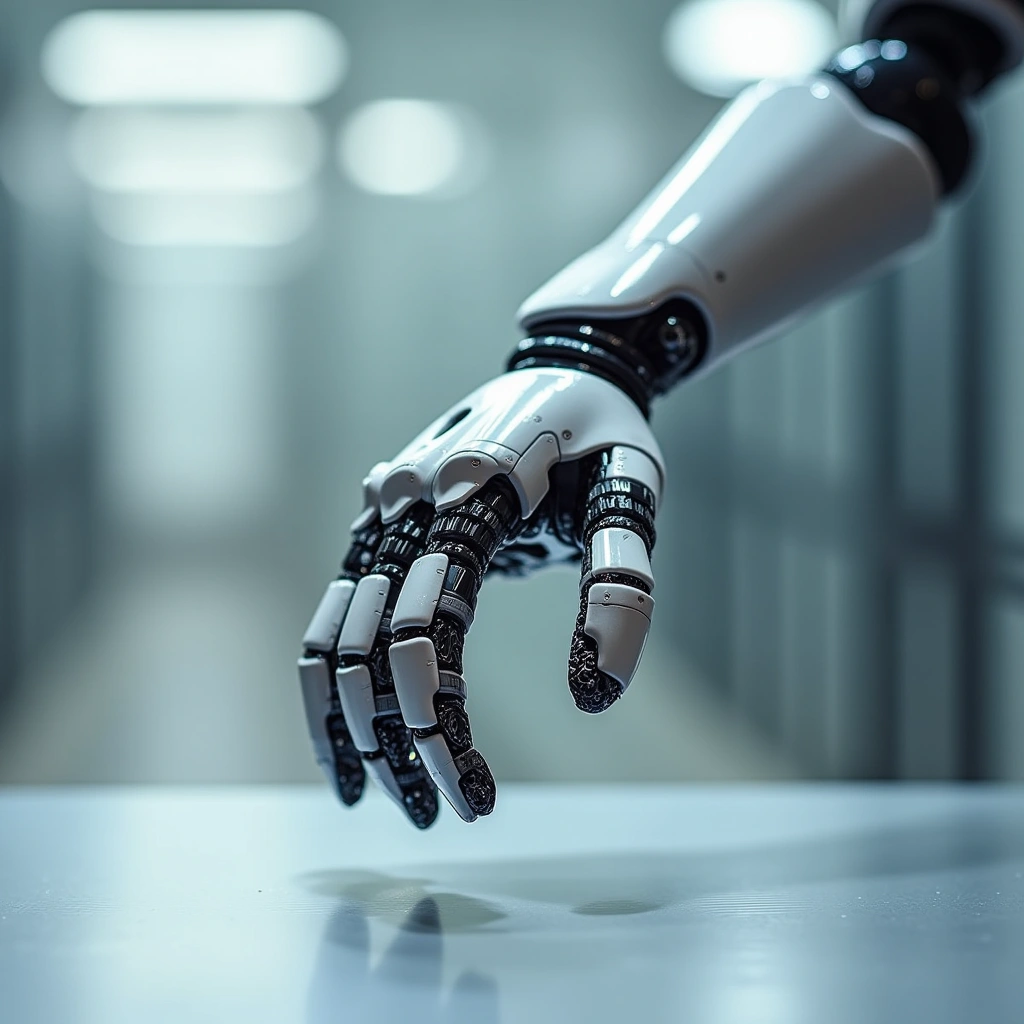
When we think of robotics, we often imagine shiny humanoid figures performing tasks that range from mundane to mind-blowing. However, one of the biggest challenges in the field isn’t building a robot that can dance the Macarena or flip pancakes perfectly; it’s creating a hand that can actually grasp and manipulate objects like a human. And guess what? China is stepping up to tackle this conundrum.
BEIJING, May 4 (Reuters) – Chinese robotics startup Linkerbot, the global market leader in highly dexterous robotic hands for humanoids, will seek a $6 billion valuation in its next financing round, double the valuation in a just-closed funding, the company said. Beijing-based Linkerbot completed what it called a “series B+” funding round last week that valued it at $3 billion.
Now, let’s think about it: hands are pretty amazing. They’re versatile, dexterous, and capable of a wide range of movements. I mean, have you ever tried to pick up a piece of sushi with chopsticks? It’s like a mini Olympics for your fingers. But for robots? Not so much.
China, with its rapidly advancing technology and a penchant for solving complex problems (like how to make the Great Wall even greater), has decided to focus on this tricky task. The goal is to develop robotic hands that can replicate the intricate movements of human hands. It’s a bit like trying to teach a toddler to use a fork—frustrating and messy, but ultimately rewarding.
Why is this important, you ask? Well, think about all the applications. From manufacturing to healthcare, a robot with a functioning hand could transform industries. Imagine robots that can assist in surgeries, or help assemble intricate machinery without the risk of dropping a crucial component. The possibilities are endless!
But let’s not get ahead of ourselves. Creating a hand that works like ours is not just about mimicking movements; it’s also about understanding the physics behind it. How much pressure do you need to grip a fragile object without turning it into a pancake? How do you make sure a robot can adjust its grip based on the object it’s holding? These are the million-dollar questions that researchers are grappling with.
Plus, there’s the matter of sensitivity. Human hands are equipped with nerve endings that allow us to feel things—like the difference between a soft marshmallow and a rock-solid boulder. A robot hand needs to have some sort of feedback system to understand what it’s holding, or else it might end up crushing that marshmallow into a gooey mess. And no one wants a gooey mess unless they’re making s’mores.
China’s approach includes a mix of advanced materials, AI, and robotics. They are looking at how to use soft robotics—think squishy, flexible materials that can adapt and move in ways traditional hard robots can’t. It’s like giving a robot a spa day, complete with a soft touch!
As they work towards this goal, you might wonder: will we soon have a robot that can give us a high-five? Or maybe even one that can help with those pesky DIY projects that always seem to go awry? (Spoiler alert: if a robot can’t follow IKEA instructions, we’re all doomed.)
In summary, China’s ambitious quest to create a functional robot hand is not just a matter of engineering prowess; it’s about pushing the boundaries of what robotics can achieve. If they succeed, we could be on the brink of a new era where robots are not just machines but capable assistants in our daily lives. So, here’s to hoping that one day, we’ll have robot hands that can do everything from high-fiving to sushi-rolling. And if they can help us with the remote control, even better!
Inspired by: “China wants to solve the hardest problem in robotics – making hands” (r/technology)