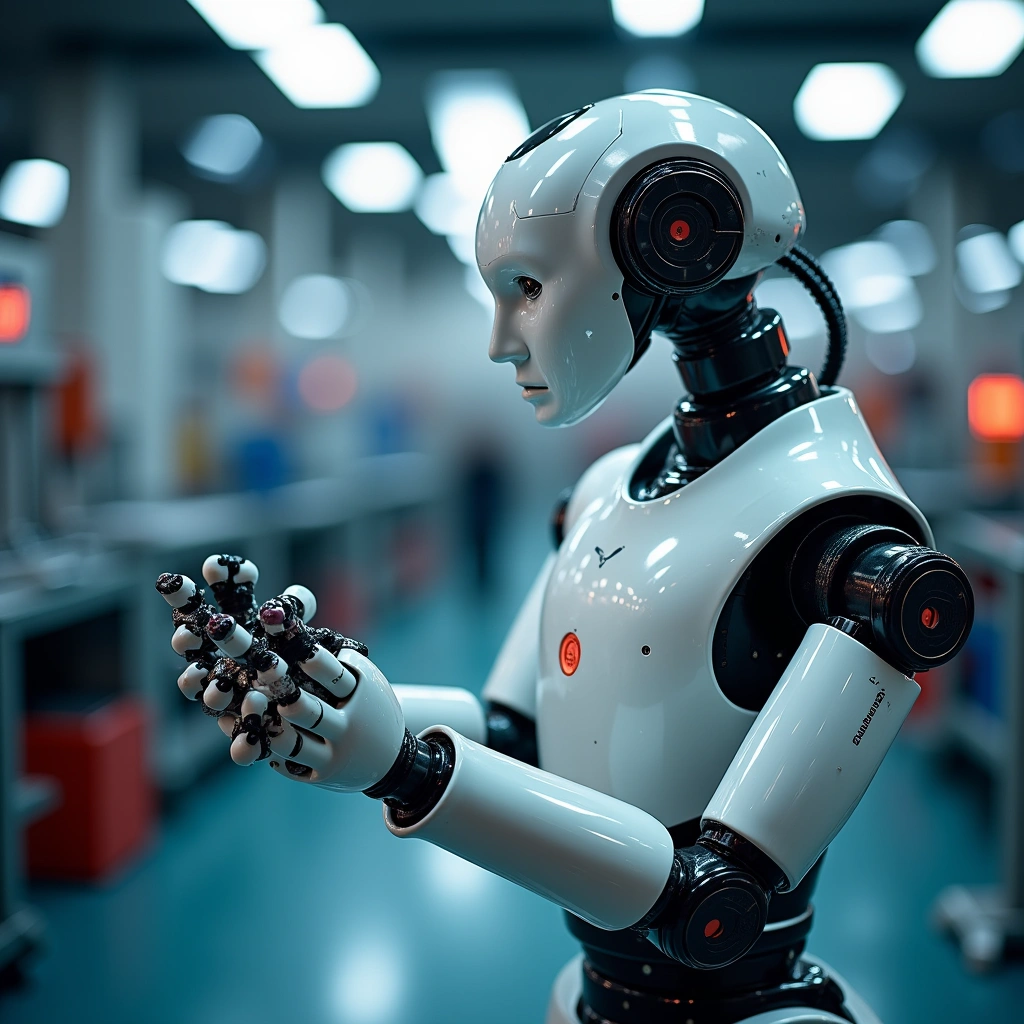
Alright, folks, buckle up! We’re diving into the fascinating yet slightly terrifying world of industrial robots. If you thought your Roomba was impressive, wait until you hear what China is up to. According to recent reports, China has officially become home to half the world’s industrial robots, and let me tell you, they’re not just building your IKEA furniture faster; they’re on a whole new level of automation.
Last year alone, China installed a jaw-dropping 300,000 industrial robots. That’s right, 300,000! To put that into perspective, that’s nine times more than the United States, which is like bringing a rubber knife to a gunfight. The US is falling further behind in the robotics race, and honestly, it feels a bit like the tortoise and the hare, except this time, the tortoise is armed with a laser and a PhD in advanced robotics.
Now, let’s break this down a bit. Why is China installing so many robots? Well, it’s all about efficiency, folks! The Chinese manufacturing sector is a behemoth, and as labor costs rise, they’re turning to automation like a kid turns to candy after being denied dessert. Robots can work tirelessly, never complain about their 401(k) plans, and don’t need bathroom breaks. Plus, with the rise of AI, these metal marvels are getting smarter by the day. Soon enough, they’ll probably be sending us unsolicited advice on how to improve our lives—thanks, but no thanks, robot overlords!
Now, let’s not forget about the implications of this robot revolution. While China is busy embracing automation, the US is still having heated debates over whether robots should be allowed to vote. Spoiler alert: they shouldn’t, unless we want our elections to be decided by a bunch of algorithms with questionable ethics. This tech gap could lead to significant economic shifts. Jobs that once required human hands may soon be handled by shiny new robots, and let’s face it, no one wants to compete with a machine that doesn’t need coffee breaks or health insurance.
But hey, all is not lost for the US. We still have Silicon Valley, innovation, and the ability to create tech that can potentially outsmart these robots. Remember, robots are only as good as the humans who program them, and we all know how much fun it is to watch someone try to fix a bug in their code. It’s like watching a cat chase its tail—entertaining but ultimately fruitless.
In conclusion, as China continues to dominate the industrial robotics scene, the US must either step up its game or risk being left in the dust. And let’s be real, no one wants to be the country that gets outpaced by a bunch of robots. So, what do you think? Is it time for America to embrace the robot revolution, or should we just stick to our good old-fashioned ways? Either way, I’m just glad I’m not a factory worker right now!
As we watch this technological race unfold, one thing is certain: the future is looking a whole lot more robotic. Let’s just hope they don’t form a union and demand rights, because then we’re really in trouble! Stay tuned, folks, the robot wars are just getting started.