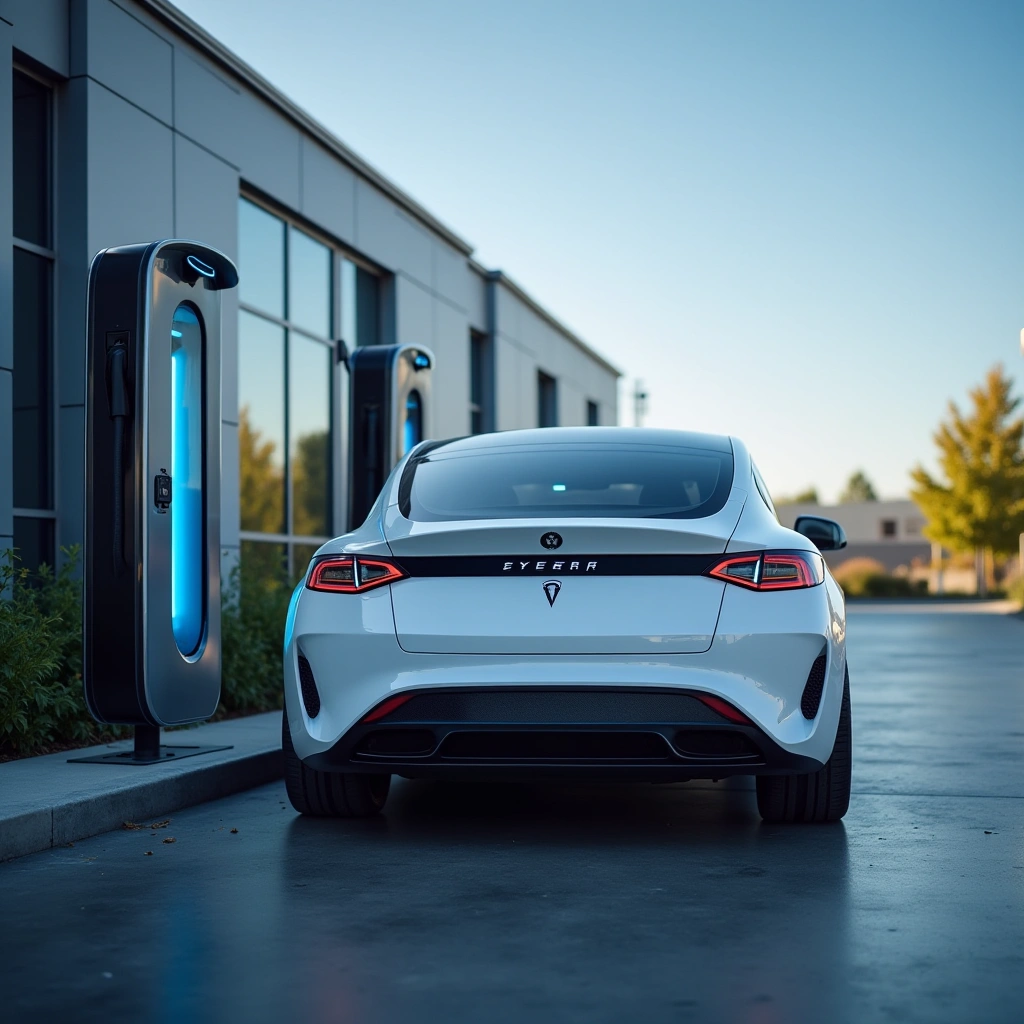
Here’s what’s available as of December 2025: Ford F-150 Lightning Nissan Leaf Hyundai Ioniq 5 & Ioniq 6 Kia EV6 & EV9 Genesis GV60 Lucid Air Mitsubishi Outlander PHEV Tesla Cybertruck
If you’ve ever tried to plug in your phone only to find it’s as dead as your social life on a Friday night, you’ll understand the importance of reliable charging. Now, imagine that scenario, but with cars—specifically, electric vehicles (EVs). Enter bidirectional charging, which is less about your phone’s battery woes and more about revolutionizing how we think about energy consumption and storage.
So, what exactly is bidirectional charging? In a nutshell, it allows electric vehicles to not only draw power from the grid but also send power back to it. Think of it as your car becoming a mobile power station, ready to help out during a blackout or even supply energy to your home when you’re not out saving the planet one electric mile at a time. It’s like your car is saying, “Hey, I got your back!”—which is a refreshing change from the usual “I’m just here to eat your wallet.”
German engineers are leading the charge (pun absolutely intended) in developing this technology, and it’s not just a passing fad. With the rise of renewable energy sources, bidirectional charging could play a crucial role in stabilizing the grid. Imagine a scenario where your EV charges during the day when solar energy is abundant and then feeds power back into your home in the evening when you’re binge-watching that latest Netflix series (because let’s be honest, who doesn’t need a little more ‘Stranger Things’ in their life?).
But wait, there’s more! Bidirectional charging could also help reduce the overall demand on the grid, especially during peak hours. You know those times when everyone decides to microwave their frozen dinners at 6 PM? Yeah, that’s when the grid is sweating bullets. By allowing EVs to discharge energy back to the grid, we can ease that demand and keep the power flowing smoothly. No more blackouts during the season finale of your favorite show, thank you very much!
Now, let’s address the elephant in the room: the potential for vehicle-to-grid (V2G) integration. This concept is as exciting as it sounds. V2G allows EV owners to sell excess energy back to the grid, turning their cars into a source of income. Yes, you read that right. Your car could actually make you money while you’re busy living your best life. Just imagine your car saying, “I’m not just a pretty face; I’m also a money-making machine!” Talk about multi-tasking.
Of course, there are challenges to overcome before we can fully embrace this technology. For starters, not all EVs come equipped with bidirectional charging capabilities, and not all charging stations support it either. Plus, there are regulatory hurdles to navigate, like figuring out how to fairly compensate EV owners for the energy they provide back to the grid. It’s a bit like trying to organize a group project in school—everyone wants to contribute, but no one wants to do the work.
But fear not! The momentum is building, and with German engineers at the forefront, we can expect significant advancements in the coming years. As the EV market continues to grow, so too will the infrastructure supporting bidirectional charging. It’s like watching a snowball roll down a hill—eventually, it’s going to be big enough to cause an avalanche of change.
In conclusion, bidirectional charging is not just another buzzword; it’s a game-changer for electric vehicles and the energy landscape as a whole. As we move towards a more sustainable future, this technology could help us maximize our energy resources, reduce our carbon footprint, and maybe even make a little extra cash on the side. So, buckle up and get ready for a ride into the future—where your car might just become your new best friend and financial advisor!
Inspired by: “Bidirectional charging dominates next development step for EVs – German engineers” (r/climatechange)