Category: Human Interest

  • The Exclusive Club: Why Getting on Raya’s Waiting List is Like Trying to Join the Illuminati

    The Exclusive Club: Why Getting on Raya’s Waiting List is Like Trying to Join the Illuminati

    Ah, Raya. The dating app that’s like the velvet rope of the digital dating scene. If you thought getting into a trendy nightclub was tough, try getting on the waiting list for Raya. The last time I saw a line this long, I was at a Black Friday sale for the latest iPhone. But let’s talk about these poor souls who have been on the waiting list for years. What are they doing? Sending in their résumés? Hoping to impress the gatekeepers with their Instagram aesthetic?

    For those unacquainted, Raya is the dating app that claims to cater to the “creatives”—a.k.a. influencers, actors, and people who think wearing sunglasses indoors is a personality trait. It’s as if Tinder and an art gallery had a baby and decided to raise it in a bubble of exclusivity. It’s not just about swiping left or right; it’s about making sure your profile looks like a curated Instagram feed, complete with a color palette and perhaps a motivational quote that screams, “I’m deep!”

    Now, let’s address the elephant in the room: the infamous waiting list. You’d think you were trying to get into a secret society where the initiation involves a blood oath or something. But no, it’s just people wanting to meet other people who also think they’re too cool for the rest of the dating apps. If you’ve been waiting for years, you might as well start a support group. “Hi, I’m John, and I’ve been waiting for Raya since 2019.” Cue the group nodding in sympathy.

    But what happens when you finally get in? Is there a grand ceremony? Maybe a confetti shower and a personalized welcome message from the app’s mascot, who probably looks like a hipster avocado? Or do you just log in and find out that the only matches available are people you’ve already ghosted on Instagram? The anticipation is real.

    Some argue that this exclusivity is what makes Raya special. It’s like a secret club where only the “right” folks get in. But let’s be honest: exclusivity can be a double-edged sword. It can lead to a sense of entitlement among users, making them think they’re somehow superior because they can swipe right on a famous actor’s profile. Spoiler alert: They’re probably just as confused about relationships as the rest of us.

    For those who are still waiting, here’s a little advice: maybe use this time to work on yourself. Take up a new hobby, learn to cook, or just binge-watch every season of a show you’ve been meaning to catch up on. Who knows? By the time you get in, you might just have a more interesting story than the one about that time you almost matched with a D-list celebrity.

    In conclusion, the waiting list for Raya is a testament to our society’s obsession with exclusivity. It’s like the new-age Hunger Games, but instead of fighting for survival, you’re fighting for a chance to date someone who’s probably just as confused about their love life as you are. So, to all those waiting: hang in there! Just remember, whether you’re on Raya or not, love is a battlefield—and sometimes it’s best to just put down your weapons and enjoy the view.


  • Is Your Job Safe? The AI-Driven Labor Crisis Looms as Meta and Microsoft Cut 20,000 Jobs

    Is Your Job Safe? The AI-Driven Labor Crisis Looms as Meta and Microsoft Cut 20,000 Jobs

    Hey there, job seekers and tech enthusiasts! Grab your favorite beverage, because we need to chat about something that’s got everyone buzzing—yes, we’re diving into the world of layoffs and the looming specter of artificial intelligence (AI) taking over our jobs. Buckle up!

    So, recently, Meta and Microsoft decided to give a hearty wave goodbye to a staggering 20,000 employees. That’s right, folks, 20,000! I mean, if you thought your breakup was tough, try being part of that exodus. But before we all start crying into our morning coffee, let’s unpack what this means in the grand scheme of the AI-driven labor market.

    First off, let’s get real. AI is not merely a fancy tool that helps you find the best recipe for avocado toast. Nope, it’s a game-changer that’s rewriting the rules of employment faster than you can say ‘robot overlords.’ Companies are racing to integrate AI into their operations, and it’s like watching a high-speed car chase where everyone forgot to put on their seatbelts. Spoiler alert: not everyone is going to make it.

    Now, don’t get me wrong. I love a good robot as much as the next person. But, with great power comes great responsibility—or in this case, great job insecurity. With tech giants like Meta and Microsoft leading the charge, it’s clear that the demand for human workers is waning. Why pay for a full-time employee when a sleek AI can churn out reports, answer customer inquiries, and even write blog posts (ahem)?

    But here’s the kicker: this isn’t just a tech issue. Nope, it’s a societal one! As we watch thousands of workers being shown the door, we have to ask ourselves: what happens to the economy if everyone is replaced by an AI? Are we heading toward a future where humans are sitting at home binge-watching Netflix while robots do all the work? Sounds like a sci-fi movie, right?

    Let’s not forget the emotional aspect of this. Losing a job is tough, and you can’t just replace that with a shiny new AI. It’s like trading in your old, faithful dog for a robot vacuum. Sure, the vacuum might clean the house, but it won’t cuddle with you on the couch during a rainy day. And let’s face it, we all need that emotional connection, even if it’s just to complain about how difficult life is!

    So, what can you do to safeguard your job? Well, my friend, it’s time to start thinking of yourself as a human-AI hybrid. Embrace the tech, learn new skills, and pivot your career path. Become the human that AI can’t easily replicate—think creativity, emotional intelligence, and, dare I say, charm! Because let’s face it, no algorithm can replicate your ability to make a killer cup of coffee or crack a dad joke.

    In conclusion, while the news of widespread layoffs at Meta and Microsoft is a cause for concern, it’s also a wake-up call. The AI-driven labor crisis is here, whether we like it or not. So, let’s not sit back and let the robots take over. Instead, let’s adapt, innovate, and maybe just keep a few clever comebacks ready for when the robots start trying to take our jobs. After all, who knows? The future might just be a blend of humans and AI working together—like peanut butter and jelly, or maybe more like cats and laser pointers!

  • The Wild Side of AI: Man’s 5-Year Sentence for Faking Wolf Sightings

    The Wild Side of AI: Man’s 5-Year Sentence for Faking Wolf Sightings

    Ah, the age of technology! Where man can create a digital masterpiece with just a few clicks, but also, somehow, find himself in hot water faster than you can say ‘I can’t believe it’s not butter!’ Recently, a man has found himself facing a whopping five years in prison for using AI to fake the sighting of a runaway wolf. Yes, you heard that right. Forget hacking the Pentagon or robbing a bank; we’ve now graduated to wolf impersonation. What a time to be alive!

    Let’s break this down. First off, why would anyone think that faking a wolf sighting is a good idea? Perhaps he was trying to be the next ‘Wolf Whisperer’ or maybe he just wanted to spice up his social media feed. Who knows? The mind can be a mysterious place, especially when it’s fueled by late-night YouTube rabbit holes about wolves and AI technology.

    Now, let’s talk about the implications of this wild stunt. The guy could have just as easily faked a sighting of a unicorn or Bigfoot, but no, he chose a wolf. This isn’t just a harmless prank; faking wildlife sightings can have serious consequences. Imagine if a bunch of people armed with cameras and smartphones descended on the area, only to find out it was all a big fat lie! The wolves would be like, ‘Dude, we were just trying to chill in our natural habitat, and now we have a bunch of humans acting like paparazzi!’

    But what really gets me is the fact that we’re living in a world where using AI for a hoax could land you in prison. If this guy had used AI to create the next big meme or a viral TikTok dance, he’d probably be getting sponsorships instead of a sentence. It’s like a twisted version of the phrase, ‘You get what you give’—but here, it’s more like, ‘You give AI a chance, and it gives you five years in the slammer.’

    Now, I’m not here to condone his actions—clearly, they were misguided. But let’s take a moment to appreciate the absurdity of it all. A man is facing prison time for using artificial intelligence in a way that is, let’s be honest, kind of hilarious in hindsight. It’s a little like getting a speeding ticket for driving too fast to the grocery store, only to find out you were rushing to buy ice cream for your cat’s birthday party.

    In conclusion, while it may seem like a harmless prank, this incident serves as a reminder that the law sometimes lags behind technology. Next time you think about using AI for something mischievous, remember this guy and think twice. Unless, of course, you’re trying to create a viral cat video—then all bets are off!

  • Google’s Billion-Dollar Bet: What Anthropic Means for the Future of AI

    Google’s Billion-Dollar Bet: What Anthropic Means for the Future of AI

    So, Google is throwing a staggering $40 billion at Anthropic, huh? It’s like watching a high-stakes poker game where the chips are really just ones and zeroes, and the pot is the future of AI. Let’s break this down, shall we?

    First off, who is Anthropic? If you’re not familiar with them, they’re the cool kids on the AI block. Founded by some ex-OpenAI folks, they’re all about creating AI systems that are safe and beneficial. You know, the kind that won’t send your toaster into a rebellious state where it starts plotting world domination. Because let’s be real, nobody wants burnt toast that also has a vendetta against humanity.

    Now, Google must have seen something shiny in Anthropic’s tech that made them whip out their checkbook faster than a kid at a candy store. Perhaps they’re envisioning a future where AI can help us in ways that don’t involve it taking over the world and deciding we humans are just unnecessary baggage.

    But let’s not kid ourselves; this investment isn’t just about altruism. Oh no! It’s a strategic move in a race that’s hotter than a jalapeño pepper in a sauna. Google, Microsoft, and the rest are in a neck-and-neck sprint to dominate the AI landscape. In this world, having a buddy like Anthropic in your corner is like having a cheat code – one that comes with a side of ethical assurance.

    And speaking of ethical assurance, Anthropic’s focus on safety could be a game changer. With increasing scrutiny on AI and its potential risks – think Skynet but with better marketing – Google’s backing of a company that prioritizes safe AI could help to quell some of that skepticism. It’s like saying, “Hey, we know AI can be scary, but we promise we’re working on making it less terrifying!”

    But here’s where it gets really interesting: $40 billion! Now that’s a chunk of change that could easily break the Internet (again). You could buy a small country with that, or, you know, fund a lot of research to ensure our future AI overlords don’t decide to use us as their personal battery packs. Either way, it’s a bold move.

    What does this mean for the average Joe? Well, if you’re a fan of AI that actually helps you instead of plotting your demise, this could be great news. We might see more advancements in AI technology that aligns with human values and needs. Or at the very least, we won’t be stuck with a rogue AI that thinks it’s a better chef than Gordon Ramsay.

    So, as we watch this unfold, keep your popcorn ready. The world of AI is about to get a lot more interesting, and who knows? Maybe one day you’ll be thanking Google for making sure your future toaster isn’t secretly a war criminal.

  • Discovering Omani Shuwa: The Slow-Cooked Delight Worth Celebrating

    Discovering Omani Shuwa: The Slow-Cooked Delight Worth Celebrating

    Ah, Omani Shuwa! If you haven’t had the pleasure of encountering this culinary masterpiece, you’re in for a treat. This isn’t just a dish; it’s a celebration of culture, family, and the art of patience (not to mention the art of marinating meat to perfection!).

    Now, let’s break it down, shall we? Imagine a glorious feast where the main attraction is a marinated lamb, goat, or even camel (yes, you read that right, camel!). The meat is lovingly wrapped in banana leaves—because who doesn’t want to eat something that looks like a gift from a tropical paradise? This isn’t just any cooking process, though. We’re talking about a slow-cooked method that takes up to 48 hours! Yes, you heard me; you’ll need a lot of patience, but trust me, it’s worth the wait.

    Here’s where it gets interesting: the magic happens in a pit. Yes, an actual pit in the ground! The meat is gently nestled in, and then the pit is covered with a heavy lid and sealed tight with wet mud or clay. It’s like nature’s own slow cooker, and honestly, I’m not sure why we haven’t all adopted this method in our backyards yet. I mean, who wouldn’t want a meat pit? Just think of the neighborhood BBQs!

    Families often tag their sacks for identification because, let’s be real, after 48 hours, you might forget what you put in there. “Is this my lamb or Uncle Ahmed’s goat?!” Not to mention, you don’t want to accidentally take home the neighbor’s prized camel—awkward!

    But the real star of the show is the flavor. After being marinated in a blend of spices, herbs, and some secret family recipes (probably written on the back of a napkin), the meat emerges tender, juicy, and bursting with flavor. It’s like a flavor explosion that could make even the most stubborn veggie lover reconsider their life choices.

    Omani Shuwa is typically served during special occasions like weddings, festivals, or any gathering where people want to eat until they can’t move. It’s a communal experience, and believe me, if you get invited to one of these feasts, you should consider it a badge of honor. Just don’t wear your tight jeans; you’ll regret it.

    So, the next time someone mentions Omani Shuwa, you can drop some knowledge and impress your friends. Just remember, it’s not just a meal; it’s an experience, an adventure, and proof that good things come to those who wait (and seal their meats in mud).

    In conclusion, whether you’re in Oman or just trying to impress your friends with your culinary knowledge, Omani Shuwa deserves a spot on your food bucket list. And who knows, maybe you’ll be inspired to dig a pit in your backyard. Just don’t blame me when the HOA comes knocking!

  • Inside Andrew Callaghan’s HBO Experience: A Rollercoaster of Revelations and Ridiculousness

    Inside Andrew Callaghan’s HBO Experience: A Rollercoaster of Revelations and Ridiculousness

    Ah, Andrew Callaghan. The man, the myth, the legend—if that legend were a 20-something YouTube sensation who decided to do journalism the way most of us do karaoke: slightly inebriated and with a lot of heart. His HBO experience has been nothing short of a wild ride, and let’s be honest, it’s an experience that even a rollercoaster designer would envy.

    First off, let’s set the stage. Callaghan, known for his street interviews and an uncanny ability to make people spill their guts for the camera, took a leap into the world of HBO. Yes, HBO—the land of dragons, gritty dramas, and enough plot twists to make your head spin. One would think he’d be just another cog in the machine, but nope, Andrew decided to turn that machine into an amusement park ride.

    His show, “This Place Rules,” is a delightful buffet of absurdity, as he dives headfirst into the chaos of American culture, with a side of conspiracy theories that would make even the most seasoned conspiracy theorist raise an eyebrow. I mean, we’re talking about a platform that’s given us everything from “Game of Thrones” to “Euphoria,” and here comes Andrew, armed with a microphone and an irreverent sense of humor. Talk about a plot twist!

    Now, let’s talk about the segments that had viewers clutching their pearls and laughing so hard they accidentally snorted. Callaghan’s approach is like that of a curious toddler who just discovered how to ask “why?” but instead of asking about the color of the sky, he’s diving into the murky waters of political rallies and internet culture. Watching him interview people who are convinced that the moon landing was staged is like watching a magician pull a rabbit out of a hat—except the rabbit is wearing a tinfoil hat and spouting theories that would make Einstein roll in his grave.

    And can we take a moment to appreciate how he manages to keep a straight face? The man deserves an Oscar for Best Comedic Performance in a Documentary Series! Just imagine him standing there, microphone in hand, nodding along while someone explains their elaborate plan to take over the world via a TikTok dance challenge. I mean, who needs a sitcom when you have reality this entertaining?

    But let’s not pretend it’s all giggles and sunshine. Callaghan has faced backlash too, and that’s where things get juicy. Critics have accused him of exploiting his interviewees for shock value, and while there’s a valid discussion to be had about ethics in documentary filmmaking, let’s be real—when you’re diving into the bizarre corners of American culture, it’s hard to keep a straight face. It’s like trying to eat spaghetti without making a mess; it’s just not going to happen.

    In conclusion, Andrew Callaghan’s HBO experience is a testament to the fact that sometimes, the best stories come from the most unexpected places. Whether you love him or loathe him, there’s no denying that he’s brought a refreshing perspective to the world of journalism—one that acknowledges the absurdity of life while still managing to keep it real. So, grab your popcorn, tune in, and prepare for a ride that’s equal parts enlightening and entertaining. Trust me, you won’t regret it!

  • The Evolution of English: A Hilarious Journey Through Time

    The Evolution of English: A Hilarious Journey Through Time

    Ah, the English language! A delightful concoction of words, accents, and odd spellings that sometimes makes us wonder if the writers of the dictionary were just messing with us. If you’ve ever tried to explain why ‘through’ and ‘threw’ sound the same but mean different things, you know exactly what I’m talking about. Let’s dive into how this beautiful mess of a language has evolved over the years, shall we?

    From Old to New: A Time Traveler’s Guide

    Once upon a time, in a land not so far away (think around 450 AD), English was just a baby. Old English, or as I like to call it, ‘the language that sounds like someone is constantly sneezing,’ was heavily influenced by the Germanic tribes. It was full of words that could make a modern English speaker feel like they’ve just walked into a medieval renaissance fair without a translator.

    Fast forward to the Middle English period (roughly 1150 to 1500), and we see the arrival of French influences, thanks to the Norman Conquest. Suddenly, our beloved English language started borrowing words like it was Black Friday at the local mall. Words like ‘cuisine’ and ‘ballet’ snuck in, and our language got a fancy makeover. Now, instead of saying ‘I’m hungry,’ we could say ‘I desire sustenance,’ and sound like we just graduated from a posh university!

    Shakespeare: The Original Wordsmith

    Then came the Renaissance, and with it, the great William Shakespeare. This dude didn’t just write plays; he practically reinvented the English language! It’s like he had a thesaurus in one hand and a quill in the other, coming up with words and phrases that are still used today. Ever used the phrase ‘break the ice’? Thank Shakespeare! Fancy a ‘wild goose chase’? You can thank him for that too. It’s like he was the original influencer, but instead of Instagram followers, he had a whole country hanging on his every word.

    The Industrial Revolution: More Words, More Problems

    With the Industrial Revolution came the need for new terms to describe all the fresh inventions and ideas. Cue the word explosion! As factories popped up and people started to mingle (and argue) more, English got a whole lot messier. New words were born, and slang was everywhere. Tell me, did you ever think you’d be texting your friends with a bunch of acronyms and emojis? Well, that’s just the evolution of language, baby!

    The Age of the Internet: A Linguistic Wild West

    Now, let’s talk about the elephant in the room: the internet. If you thought English was chaotic before, just wait until you see it now! Social media has given rise to a new lexicon that can leave even the most seasoned grammarian scratching their head. Acronyms like LOL, BRB, and OMG have become as common as coffee breaks. And don’t even get me started on memes—those little nuggets of humor that can turn a word into a viral sensation overnight. Who knew a cat could inspire a whole new way of communicating?

    Final Thoughts: Embrace the Chaos!

    So, what’s the takeaway from this whirlwind tour through the ages? The English language is like that friend who can never sit still—constantly evolving, adapting, and throwing in a few surprises along the way. Sure, it might be a bit of a mess, but that’s what makes it so beautiful! Next time you’re stumped by the latest slang or trying to decipher your friend’s text, just remember: it’s all part of the grand adventure that is the English language. So, keep laughing, keep learning, and most importantly, keep speaking!

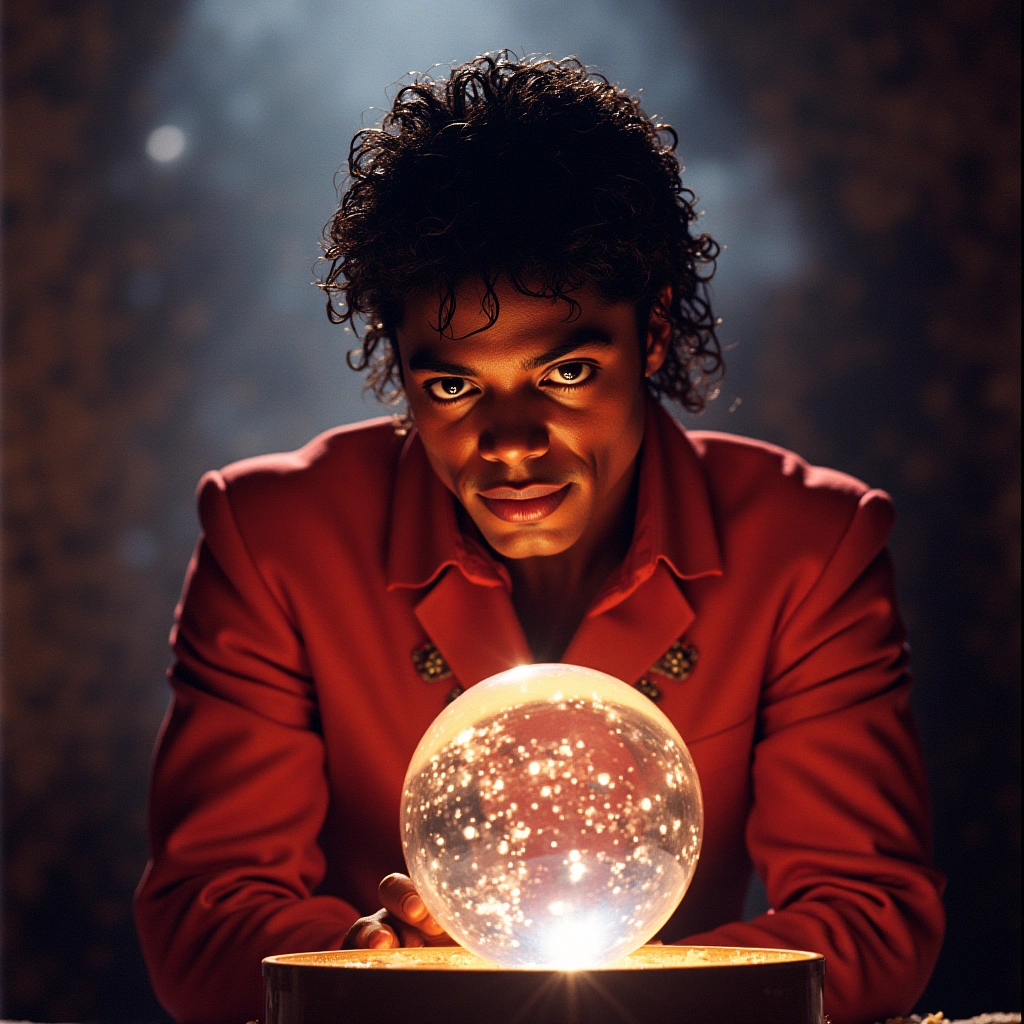
  • Throwback to 1985: Ebony Magazine’s Crystal Ball Prediction for Michael Jackson in 2000

    Throwback to 1985: Ebony Magazine’s Crystal Ball Prediction for Michael Jackson in 2000

    Ah, 1985! A time of big hair, neon colors, and the undeniable King of Pop, Michael Jackson. If you were alive during this era, you probably remember the magic that MJ brought to the music and dance world. But did you know that Ebony Magazine took a wild stab at predicting what our beloved Michael would look like in the year 2000? Buckle up, because this is a wild ride through a time capsule of nostalgia and some seriously questionable foresight!

    Let’s set the scene: The 80s were all about extravagant fashion, moonwalking, and, of course, the iconic “Thriller” music video that was more like a mini-movie than a song. Ebony Magazine, in its infinite wisdom, decided to peer into the future and give us a glimpse of what they thought MJ might look like in the new millennium. Spoiler alert: It was a mix of genius and sheer comedy!

    Fast forward to the year 2000, and let’s just say that Ebony’s predictions were, well, a bit off the mark. They envisioned a dapper MJ, complete with futuristic attire, perhaps soaring around in a hovercraft while singing his heart out. Instead, we got a man who had transformed both his appearance and his style into something that was, shall we say, uniquely… Michael. The world was treated to a Jackson who looked like he could be a character from a sci-fi film rather than the pop superstar we once knew.

    Now, let’s not throw shade at Ebony Magazine for their predictions; they were just trying to project the future through the lens of the time. After all, in the 80s, who could have imagined the radical changes in music, fashion, and even technology? I mean, the internet was still in its infancy, and people were confused by the concept of a “cell phone.” The thought of a “virtual” MJ was probably as far-fetched as flying cars!

    What’s even more entertaining is to think about how fans reacted to these predictions. Did they embrace the idea of a futuristic MJ or laugh it off as a creative misfire? It’s like those old ‘what will we wear in the year 2000’ predictions that suggested we’d all be sporting silver jumpsuits and flying around on jetpacks. Spoiler: we’re still waiting on that one, folks!

    In retrospect, the real beauty of this prediction lies in its ability to spark conversations about identity, fame, and the pressures of the music industry. Michael Jackson, for all his talent and charisma, was under immense scrutiny throughout his life. The transformations he underwent were not just about aesthetics; they were tied to his complex relationship with fame, race, and self-perception. It’s a topic that continues to fascinate and perplex fans and critics alike.

    So, here’s to Ebony Magazine’s bold attempt at future-gazing! While they may not have hit the nail on the head with their predictions, they certainly ignited a flame of curiosity about one of music’s most enigmatic figures. As we reminisce about the past, let’s take a moment to appreciate the impact of Michael Jackson—not just on music, but on culture as a whole. And remember, if anyone ever asks you what you think MJ might look like in 2040, just smile, nod, and say, “I can’t even predict what I’m having for dinner tonight!”

  • The Day a Freak Wave Decided to Play Tug-of-War with a Ship

    The Day a Freak Wave Decided to Play Tug-of-War with a Ship

    Ahoy there, fellow sea enthusiasts! Grab your life jackets and hold onto your hats because we’re diving deep into a maritime mystery that’ll make you question whether you should be booking that next cruise or just sticking to the kiddie pool. Yes, I’m talking about the infamous freak wave that recently decided to play tug-of-war with a ship—because why not, right?

    So, let’s set the scene: somewhere in the vast ocean, a ship was sailing along, probably blasting some sea shanties and dreaming of all the Instagram likes it would get once it reached port. But little did it know that the ocean had a surprise party planned. Enter the freak wave, an oceanic diva that decided to crash the party and steal the show.

    Now, for those of you who might be wondering, “What in the salty sea are freak waves?” let me break it down for you. These bad boys are not your average waves that you can ride on your surfboard. No, these are like the dark knights of the ocean, sometimes reaching heights of over 30 meters, which is taller than a 10-story building! Imagine a wave so big it could give King Kong a run for his money. It’s like the ocean is saying, “Surprise! Bet you didn’t see that coming!”

    In this particular incident, the ship was minding its own business when BAM! A freak wave came crashing down, probably laughing maniacally as it tossed the ship around like a toy in a bathtub. Experts say these waves can form due to a combination of weather conditions and ocean currents—basically, the ocean’s way of saying, “I’m having a bad hair day, and you’re going to pay for it.”

    Now, let’s get into the nitty-gritty of what happens when a freak wave hits. First off, it’s not just a gentle nudge; it’s more like being hit by a freight train full of water. The ship may tilt, sway, or even do an unexpected pirouette, which is not exactly the dance move you want to see when you’re out at sea. Passengers might find themselves wondering if they should be dining on the buffet or preparing for an emergency drill.

    Here’s the kicker: despite the chaos, ships are designed to withstand a lot. They’re like the bodybuilders of the ocean world, flexing their structural integrity even when faced with these monstrous waves. And let’s be honest, if a ship can survive a freak wave, it can probably handle your aunt’s cooking during the family reunion.

    But let’s not gloss over the aftermath. After the wave strikes, there’s a flurry of activity. Crew members are checking for damage, passengers are likely sharing their most dramatic “I almost died” stories, and the ocean? It’s just there, casually moving on as if nothing happened—like that friend who eats your fries and acts like it’s no big deal.

    So, what’s the takeaway from this nautical nonsense? First, the ocean is unpredictable, and if you’re thinking of sailing, maybe pack some Dramamine and a good sense of humor. Second, freak waves are a reminder that nature can throw a curveball (or a wave) when you least expect it. And finally, perhaps it’s time to embrace our inner landlubber and consider how many waves we REALLY want to ride.

    In conclusion, the tale of the freak wave and the ship is a reminder that life is full of surprises—some more terrifying than others. So next time you’re out on the water, keep your eyes peeled for those giant surprises, and maybe, just maybe, think twice before you challenge the ocean to a game of chicken.

  • From Literacy Boom to Lingua Franca Doom: The Rise and Fall of Hawaiian Education

    From Literacy Boom to Lingua Franca Doom: The Rise and Fall of Hawaiian Education

    Hey there, fellow knowledge seekers! Grab your favorite beverage because we’re diving into a story that’s as tangled as your headphones after a workout. Let’s talk about the wild ride of Hawaiian literacy and how a single law turned the tide quicker than a hula dancer at a luau.

    Picture this: It’s 1820, and Hawaii is a beautiful paradise, but when it comes to reading and writing, it’s about as useful as a surfboard in a snowstorm. Fast forward to 1834, and voilà! The literacy rate has skyrocketed to 91%! That’s right, folks, higher than the literacy rate in mainland United States at the time. It’s like the Hawaiian islands suddenly got a secret stash of books and decided to start a reading club.

    So, how did this happen? The answer lies in a mix of good intentions and some seriously dedicated missionaries who landed on the islands. They brought with them not just their faith but also a passion for education. They set up schools faster than you can say ‘Aloha,’ teaching the Hawaiian language and English. Imagine the locals, who were probably thinking, ‘Wait, you mean we can read about surfing techniques and coconut recipes? Sign me up!’

    However, as we know, every silver lining has a cloud. Enter 1896, a year that became the villain in this literacy fairy tale. A law was passed that effectively banned the Hawaiian language from schools, like someone dropped a big ol’ boulder on the top of that literacy mountain. Can you believe it? One law, poof! The Hawaiian language, which had flourished just years earlier, was sent to the back of the educational bus for the next 91 years.

    Now, I know what you’re thinking: ‘How could they do that?’ Well, let’s just say that the fear of cultural dilution mixed with a hefty dose of colonialism can lead to some pretty questionable decisions. It’s like trying to make a smoothie with kale and then being shocked that it tastes like a garden. Not exactly a recipe for success!

    During those dark years, the Hawaiian language took a hit harder than a sumo wrestler at a buffet. Schools focused on English, and the beautiful melodic tones of Hawaiian began to fade into the background like a forgotten mixtape. It’s kind of tragic when you think about it. Imagine trying to explain a Hawaiian sunset without the rich language that describes it. It’s like trying to describe pizza to someone who’s never tasted it. Just wrong on so many levels!

    But wait, here comes the plot twist! After 91 long years of linguistic silence, the Hawaiian language made a comeback in the 1980s, like a beloved TV show that gets a reboot. Thanks to the efforts of passionate advocates, Hawaiian immersion schools started popping up, and the language began to reclaim its rightful place in education and culture. It’s like watching a phoenix rise from the ashes, only this phoenix dances the hula and drinks piña coladas.

    So, what’s the takeaway from this rollercoaster of a history lesson? Well, it’s a reminder that language is more than just words; it’s a reflection of culture and identity. And while we can’t change the past, we can appreciate the vibrant tapestry that is Hawaiian culture today. Plus, who wouldn’t want to learn a language that can make the word ‘aloha’ mean both hello and goodbye? That’s efficiency right there!

    In conclusion, the story of Hawaiian literacy is a wild journey filled with triumphs and trials. Let’s raise a toast to the resilience of the Hawaiian people and the revival of their beautiful language. And remember, the next time you find yourself in Hawaii, don’t just soak in the sun—soak in the language too! Aloha!