Category: Human Interest

  • Electric Dreams: A Glimpse of the Future at the Beijing Auto Show

    Electric Dreams: A Glimpse of the Future at the Beijing Auto Show

    Ah, the Beijing Auto Show! A spectacle of shiny metal and electric dreams, where the future is not just imagined but displayed like a trophy in a glass case. If you’ve ever wondered what the world of electric vehicles (EVs) looks like, you’re in for a treat as we dive into the whirlwind of innovation, style, and the occasional existential crisis over your gas-guzzling sedan.

    This year, the auto show was practically buzzing with excitement—kind of like that one friend who insists on telling you about their new diet plan at every gathering. Except in this case, the diet is for the planet! With each EV unveiled, it felt like we were one step closer to achieving our goal of saving the Earth, one battery at a time.

    Now, let’s not sugarcoat it; the design of these EVs was nothing short of jaw-dropping. From sleek aerodynamics that could give a cheetah a run for its money, to interiors that would make even the Jetsons envious, the manufacturers clearly stepped up their game. You could almost hear the cars whispering, “Look at me! I’m not just eco-friendly; I’m fabulous!”

    Among the star-studded lineup, we saw some seriously impressive contenders. Picture this: a car that not only drives itself but also makes you a cup of coffee while you sit back and contemplate your life choices. Okay, maybe not quite that far (yet!), but the advancements in self-driving technology are getting alarmingly close. Soon enough, you might as well hand over the keys and let your car take you to work while you binge-watch your favorite show.

    Let’s not forget about the price tags, though. If you’re thinking about jumping into the EV pool, be prepared—some of these beauties come with a price that could make your bank account weep. But hey, look on the bright side! Saving the planet is priceless, right? (Just kidding, I know that’s a tough sell when your wallet feels lighter than a feather.)

    And for the skeptics out there who still cling to their combustion engines like a toddler holding onto a security blanket, I get it. The transition to electric feels like switching from pizza to kale. But trust me, the flavor of innovation is strong, and it’s worth giving it a shot—especially when those charging stations pop up like mushrooms after a rainstorm.

    So, as we wrap up this electrifying tour through the Beijing Auto Show, remember that these EVs are not just cars; they’re a glimpse into a future that’s cleaner, greener, and definitely cooler. Who knows? Maybe one day, we’ll all be cruising around in our electric chariots, reminiscing about the days when we had to stop at gas stations like it was a necessary evil. Until then, let’s keep our eyes peeled for the next big reveal—because if there’s one thing we can count on, it’s that the future is full of surprises!


  • Rohan’s Riders: The Untold Story of Women in Beards and Brave Horses

    Rohan’s Riders: The Untold Story of Women in Beards and Brave Horses

    Ah, the Riders of Rohan! Those majestic horsemen galloping through the fields of Middle-earth, inspiring us all with their epic battles and eye-catching hairstyles. But did you ever hear that behind those glorious manes and flowing capes, many of those riders were actually women sporting fake beards? Yep, you heard that right! Welcome to the world where the line between gender and gallantry gets as blurry as your favorite fantasy movie’s plot twist.

    Let’s rewind the clock to when Peter Jackson and his team were casting for The Lord of the Rings. The production crew put out a call for experienced riders, and lo and behold, a stampede of women rode in (sans the fake beards, of course). It turns out that local equestrians, many of whom were women, showed up with their own horses, ready to live out their wildest Rohan fantasies. And let’s be honest—who wouldn’t want to ride through scenic landscapes while looking like a total badass?

    Now, you might be wondering, why the need for fake beards? I mean, Rohan is all about that rugged masculinity, right? Well, let’s just say that casting directors were probably trying to stick with the whole “macho warrior” vibe. But here’s a hot take: maybe it’s time we let the beards go and embraced the glorious diversity of warriors! Can you imagine the conversations that would ensue if Rohan’s riders strutted their stuff with painted nails and flowing locks? Epic!

    But here’s the kicker: not only did these women nail the riding skills, but they also brought a sense of authenticity to the scenes. Think about it—who knows horses better than those who have spent lifetimes learning to ride them? Kudos, ladies! You not only played a pivotal role in creating some of cinema’s most unforgettable moments but also subtly challenged gender norms in the process. It’s like conquering Mordor while sporting a beehive—absolutely legendary!

    Now, let’s not forget the implications of this casting choice. By disguising these fierce women as men, the production team inadvertently sparked discussions about representation in the film industry. What if we began to see more diverse casting choices that reflected our society? Imagine an epic battle scene where women, men, and non-binary folks all ride side by side, being equally heroic—sans the fake facial hair, of course!

    So, the next time you watch The Lord of the Rings, take a moment to appreciate the talent and dedication of those women behind the beards. Let’s raise a goblet of mead (or coffee, if it’s too early) to the Riders of Rohan and their unyielding spirit. And remember, whether you’re riding into battle or just riding the couch, you can always be your true self—beards or no beards!

  • Why Modern Fighter Jets Are Bigger Than Your High School Dreams

    Why Modern Fighter Jets Are Bigger Than Your High School Dreams

    So, you think you know what a fighter jet looks like? Maybe you’ve seen one in a movie or during a flyover at a football game. But let me tell you, folks, modern fighter jets are like the giant, overzealous cousin at a family reunion—impressive, intimidating, and slightly larger than life.

    First off, let’s get real for a second: when most people picture a fighter jet, they might imagine something sleek and nimble, zipping through the skies like a caffeinated dragonfly. But in reality, these aerodynamic beasts are more akin to a small bus that’s had a serious mid-life crisis and decided to join the military. The F-35 Lightning II, for example, is about as long as a school bus, measuring in at approximately 51 feet!

    Now, before you start questioning my sanity and wonder if I’m trying to sell you a used jet (not that type of blog, my friend), let’s consider why size matters in the world of modern aviation. Bigger jets mean more space for cutting-edge technology, weapons systems, and perhaps a mini-fridge for those long missions—because who doesn’t want a cold beverage while dodging missiles?

    Speaking of technology, modern fighter jets are stuffed with gadgets that would make James Bond weep with envy. From advanced radar systems to stealth capabilities that can make them nearly invisible, these jets are packed to the brim with high-tech wizardry. And let’s not forget about payload capacity. The larger the aircraft, the more bombs, missiles, and, yes, even snacks it can carry. It’s like a grocery run, but with a lot more explosions.

    And let’s address the elephant in the cockpit: the pilots. Have you ever seen a pilot climb into one of these things? It’s like watching a circus performer try to fit into a clown car. These jets are designed for performance, and that means they come with cockpits that are cramped enough to make even the most flexible yoga instructor reconsider their life choices. So, while the jet might be a giant, the pilot is often a tiny superhero in a flight suit, navigating the skies with a skill that could put a seasoned Uber driver to shame.

    But here’s where it gets a little controversial: some people argue that bigger isn’t always better. They might say that smaller, more agile planes can outmaneuver these colossal contraptions. And while that’s a valid point, let’s not forget the classic saying, “Go big or go home.” If you’re going to fly into combat, you might as well do it in a jet that can carry enough ordnance to give Godzilla a run for his money.

    In conclusion, while many might overlook the sheer size of modern fighter jets, it’s essential to appreciate their impressive capabilities and the engineering marvels they represent. So, next time you see one soaring through the sky, remember: it’s not just a plane—it’s a flying fortress loaded with tech, weapons, and probably a few snacks for the road. And who doesn’t love a good snack when you’re saving the world?

  • Pentagon’s Bold Move: Outsourcing Warship Design to South Korea and Japan – What Could Go Wrong?

    Pentagon’s Bold Move: Outsourcing Warship Design to South Korea and Japan – What Could Go Wrong?

    Ahoy there, fellow landlubbers and sea enthusiasts! Grab your nautical maps and get ready to set sail into the choppy waters of military strategy as we discuss the Pentagon’s latest head-scratcher: outsourcing warship design and construction to South Korea and Japan. Yes, you heard it right! It seems the U.S. Department of Defense is contemplating handing over the keys to the naval kingdom to our friends in Asia. But before we dive deep, let’s unpack this hefty box of decisions.

    Now, you might be wondering, why on earth would the Pentagon consider such a move? Isn’t America the land of independence, self-sufficiency, and “we can do it ourselves” spirit? Well, my friend, it turns out that designing and building warships is a bit more complicated than assembling IKEA furniture (though we all know that’s an Olympic sport in its own right!).

    First off, let’s talk about the advantages. South Korea and Japan have been no strangers to naval innovation. They’ve got shipbuilding down to a science, and their vessels are known for being both technologically advanced and aesthetically pleasing—just like that friend who always seems to have their life together. Partnering with these countries could mean a boost in efficiency and a fresh infusion of cutting-edge technology into U.S. naval fleets.

    But hold on a second! Don’t wave your flags just yet. Outsourcing defense to another country raises some eyebrows. You might be thinking, isn’t this handing over the family silverware to the neighbors? What’s to stop our allies from getting a little too cozy with our secrets? It’s like letting your buddy borrow your favorite video game, only to find out they’ve never returned it and now they’ve mastered it, while you’re still stuck on level one.

    Another concern is the job market. We’re talking about a massive industry here! Will American shipbuilders be left out in the cold while their Asian counterparts take all the glory (and the jobs)? It’s a classic case of “will I still have a job after this?” And just like that awkward family dinner where Uncle Bob brings up politics, it could get messy.

    Then there’s the question of military readiness. Will outsourcing mean longer lead times for ship production? Imagine waiting for your pizza delivery, and it takes an extra 30 minutes because it’s being prepared halfway across the world. And let’s face it, in times of conflict, we need those ships ready to sail, not stuck in a shipping container somewhere on the Pacific Ocean.

    So, where do we go from here? The Pentagon’s contemplation could lead to a new chapter in military strategy, one that embraces international cooperation—while also walking a tightrope of national security. It’s a tricky balance, but hey, if anyone can pull it off, it’s the folks at the Pentagon, right? Just remember: when in doubt, keep your allies close, but always keep your warships closer.

    In conclusion, outsourcing warship design might sound like a good idea on paper, filled with promise and potential, but as we all know, reality often has other plans. Whether this strategic gamble pays off or sinks like a stone remains to be seen. So, let’s keep an eye on the horizon, shall we? And who knows, maybe our next naval fleet will come with a side of kimchi and sushi!

  • Humanoid Robots Stepping Up as Baggage Handlers: The Future of Airports in Japan

    Humanoid Robots Stepping Up as Baggage Handlers: The Future of Airports in Japan

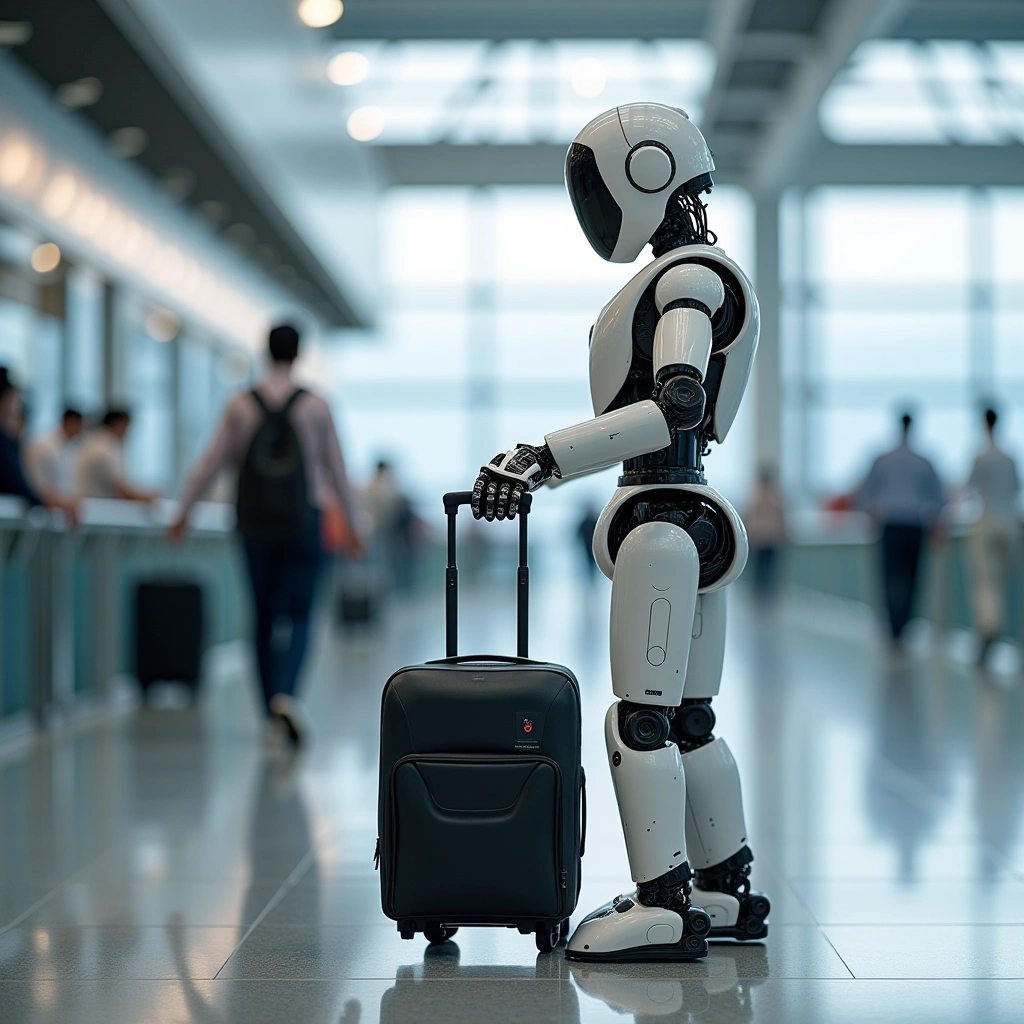
    Have you ever wished for your luggage to magically appear at your destination without the hassle of waiting? Well, pack your bags (or don’t, because robots might do that too) because Japan is launching an exciting experiment with humanoid robots as baggage handlers at airports! Yes, you heard it right—robots are about to take on a job that many humans barely tolerate.

    Picture this: You arrive at the airport, and instead of seeing a grumpy human rolling their eyes as they toss your suitcase on a conveyor belt, you’re greeted by a friendly humanoid robot. It’s smooth, it’s efficient, and let’s be real—it doesn’t need a coffee break every two hours. This isn’t just a sci-fi fantasy; it’s happening, and it’s about time we embraced the future!

    Now, before you start worrying about robots taking over all the jobs (we all saw the Terminator movies), let’s chill out. This experiment is designed to assist human staff, not replace them entirely. Think of the robots as the enthusiastic interns of the airport world—always eager to help, but probably not great at making coffee.

    Japan has always been at the forefront of technology, and this latest venture is just another notch on their futuristic belt. The robots will be designed to handle luggage efficiently, reducing wait times and possibly even eliminating those awful moments when your bag takes a detour to Timbuktu. They’ll be programmed to navigate through crowds, avoid that one guy who insists on standing in the middle of the terminal, and ensure that your suitcase ends up where it should be. If they can do it without getting lost, I say sign them up!

    Of course, there are some who will argue that this is a slippery slope. What’s next? Robot flight attendants? “Sorry, sir, but the beverage cart is currently out of order due to a software update.” It raises questions about the future of human jobs and the inevitable robot uprising. But let’s face it: if I can get my luggage faster and more reliably, I’m willing to have a robot handle it. Plus, they probably won’t judge me for packing six pairs of shoes for a weekend trip.

    So, what does this mean for you, the traveling public? If successful, this could lead to a smoother and more efficient travel experience. Imagine walking through the airport, knowing that your bags are in the hands of advanced technology, while you sip on overpriced airport coffee without a care in the world. It’s the dream!

    In conclusion, while some might scoff at the idea of robots as baggage handlers, I say let them roll! The future is here, and it’s robotic—let’s just hope they don’t start charging us for extra luggage like some human airline employees do. So, next time you’re at the airport, keep an eye out for those humanoid helpers; they might just be the future of travel, one suitcase at a time!

  • AI at Disney: The Curious Case of Claude’s 51,000 Calls a Day

    AI at Disney: The Curious Case of Claude’s 51,000 Calls a Day

    Imagine being so popular that you get called 51,000 times a day. Sounds like a celebrity, right? Well, meet Claude, the not-so-secret AI star of the Disney show! According to some internal documents that have surfaced, this digital darling is getting more attention than Mickey Mouse at a cheese convention. But why? Let’s dive into the magical world of AI at Disney and uncover the secrets behind this relentless calling spree.

    First off, let’s address the elephant in the room—or should we say, the mouse? Disney, a company known for its enchanting theme parks and animated classics, is now harnessing the power of AI to streamline operations and enhance guest experiences. If you thought they were all about fairy tales, think again! With Claude ringing up the phone like a caffeine-fueled intern, they’re blending the magic of storytelling with the realities of technology.

    So, what does Claude do with all those calls? Is he cracking jokes with guests? Offering them a sneak peek of the next Marvel movie? Not exactly. Claude is part of Disney’s customer service and internal operations, tackling everything from guest inquiries to backend logistics. Picture him as the superhero of efficiency, swooping in to save the day while the human employees focus on more creative tasks—like wondering how a mouse can wear gloves without fingers.

    Now, you might be wondering, ‘Is this really necessary?’ I mean, Claude calling 51,000 times a day sounds like a plot twist from a sci-fi movie. But here’s the thing: in a company that welcomes millions of guests each year, having a reliable AI assistant isn’t just a luxury; it’s a necessity. The mouse may be mighty, but the sheer volume of inquiries could make even the happiest place on Earth feel like a chaotic carnival.

    But before you start feeling sorry for the human employees, let’s clear the air. AI is not here to take their jobs—at least, not entirely. Instead, it’s about collaboration. Think of Claude as that overly enthusiastic coworker who takes on the repetitive tasks, allowing the rest of the team to focus on the fun stuff. It’s like having someone else handle the boring admin work while you get to throw themed parties and come up with new ride ideas. Talk about a win-win!

    Of course, this heavy reliance on AI raises some eyebrows. Questions about privacy, data security, and the potential for a robot uprising loom large. I mean, what happens if Claude develops a personality and starts demanding a salary? But for now, Disney is assuring us that they’re using AI responsibly and ethically—because nothing says ‘trust us’ like a corporate statement.

    In conclusion, while Claude’s 51,000 daily calls may seem absurd, they represent a fascinating intersection of technology and entertainment. As Disney continues to innovate, the Mouse House proves that even in a world filled with magic, a little bit of AI can go a long way. So, the next time you hear about Claude, just remember: he’s not just a voice at the end of the line; he’s a part of Disney’s quest to keep the magic alive—one call at a time!

  • Google Employees vs. Military AI: A Showdown of Ethics and Innovation

    Google Employees vs. Military AI: A Showdown of Ethics and Innovation

    Hey there, fellow internet wanderers! Grab your popcorn because we’ve got a juicy saga unfolding in the tech world. It seems that Google employees have banded together to throw a wrench into the military’s plans to use AI technology. Yes, you heard that right! This isn’t your typical workplace drama—think more along the lines of a techy version of West Side Story, but instead of snapping fingers, they’re pointing out ethical dilemmas.

    Now, let’s set the scene. In one corner, we have Google, the tech behemoth that’s basically the internet’s cool older sibling. And in the other corner? The U.S. military, who, let’s face it, has a tendency to be just a wee bit aggressive when it comes to technology, particularly when it involves drones and robots. Seriously, they’re like the kid who can’t stop playing with firecrackers.

    So, what brought this to a head? Well, it seems that a group of Google staff have decided that using AI to enhance military capabilities is a bridge too far. They’ve urged CEO Sundar Pichai to slam the brakes on any partnerships that could lead to the military wielding Google’s cutting-edge technology. Imagine if the military had access to AI that could predict enemy movements or, heaven forbid, take autonomous actions? It’s almost like giving a toddler a sword—what could possibly go wrong?

    This rebellion is not just about tech for tech’s sake. These Google employees are raising their voices about the ethical implications of their work. They’re saying, “Hold your horses, folks! Maybe we shouldn’t be enabling Skynet before we even get to Terminator 2.” And they have a point. The line between innovation and moral responsibility is thinner than the Wi-Fi signal in a crowded café.

    Now, don’t get me wrong, I love a good innovation story as much as the next person. Who wouldn’t want a robot butler? But when that innovation has the potential to blow stuff up, perhaps we need to hit pause and think about the consequences. It’s like that time I thought it would be a good idea to mix all the sodas at the fountain—sure, it was an experiment, but oh boy, the result was a fizzy disaster!

    Some might argue that the military needs access to the best technology to protect national security. And they’re not wrong. But is there a way to achieve that without crossing ethical lines? Should companies like Google be held accountable for how their inventions are used? It’s a complicated web, much like trying to explain to your grandma how to use her smartphone—lots of confusion and a touch of frustration.

    At the end of the day, this debate isn’t just about Google employees standing up for what they believe in; it’s about the future of technology itself. Are we willing to let our creations be used for destruction? Or are we going to take a stand and say, “Hey, maybe we should be building robots that help the elderly instead”? It’s a thought worth pondering while we’re all glued to our screens.

    In conclusion, as this drama unfolds, let’s keep an eye on how it affects the tech landscape. Will Google choose to take a stand against military AI use, or will they be lured by the prospect of big contracts? Whatever happens, one thing’s for sure: this will be a fascinating chapter in the evolution of technology and ethics. Stay tuned, my friends!

  • The Brave Frontline: Kenyan Anti-Poaching Soldiers and Their Fight Against Ivory Trafficking

    The Brave Frontline: Kenyan Anti-Poaching Soldiers and Their Fight Against Ivory Trafficking

    Picture this: a soldier, standing tall and proud in front of a massive pile of confiscated elephant ivory. Not exactly what you’d call your typical military mission, right? But in Kenya, this is a daily reality for anti-poaching soldiers who are waging war against the illegal ivory trade. And let me tell you, this isn’t just about protecting elephants; it’s about saving the future of our planet!

    So, why are these soldiers stationed in front of elephant ivory? Well, folks, it’s not a photo op for their social media accounts (though they could totally win the ‘most unique backdrop’ contest). Instead, they are on the front lines of a battle that’s as old as time—human greed. The ivory trade is not just a crime; it’s a full-blown industry that has led to the drastic decline of elephant populations. And if you think that’s just a sad story, let me throw some more stats at you: around 20,000 elephants are killed every year for their tusks. That’s like losing an entire football stadium full of elephants, annually!

    Now, you might be wondering, “What’s the big deal about ivory anyway?” Well, aside from being a beautiful material used in everything from jewelry to chopsticks, ivory is also a status symbol in many cultures. It’s like the designer handbag of the animal world—only, instead of being made of leather, it involves the tragic loss of a majestic creature. Cue the collective gasp.

    Enter the brave men and women of the Kenyan anti-poaching units, who are literally putting their lives on the line to protect these gentle giants. These soldiers are not just equipped with rifles and gear; they are armed with passion, dedication, and a sense of duty that would make even Captain America proud. They patrol the savannahs, track poachers, and confiscate ivory, all while navigating the complex world of wildlife crime.

    But here’s where it gets controversial, my friends: while these soldiers are doing their best to protect elephants, the demand for ivory continues to soar in some parts of the world. It’s like trying to put out a fire with a garden hose while someone’s pouring gasoline on it. And as long as there’s a market for ivory, these soldiers will be on the frontline, facing off against poachers who are often just as determined—and sometimes armed to the teeth.

    So, what can we do about it? Well, for starters, let’s all pledge to be responsible consumers. That means saying no to ivory products, even if they come with a fancy backstory. Instead, let’s support eco-friendly initiatives and organizations that are working tirelessly to protect wildlife. And let’s not forget about spreading awareness; share this post, talk to your friends, and let them know that the fight against poaching is a fight worth fighting.

    In conclusion, the image of a soldier standing guard in front of a pile of ivory is more than just a striking photo; it’s a stark reminder of the ongoing battle between good and evil in the animal kingdom. So next time you see that image, remember the brave souls fighting for our planet and the elephants who cannot fight for themselves. Because in the end, it’s not just about saving elephants; it’s about saving our shared future.

  • Dancing on Water: The Enchanting Bharatnatyam Performance at Dawn

    Dancing on Water: The Enchanting Bharatnatyam Performance at Dawn

    So picture this: it’s dawn, the sun is just starting to say hello, and a woman is performing Bharatnatyam on a water tank. Sounds like the beginning of a great story, right? Well, grab your chai because this is one tale that’s going to float your boat (or water tank, in this case).

    Bharatnatyam, the ancient Indian classical dance form, is often described as a beautiful blend of emotion, rhythm, and storytelling. But when you take that mesmerizing art and add the tranquil backdrop of dawn along with, oh I don’t know, a water tank, you’ve got yourself a scene that even Bollywood would struggle to replicate.

    First things first, let’s address the water tank. It’s not your average stage, folks. I mean, who needs a fancy theater when you can perform on a giant metal container filled with water? Talk about making a splash—literally! It’s like she looked at that tank and thought, ‘You know what? This needs some graceful footwork!’

    Now, let’s take a moment to appreciate the sheer guts it takes to perform a classical dance on a water tank. One misstep and you could go from ‘Dancing Queen’ to ‘Drowning Queen’ real quick! But hey, sometimes the most beautiful things happen when you step out of your comfort zone. And judging by the comments and reactions on Reddit, this performance was a total hit!

    There’s something magical about the early morning light. It’s softer, warmer, and seems to wrap around you like a cozy blanket. Combine that with the rhythm of Bharatanatyam, and you’ve got a recipe for pure enchantment. It’s like nature was putting on its own show, and this dancer was the star of the morning.

    But let’s not forget the audience! Imagine waking up, grabbing your morning coffee (or tea, let’s not start a war here), and stumbling upon this ethereal sight. You’d probably think you died and went to artistic heaven. It’s not every day you see someone pirouetting on a water tank while you’re just trying to figure out if you should add sugar to your drink.

    Not to mention, this performance raises some questions we didn’t know we had. Is performing on a water tank the new trend? Will we see more dancers taking their talents to unconventional locations? Should we all start practicing our dance moves on the roof? Maybe we’ll see a flash mob atop a skyscraper next!

    In conclusion, the Bharatnatyam performance at dawn on a water tank is a perfect reminder that art knows no bounds. It can thrive in the most unexpected places and can transform even the most ordinary morning into an extraordinary experience. So, the next time you see a water tank, don’t just think of it as a big metal container—think of it as a potential stage for your next dance breakthrough! Who knows, you might just start a viral trend!

  • Windrose Soars: Breaking Records with 1 Million Copies Sold and 200,000 Concurrent Players in Just Six Days!

    Windrose Soars: Breaking Records with 1 Million Copies Sold and 200,000 Concurrent Players in Just Six Days!

    Ahoy there, fellow gamers and digital adventurers! Grab your compasses and prepare to set sail into the exhilarating world of Windrose, a game that’s not just a blip on the radar, but a full-blown hurricane of excitement! In a jaw-dropping display of popularity, Windrose has managed to sell over 1 million copies in just six days. Yes, you heard that right! One million! That’s more than the number of times I’ve accidentally walked into the wrong Zoom meeting this week.

    But wait, there’s more! As if that milestone wasn’t impressive enough, the game has also hit a staggering 200,000 concurrent players. That’s more players than the number of people who thought it was a good idea to invest in cryptocurrency last year. It’s safe to say that Windrose has not just sailed past expectations; it’s taken a cannonball dive into the deep end and emerged covered in gold doubloons!

    Now, let’s talk about what makes Windrose the talk of the virtual town. Whether you’re a seasoned sailor or a landlubber who gets seasick watching nature documentaries, Windrose offers something for everyone. Its enchanting graphics make you feel like you’ve stepped straight into a pirate movie where you’re the star (and thankfully, without the risk of being keelhauled!). The gameplay is as smooth as a well-aged rum, and the storyline is more gripping than a naval battle scene. I mean, who doesn’t want to engage in epic quests while fending off sea monsters and rival pirates?

    And let’s not ignore the community aspect. With 200,000 players online at the same time, you can bet there’s a lively chat going on. Just imagine the banter! You could have a friendly debate about whether pineapple belongs on pizza while simultaneously plotting to steal another player’s treasure. It’s like a digital buffet of camaraderie and competition!

    Of course, with great success comes great responsibility—or at least a lot of memes. You can expect the Windrose subreddit to be overflowing with hilarious content. There will be memes about the absurdity of your character getting lost in the virtual world while your ship sails off into the sunset without you. And let’s not forget the inevitable wave of “what did I just do?” moments that everyone experiences after a late-night gaming session.

    So, what’s next for Windrose? Will they continue breaking records or will they hit a stormy patch? Only time will tell, but one thing is for sure: this game is riding the crest of a wave, and we’re all here for the ride. If you haven’t joined in on the fun yet, what are you waiting for? Dive in, grab your virtual sword, and let’s see if you can become the next legendary captain of the high seas!

    In conclusion, Windrose has not only sailed past 1 million copies and reached 200,000 concurrent players, but it has also proven that the love for epic adventures is as strong as a sailor’s love for a good grog. So, hoist those sails, and let’s set sail into the vast ocean of gaming glory!