Category: Human Interest

  • Another Day, Another Airstrike: The Reality of Conflict in Gaza

    Another Day, Another Airstrike: The Reality of Conflict in Gaza

    The Gaza war is an armed conflict in the Gaza Strip and Israel, fought as part of the unresolved Israeli–Palestinian and Gaza–Israel conflicts. The war began on 7 October 2023, when Palestinian militant group Hamas led an attack on Israel, in which 1,195 Israelis and foreign nationals were …

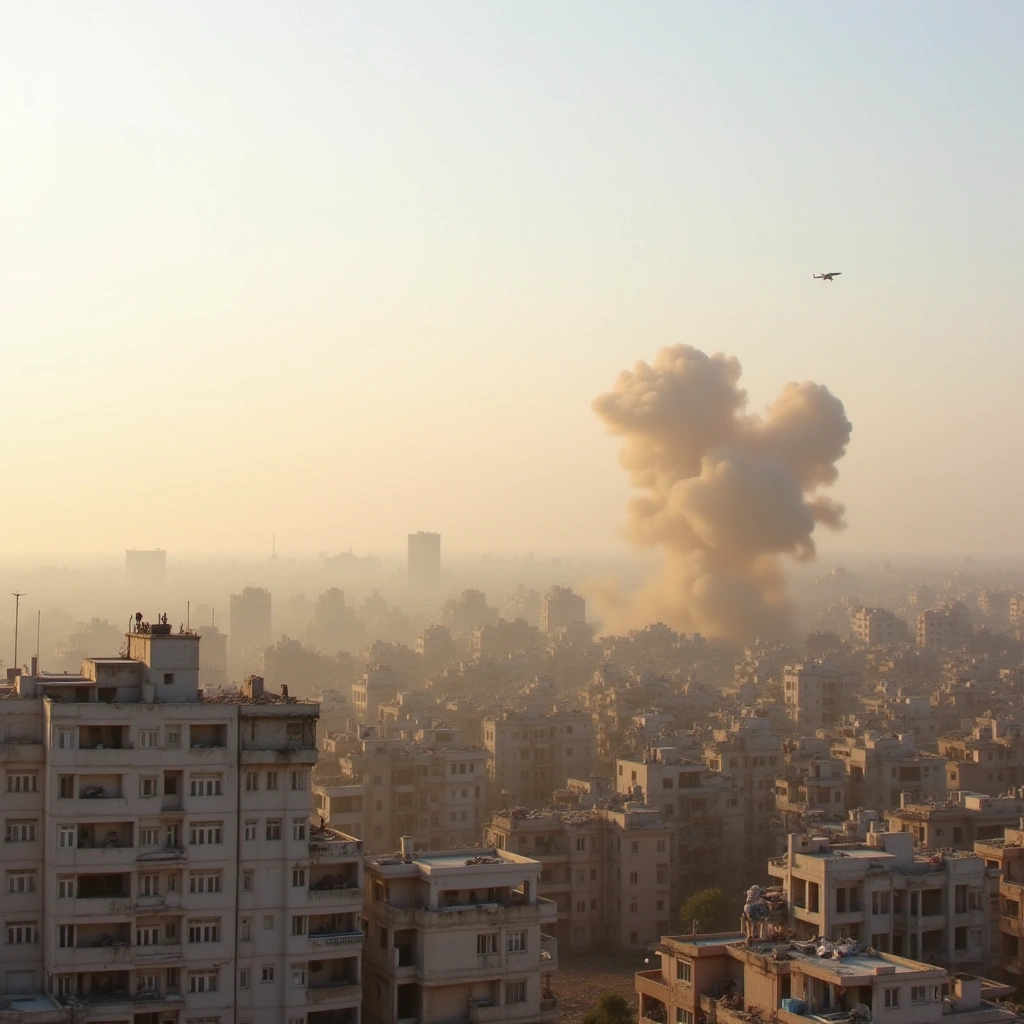
    In the ongoing saga of conflict in the Middle East, another airstrike has made headlines, and unfortunately, it’s yet another reminder of the harrowing reality faced by civilians in conflict zones. On Wednesday, an Israeli airstrike in Gaza claimed the lives of two individuals and left two others injured. The strike took place in western Khan Younis, where a vehicle was targeted, reportedly carrying Osama Abu Khater and Mohammad Abu Elwan. Now, if you’re thinking, ‘What did they do to deserve this?’ you’re not alone. It’s a question that often lingers in the air—like the smoke from the aftermath of such strikes.

    Israel has insisted that the strike aimed at a Hamas finance chief, which sounds very official and important. But let’s be honest, in the chaos of warfare, such claims often come with more questions than answers. Why did the lives of two individuals have to be lost in the pursuit of what might be a strategic target? And why does it seem like every week we’re reading about similar incidents?

    The two men who met their fate were not combatants; they were people—likely with families, dreams, and plans for tomorrow that were abruptly cut short. And while Israel may have had its reasons, it’s hard to shake the feeling that too often, the collateral damage doesn’t get the attention it deserves. The world seems to be desensitized to the ongoing violence, as if it’s just another day at the office.

    Reports indicate that neither of the deceased men were claimed by any Palestinian militant group, which adds another layer of complexity to the situation. It’s like a bad episode of a reality show where the drama just keeps escalating, and you’re left wondering who’s actually in control of the narrative. In a region where tensions run high, the loss of life feels all too common, and the cycle of violence continues.

    As we scroll through our news feeds, it’s easy to become numb to the headlines. We read them, we sigh, and then we move on to the next trending topic. Maybe it’s a cute cat video or a celebrity scandal—because who doesn’t want to escape the harsh realities of the world? But let’s take a moment to reflect on what’s happening in Gaza. While we’re binge-watching our favorite shows, people are living in fear, uncertainty, and despair, often with no clear end in sight.

    So, what can we do? Well, for starters, we can try to stay informed. Understanding the complexities of the Israeli-Palestinian conflict is no small feat, but it’s necessary if we want to engage in meaningful conversations about it. We can advocate for peace, support humanitarian efforts, and remember that behind every headline, there are real people affected by the decisions made by those in power.

    As we digest this latest news, let’s not forget the human cost of conflict. It’s easy to get lost in the politics and the strategies, but at the end of the day, it’s about people—and it’s high time we start treating it as such. After all, the world could use a bit more empathy and a lot less violence. Here’s hoping for a future where airstrikes are nothing more than a distant memory, and peace becomes the new norm.


    Inspired by: “Israeli airstrike kills two people in Gaza, medics say” (r/News)

  • Trump’s Board of Peace: A $2.45 Billion Plan for Gaza – What’s Cooking?

    Trump’s Board of Peace: A $2.45 Billion Plan for Gaza – What’s Cooking?

    … Nine Board of Peace member countries have agreed to contribute more than $7 billion to the Gaza rebuilding effort , President Trump announced Thursday.Credit…Saher Alghorra for The New York Times

    Ah, the Board of Peace, a name that conjures visions of doves, olive branches, and maybe even a few awkward group hugs. This week, they’re unveiling a six-month, $2.45 billion recovery plan for Gaza. Yes, you heard that right—$2.45 billion! That’s not just pocket change; that’s a small fortune that could make even Scrooge McDuck do a double take.

    So, why does this matter, you ask? Well, this grand proposal is touted as one of the most comprehensive roadmaps for post-war reconstruction in Gaza. It’s the result of a year-long effort by dozens of people from the Board of Peace (which, by the way, has 28 member countries—talk about a dinner party) and the Palestinian technocratic government. You can’t just throw money at a problem and hope it goes away, right?

    The plan includes 66 projects, and it’s not just about slapping a coat of paint on the ruins. We’re talking temporary housing, rubble removal, hospital repairs, and the deployment of a multinational security force. You know, all the fun stuff! One official even said, “The plan shows how to stand up a government from nothing, an economy from shambles, and a territory from disaster.” Sounds like a tall order, but hey, we’re all about optimism here!

    Now, let’s get real for a second. For this plan to actually work, the Board of Peace needs a little cooperation from two rather stubborn parties: Israel and Hamas. The Netanyahu government has been a bit hesitant to jump on board, mainly due to domestic political reasons (because what’s a good plan without some political drama, right?). And while Hamas has agreed in principle to disarm, they haven’t quite put that into action yet. It’s a bit like saying you’ll go to the gym but then binge-watch your favorite show instead—easy to say, harder to do.

    The Board hopes that after the Israeli elections on October 27, which are likely to leave us with a political stalemate (because why not add a little suspense?), the recovery process can finally kick off. But let’s be honest, if we’re expecting a clear winner, we might need to rethink our optimism.

    Now, onto the numbers, because who doesn’t love a good breakdown? The damages in Gaza are estimated at a staggering $35.2 billion, and full recovery will need about $71.4 billion over the next decade. The plan divides its 66 projects into six areas: infrastructure development, human development, economic acceleration, digital transformation, legal affairs, and peace and security. Infrastructure takes the lion’s share, with about $1 billion allocated, which includes funds for temporary shelters, rubble clearance, hospital rehabilitation, and, of course, repairing that road network that’s seen better days.

    Security projects alone account for roughly $885 million, which is a hefty chunk of change. They’re planning to set up a permanent site in Rafah for an International Stabilization Force, among other things. And here’s a fun tidbit: $20 million is earmarked for a weapons buy-back program. So, if you’ve got an old bazooka lying around, now’s your chance to cash in!

    But the plan isn’t just about emergency relief; it aims to lay the groundwork for a functioning Palestinian administration and get Gaza’s private sector up and running again. Think digital ID systems, electronic health and education systems, and grants to restart small businesses. Because who wouldn’t want to launch a startup in a war-torn area?

    As for the funding, the Board of Peace and the Palestinian government haven’t secured the entire $2.45 billion yet. But they’re confident that once the political hurdles are cleared, donor countries will step up. Because nothing screams “trust me” like a multi-billion dollar promise dependent on political cooperation.

    Representatives from 35 countries are expected to attend the briefing, including some big names from the EU. And yes, Jared Kushner will be there, probably with a PowerPoint presentation that’s as flashy as a Vegas show.

    In conclusion, while the $2.45 billion recovery plan for Gaza sounds ambitious and hopeful, the road ahead is anything but smooth. It’s a mix of optimism, political maneuvering, and a dash of reality check. So, let’s keep our fingers crossed and hope for the best—because we could all use a little peace and prosperity, right?

    Now, who’s bringing the doves for that group hug?


    Inspired by: “Scoop: Trump’s Board of Peace to unveil $2.45 billion Gaza recovery plan” (r/News)

  • The Great Coldcard Rescue: How Whitehats Saved the Day

    The Great Coldcard Rescue: How Whitehats Saved the Day

    White hat hackers beat Coldcard attackers to 52.37 BTC, sweeping vulnerable coins into a trust created to return funds to victims .

    In the wild world of cryptocurrency, where fortunes can change faster than your Wi-Fi connection drops, it’s nice to see some heroes step up when things go south. Recently, it was reported that approximately 40% of the outflows related to the second wave of attacks on Coldcard wallets were due to the efforts of whitehat hackers. Yes, you heard that right—there are actual people out there who don’t just want to drain your wallet but rather rescue it. It’s like the superhero movie we didn’t know we needed.

    According to Galaxy Digital’s Alex Thorn, these whitehats were busy at work, saving the day while the rest of us were probably binge-watching another season of whatever show is trending on Netflix. In a remarkable act of digital heroism, a transaction involving a hefty 52.37 BTC was sent to a new address in block 967,948. This wasn’t just a random transfer; it included an OP_RETURN note directing users to “claim:cryptorecoverytrust dot com.” So, if you’re wondering where to go for your crypto rescue mission, now you know.

    Now, let’s break down what this all means. The 52.37 BTC represents roughly 2.8% of the total exploited funds tracked by Galaxy. That’s a significant chunk of change saved from the clutches of malicious actors. To put that into perspective, if you were to buy a decent used car with that amount, you’d probably end up with something that doesn’t require a mechanic’s degree to operate. So, kudos to the whitehats for not only saving funds but also for potentially saving the day for some very anxious wallet owners.

    But wait, there’s more! The term ‘whitehat’ might sound like something from a Western movie, but in the tech world, it refers to ethical hackers who use their skills for good. They’re the ones who sit in front of their computers, probably wearing pajamas and sipping coffee, while the rest of us are clueless about the impending doom of our crypto assets. They’re like the Robin Hoods of the digital age, taking back from the bad guys and giving back to the good.

    So, why should we care about these whitehat rescues? Well, for one, it gives us a glimmer of hope in an otherwise chaotic crypto landscape. With hacks and scams lurking around every corner, knowing that there are people dedicated to protecting our funds is somewhat reassuring. It’s like having a security blanket, except this one is made of code and algorithms.

    In conclusion, while the crypto world can often feel like the Wild West, with cowboys and outlaws battling it out, the emergence of whitehats brings a sense of balance. They remind us that not everyone is out to get us, and some are genuinely interested in keeping our assets safe. So, the next time you hear about a hack, remember that there are still champions out there fighting for justice in the digital realm. And who knows? Maybe one day we’ll all be able to say, “I was saved by a whitehat!” Now, that’s a story worth telling at the next crypto meetup.


    Inspired by: “About 40% of Coldcard’s Wave 2 outflows were whitehat rescues, Galaxy says” (r/Crypto)

  • Banks Open Sunday: Your Last Chance Before the Great Three-Day Shutdown

    Banks Open Sunday: Your Last Chance Before the Great Three-Day Shutdown

    No. Many branches keep Saturday-morning hours; almost all are closed Sunday .

    Well, folks, it seems like your bank has decided to throw a little party this Sunday, September 27! Yes, you heard that right—your local bank branch will be open for business. Why? Because they want to make sure you can access essential services before a nationwide strike hits from September 28 to 30. And let’s face it, nobody wants to be left high and dry without access to their money or a friendly teller to roll their eyes at.

    The United Forum of Bank Unions is gearing up for this strike, and it’s not just a whimsical day off; they have some serious demands on the table. Among them, the call for five-day banking (imagine that, a life where you don’t have to rush to the bank on a Saturday) and improved pension schemes for employees. Because let’s be honest, who wouldn’t want more money to lounge around in their golden years?

    Now, if you’re wondering how this affects you, here’s the breakdown: with the strike right after a weekend, you could be facing a five-day disruption in banking services. That’s right, five days! Five whole days of trying to remember your online banking password while you stare at your empty wallet. So, if you need to deposit that birthday check from Aunt Edna or withdraw cash for your weekend plans, Sunday is your last chance.

    This sudden Sunday opening is a rare gift from the banking gods, so make sure you take advantage of it. You might even want to grab a coffee and make a day out of it—because nothing says ‘fun day’ like standing in line at the bank. But hey, at least you’ll have a story to tell about how you braved the banking wilderness before the great shutdown.

    In summary, mark your calendars: Sunday is the day to get your banking affairs in order. Don’t be the person who forgets and ends up staring hopelessly at their empty bank account come Monday. And remember, while the banks are open, they’re also likely bracing themselves for the complaints and queries that will flood in from customers who didn’t quite get the memo about the strike. So, go forth and bank wisely! You’ve got this.


    Inspired by: “Banks to open on Sunday ahead of 3-day nationwide strike: What customers should know” (r/World)

  • S&P 500 Equal Weight vs S&P 500: The Widening Gap Explained

    S&P 500 Equal Weight vs S&P 500: The Widening Gap Explained

    For investors, the key point is simple: RSP vs SPY is also a market-breadth signal. A widening performance gap can show whether the S&P 500 rally is broad or increasingly dependent on its largest companies .

    Let’s talk about the S&P 500—everyone’s favorite stock market barometer that’s as popular as cat videos on the internet. But today, we’re diving into a comparison that might make your head spin faster than a stock ticker on a trading floor: the S&P 500 Equal Weight versus the traditional S&P 500. Spoiler alert: they don’t always play nicely together, and the gap between their performances is getting wider.

    First off, what’s the deal with the S&P 500? It’s essentially a collection of 500 of the largest publicly traded companies in the U.S. If you’ve ever wondered why your portfolio looks like a rollercoaster ride, you can thank the S&P 500 for that. The catch is that this index is market-cap weighted, meaning that the larger companies have a bigger influence on the index’s performance. Think of it like a group project in school where one kid does all the work while the rest of the team enjoys pizza.

    Now, enter the S&P 500 Equal Weight Index, which gives each of those 500 companies an equal slice of the pie, regardless of their size. It’s like giving everyone in the group project an equal say, whether they contributed one line of code or the entire project. This method is supposed to lead to more balanced performance, as it prevents a couple of massive companies from skewing the results.

    So, why does this matter? Well, as of September 2026, the top 10 companies in the S&P 500 represented a whopping 37.8% of the index. That’s nearly 40% of your investment tied up in just ten companies. If those companies are doing great, fantastic! But if they hit a rough patch, good luck to the rest of your portfolio.

    The widening gap between these two indices is partly due to the fact that the biggest players—think tech giants like Apple and Microsoft—are often the ones driving the market higher. Meanwhile, the smaller companies that make up the equal-weight index might not be keeping pace. It’s like watching a race where the big dogs are sprinting while the smaller ones are still trying to figure out how to tie their shoelaces.

    In recent years, this gap has become more pronounced. While the S&P 500 has been cruising along, propelled by the performance of those tech behemoths, the Equal Weight Index has been playing catch-up. Some analysts argue that this could be a sign of a potential market correction. Others say it’s just a natural ebb and flow of the market. Either way, it’s a reminder that investing isn’t just about following the crowd. Sometimes, it’s about thinking for yourself—like bringing your own lunch to a potluck.

    So what does this mean for investors? If you’re the type who likes to put all your eggs in one basket (which, let’s be honest, is a terrible idea), the traditional S&P 500 might seem appealing. But if you’re looking for a more balanced approach and want to avoid the risk of being overly reliant on a handful of companies, the Equal Weight Index could be your jam.

    In conclusion, the widening gap between the S&P 500 and its Equal Weight counterpart is a fascinating tale of two indices. One is led by the big players, while the other tries to give everyone a fair shot. As always, the best investment strategy is to do your homework, keep your options open, and maybe, just maybe, avoid putting all your eggs in one basket. Unless, of course, you like omelets. In that case, go nuts!


    Inspired by: “S&P 500 Equal Weight vs S&P 500: The Widening Gap” (r/Crypto)

  • Lights, Camera, Action: Doha Film Festival Kicks Off with ‘The Station’

    Lights, Camera, Action: Doha Film Festival Kicks Off with ‘The Station’

    Qatar's Doha Film Festival To Open With Yemeni Female-Focused Drama ‘The Station’

    Get ready, film buffs! The Doha Film Festival is back for its second edition, and it’s kicking off with a bang—or perhaps a dramatic petrol pump? This year, the spotlight shines on ‘The Station,’ a gripping drama directed by the talented Yemeni-Scottish filmmaker Sara Ishaq. Now, I know what you’re thinking: a film about a women-only petrol station in Yemen during a civil war? Sounds like a plot twist in a soap opera, but trust me, it’s way more profound.

    The film, which had its grand premiere at Cannes Critics’ Week (yes, that Cannes), follows the story of Layal, a fierce woman who runs this petrol station amidst the chaos of war. Talk about multitasking! Not only does she manage a business in a war zone, but she’s also challenging societal norms in a country where women often have to fight for their rights—literally and figuratively. Layal’s journey is a testament to resilience and courage, proving that even in the direst situations, women can take charge and make a difference.

    Now, you might be wondering why a film festival in Qatar is opening with a Yemeni story. Well, it’s all about celebrating diverse voices and narratives that often get overshadowed in mainstream cinema. The Doha Film Festival aims to give a platform to these stories, and what better way to do that than with a film that not only highlights female strength but also sheds light on the ongoing struggles in Yemen? Plus, it gives us a chance to sip overpriced coffee while discussing the heavy themes of war and empowerment—what’s not to love?

    Mark your calendars, folks! The festival runs from November 19 to 27, and if you’re in Qatar or fancy a spontaneous trip, this is one event you won’t want to miss. Expect a lineup of films that will make you laugh, cry, and question your life choices—because let’s face it, who doesn’t love a good existential crisis served with popcorn?

    So, whether you’re a die-hard cinephile or just someone who enjoys a good story, ‘The Station’ is sure to be a highlight of this year’s festival. And who knows? You might just walk away with a new perspective on life, or at the very least, a decent Instagram story. Let’s support these incredible filmmakers who dare to tell the stories that matter, and maybe, just maybe, we’ll all leave the festival a little more enlightened (and slightly more pretentious).

    In conclusion, let’s raise a toast (or a soda) to Sara Ishaq and the brave women like Layal who inspire us all. Here’s to the power of film, the strength of women, and the hope that someday we’ll all have a petrol station of our own—preferably one that’s drama-free!


    Inspired by: “Qatar’s Doha Film Festival To Open With Yemeni Female-Focused Drama ‘The Station’” (r/Entertainment)

  • The Houthi Surprise: Yemen’s Rebels Take Center Stage with a Little Help from Their Friends

    The Houthi Surprise: Yemen’s Rebels Take Center Stage with a Little Help from Their Friends

    The Houthis' lightning advance across the southern reaches of the Tihamah – Yemen's arid coastal plain – appears to have taken most observers by surprise. Until recently, the anti-Houthi coalition known as the National Resistance held …

    Well, folks, it seems like Yemen’s Houthi rebels decided to shake things up a bit in the Middle East, and boy, did they do it with a bang! In a move that could make even the most seasoned military strategists raise an eyebrow, the Houthis managed to seize Yemen’s Red Sea coast from pro-government forces in less than 48 hours. Yes, you heard that right – 48 hours! That’s less time than it takes to binge-watch a season of your favorite show on Netflix.

    Now, let’s talk about the elephant in the room – or rather, the elephant in the Middle East. Reports suggest that the Iranian Revolutionary Guard advisors were not just sitting on the sidelines sipping tea while this was happening. No, they were reportedly on the ground, directing the offensive. It’s like they were the coaches of a very intense game of geopolitical football, calling plays and probably making some questionable decisions along the way. This intervention marks a significant escalation in the ongoing civil war that has been playing out in Yemen since 2014, and it’s safe to say it’s not just a minor skirmish.

    The implications of this sudden blitz are massive. The Houthis’ advance is not just a tactical win for them; it’s a major land grab that they haven’t seen in years. Think of it as a really aggressive game of Monopoly, but instead of just taking Boardwalk and Park Place, they’ve snagged the entire hotel chain.

    As if that wasn’t enough to raise some eyebrows in Washington and beyond, the closure of a key Saudi pipeline is also on the table. Now, if you’re not familiar with oil pipelines, let’s just say that closing one is akin to shutting down a major artery in the body. It doesn’t just affect the immediate area; it has ripple effects that can be felt far and wide. And yes, that probably includes your gas prices, so you might want to keep an eye on that.

    So, what does this all mean for U.S. and allied interests in the region? Well, let’s just say that the geopolitical chessboard just got a little more complicated. With Iran stepping in to lend a hand (or should we say a tactical playbook?), the stakes are higher than ever. It’s like a high-stakes poker game where everyone is bluffing, but no one really knows what cards they’re holding.

    In conclusion, Yemen’s Houthi rebels have pulled off a stunning move that has not only changed the dynamics of their civil war but has also sent shockwaves throughout the Middle East. With Iranian advisors in the mix, it looks like this isn’t just a local conflict anymore; it’s a full-blown regional affair. So, grab your popcorn, folks, because this geopolitical drama is just getting started, and it’s bound to be a wild ride.


    Inspired by: “Yemen’s Houthi rebels shook up the Mideast with a sudden blitz. Iran helped, sources tell AP” (r/News)

  • When ‘Man’s Game’ Meets Reality: Federico Higuain Gets the Boot

    When ‘Man’s Game’ Meets Reality: Federico Higuain Gets the Boot

    The Columbus Crew fired Crew 2 head coach Federico Higuaín on Tuesday following a mid-game incident on Aug.

    In a stunning twist that would make even the most seasoned soap opera writers raise an eyebrow, Federico Higuain, brother of soccer star Gonzalo Higuain, was recently sacked from his role as reserve team manager for the Columbus Crew. The reason? He decided it was a good idea to tell a female referee, “this is a man’s game.” Yes, you read that right. Apparently, someone forgot to tell him that the 21st century is a thing.

    This incident occurred during a match on August 23rd, when Federico, perhaps channeling his inner caveman, made the remark after a call he didn’t agree with. But wait, it gets better. Not only did he verbally insult the referee, but he also thought it necessary to physically intimidate her by refusing to let go of her hand. Nothing says ‘I respect your authority’ quite like a game of tug-of-war with a referee.

    After the incident, the Columbus Crew initially opted for a two-match suspension, which, let’s be honest, is about as effective as putting a Band-Aid on a broken leg. Thankfully, the Professional Soccer Referees Association stepped in and said, “Hold up, we need to talk about what just happened here.” Following an internal review, the Crew decided that a two-match suspension was not nearly enough for such a blatant act of sexism and intimidation. And just like that, Federico found himself without a job.

    Now, you might be wondering what goes through someone’s mind when they make a comment like that during a professional match. Did he think he was on a reality show where the most outrageous comment wins a prize? Or maybe he just missed the memo that women have been officiating in sports for decades now? It’s 2023, Federico! Women are not only playing sports but also breaking records, shattering glass ceilings, and officiating games without needing a man to validate their existence.

    The fallout from this incident has sparked a larger conversation about sexism in sports. It’s not just about one guy making a fool of himself; it’s about the culture that allows such comments to be made in the first place. We’ve seen this time and time again: a lack of respect for women in sports, whether it’s players, coaches, or referees. It’s high time we change the narrative and start treating everyone equally, regardless of gender.

    So, what’s next for Federico Higuain? Well, he might have to take a long, hard look in the mirror and reflect on his actions—or perhaps enroll in a sensitivity training class. And let’s hope he learns that the only thing that should be on the field is sportsmanship, not outdated notions of masculinity.

    In conclusion, while it’s easy to laugh at the absurdity of the situation, it’s important to remember that this isn’t just about one man’s poor judgment. It’s about creating an inclusive environment in sports where everyone, regardless of gender, can feel respected and valued. So here’s to hoping that the next time someone thinks about making a comment like Federico’s, they’ll stop, think, and realize that this is everyone’s game.


    Inspired by: “Gonzalo Higuain’s brother sacked by MLS club after telling female referee ‘this is a man’s game’” (r/World)

  • Ethiopian Airlines Hits the Brakes on Tigray Flights: When Rebels Take Over Airports

    Ethiopian Airlines Hits the Brakes on Tigray Flights: When Rebels Take Over Airports

    Passenger flights between Ethiopia's capital, Addis Ababa, and cities in the northern Tigray region have been cancelled amid fears of a return to conflict , with reports of clashes in one area.

    In a move that has left many scratching their heads and checking their flight itineraries, Ethiopian Airlines has decided to suspend flights to three destinations in Tigray. Why, you ask? Well, it seems that the Tigray People’s Liberation Front (TPLF) has taken control of the airport in the regional capital. Nothing says ‘let’s go on vacation’ like a rebel takeover, right?

    Now, let’s unpack this a little. Tigray, a region in northern Ethiopia, has been in the news for all sorts of reasons—most of which are not exactly vacation brochure material. The ongoing conflict has been a rollercoaster ride of political tension and military actions, and now it seems the airport is the latest hotspot. Who knew airports could be so exciting?

    Ethiopian Airlines, the largest airline in Africa, has taken a rather prudent step by canceling flights to Tigray. After all, it’s hard to enjoy a mid-air snack when you’re worrying about whether the airport you’re landing at is currently under siege. The airline has not only suspended flights but has also raised concerns over renewed fighting in the region. You can bet they’re hoping this situation resolves faster than you can say ‘flight delay.’

    While some travelers are probably disappointed about their vacation plans going up in smoke, others might be breathing a sigh of relief. You know, the ones who would rather not find themselves in the middle of a conflict zone. They might have originally been excited about visiting Tigray for its stunning landscapes and rich history, but now they can focus on more peaceful destinations—like their couch.

    The news comes as the region has seen a resurgence of hostilities, and the airport takeover is just the cherry on top of an already complicated situation. So, if you were planning to hop on a flight to Tigray anytime soon, it might be time to rethink those travel plans. Perhaps a nice beach vacation in a more peaceful location is in order? Just remember to check if the local beach is free of any unexpected visitors, like, say, rebels.

    In all seriousness, the situation in Tigray is a reminder of the complexities of travel in regions experiencing conflict. While airlines like Ethiopian Airlines do their best to keep passengers safe, sometimes the unpredictable nature of geopolitics can intervene. So, travelers, keep your eyes peeled, your plans flexible, and maybe invest in some travel insurance—just in case your next destination turns out to be a little too exciting.

    So, as Ethiopian Airlines grounds its flights to Tigray, let’s all take a moment to appreciate the beauty of a peaceful journey. And who knows? Maybe in a few months, Tigray will be back on the map—just not the airport map, if you catch my drift.


    Inspired by: “Ethiopian Airlines Cancels Tigray Flights as Rebels Take Airport” (r/Business)

  • Israel’s Response to Macron: A ‘Grotesque Absurdity’ or Just a Tuesday?

    Israel’s Response to Macron: A ‘Grotesque Absurdity’ or Just a Tuesday?

    " The grotesque absurdity of Emmanuel Macron's statement is staggering ," said a statement by the office of Prime Minister Benjamin Netanyahu, who is expected to deliver a defiant address to the world body on Thursday.

    So, here we are again. Emmanuel Macron, the French President known for his rather elegant speeches and the occasional eyebrow-raising comment, has found himself in hot water over remarks made at the United Nations General Assembly. His comments, which focused on Israeli actions in the West Bank and the humanitarian situation in Gaza, have drawn quite the reaction from Israel, who has labeled them a “grotesque absurdity.” Now, if that doesn’t sound like a line straight out of a political drama, I don’t know what does.

    Let’s break this down a bit. Macron, in his speech, pointed out that Hamas has not historically conducted attacks in the West Bank, a territory that has been under Israeli occupation since 1967. While one might think that this is a straightforward observation, it appears that Israel did not appreciate the implication. In their official statement, they quickly fired back, denouncing Macron’s comments as, you guessed it, a “grotesque absurdity.” I mean, you have to admire the consistency in their choice of words, right?

    Now, why is this a big deal? Well, the West Bank and Gaza are like the world’s longest-running soap opera, filled with dramatic twists, passionate speeches, and a cast of characters that could rival any reality show. Macron’s critique touches on a sensitive nerve, especially considering the ongoing tensions and the humanitarian crises that have plagued the region for decades. So, naturally, Israel’s response was swift and, one could argue, a tad theatrical.

    It’s worth noting that France has often taken a stance that leans toward advocating for Palestinian rights, which might explain why Macron felt emboldened to speak up at the UN. After all, when you’re the leader of a country that once prided itself on being the land of liberté, égalité, fraternité, it’s hard to sit back and watch humanitarian crises unfold without saying something. But, apparently, saying something can lead to being labeled as absurd. Who knew?

    In the grand scheme of things, this exchange is just another chapter in the ongoing saga of Middle Eastern politics. You can almost picture the diplomats in the UN chamber, shaking their heads and rolling their eyes as yet another round of verbal sparring unfolds. It’s like watching a tennis match, but instead of balls being served back and forth, it’s statements and press releases flying across the net.

    In conclusion, while Macron may have intended to shed light on a dire situation, Israel’s vehement denial and labeling of his remarks as a “grotesque absurdity” serves as a reminder of how complex and sensitive this issue is. It’s not just politics; it’s a tangled web of history, emotions, and, yes, absurdities. So, as we continue to watch this drama unfold, let’s grab the popcorn and see who serves up the next round of comments. Because in this game, it’s always someone’s turn to be absurd.


    Inspired by: “Israel denounces ‘grotesque absurdity’ of Macron’s UN remarks on West Bank” (r/World)