Category: Business

  • Apple’s New Google-Infused AI: A Privacy Paradox or a Marketing Masterstroke?

    Apple’s New Google-Infused AI: A Privacy Paradox or a Marketing Masterstroke?

    Ah, Apple. The company that has mastered the art of making us feel like we’re holding the future in our hands while simultaneously having our wallets cry for mercy. So, when they announced their new Google-infused AI, they did what any tech giant would do: they waved the privacy flag like a proud cheerleader at the Super Bowl. But let’s dive a little deeper, shall we?

    First, let’s address the elephant in the room—Google. The search engine that knows what you had for breakfast last Tuesday and whether you prefer your cats in sweaters or not. When you mix Apple’s slick design and user-friendly interface with Google’s data-hungry algorithms, you have a concoction that could either be your best friend or your worst nightmare.

    Apple claims this AI is all about privacy. They say it’s designed to keep your personal information tucked away like the last slice of pizza at a party—no one’s getting to that without your explicit permission. But here’s the kicker: if the AI is using Google’s methods, can we really trust that our data is safe? It’s like letting the fox guard the henhouse while wearing a ‘No Foxes Allowed’ t-shirt.

    Now, I can hear you already, “But wait, Apple has a reputation for privacy!” Yes, they do, and that’s why we love them. But let’s not forget their occasional slip-ups, like that time they had to patch a privacy flaw faster than a teenager covering their browser history. So, while their intentions might be good, the execution can sometimes resemble a toddler trying to assemble IKEA furniture—lots of enthusiasm, but not always the best outcome.

    On the flip side, this AI could genuinely help streamline our digital lives. Imagine an assistant that understands your needs without snooping through your search history for cat memes. If they can pull this off without turning into a glorified Google search engine, then maybe, just maybe, we’ll be onto something revolutionary.

    So, what do you think? Is this AI a step forward for privacy, or just a fancy way for Apple to cash in on the AI craze while maintaining their image as the tech world’s good guys? Either way, it’s going to be a wild ride watching this fusion unfold. Grab your popcorn, folks—this tech drama is just getting started!


    Inspired by: “Apple Says Its New Google-Infused AI Is All About Privacy” (r/technology)

  • Why Asia Tech Stocks Are Dropping Faster Than Your WiFi Signal During a Zoom Call

    Why Asia Tech Stocks Are Dropping Faster Than Your WiFi Signal During a Zoom Call

    Ah, the world of tech stocks! It’s like riding a rollercoaster designed by a caffeinated squirrel. One moment you’re soaring high with dreams of silicon utopia, and the next, you’re plummeting down as investors panic like they just saw a spider in the bathroom.

    Recently, Asia tech stocks have been diving deeper than your average conspiracy theory enthusiast at a flat Earth convention. Leading the charge into the downward spiral is none other than SoftBank, which saw its shares tumble over 7%. If you think that’s a dramatic fall, just wait until you hear what happened to my last attempt at baking a soufflé!

    So, what’s causing this mass sell-off, you ask? Well, investors are starting to sour on AI-linked names as if they just discovered their favorite coffee shop uses non-organic beans. The excitement around AI was like a first date that seemed promising until you realized your date was actually a little too obsessed with their pet iguana. It’s all fun and games until the hype wears off, right?

    The truth is, many investors are realizing that not every AI startup is going to be the next unicorn. Some might end up being more like those inflatable lawn decorations that look great in October but are deflated by November. With SoftBank’s hefty investments in various tech companies, it’s not surprising that the spillover from its stock plunge has investors thinking twice about their own portfolios.

    But let’s not forget the underlying problem here: the tech sector is notorious for its volatility. It’s like a teenager’s mood swings but with more zeros in the bank account. One minute, everyone’s going gaga over the potential of AI, and the next, they’re pulling out faster than you can say “market correction.”

    Moreover, geopolitical tensions and regulatory concerns have investors feeling a bit jittery, akin to a cat in a room full of rocking chairs. The combination of these factors makes it an uncertain time for tech stocks in Asia, and SoftBank is feeling the brunt of it.

    So, what’s the takeaway from this financial fiasco? Well, if you’re an investor, it might be time to put your money where your mouth is and consider diversifying. Or at least invest in something less volatile, like bottled water or avocado toast. Just kidding—those are probably going to get expensive too!

    In the end, remember: the stock market is a fickle friend. One moment it’s showering you with riches, and the next, it’s ghosting you like a bad Tinder match. Just keep your seatbelt fastened and enjoy the ride—because it looks like we’re in for more twists and turns ahead!


    Inspired by: “Asia tech stocks extend sell-off with SoftBank down over 7% as investors sour on AI-linked names” (r/technology)

  • Massachusetts Sends a Clear Message: Location Data Startups, It’s Time to Shape Up!

    Massachusetts Sends a Clear Message: Location Data Startups, It’s Time to Shape Up!

    Hey there, fellow data enthusiasts and privacy warriors! So, Massachusetts has decided to throw down the gauntlet, and what do they want? They want to keep those location data startups on their toes! And who can blame them? It’s like having a bunch of toddlers running around with markers in a white room – someone’s bound to get messy.

    Let’s break this down. Massachusetts, a state known for its rich history and a penchant for clam chowder, has recently put the spotlight on location data startups. These companies have been gathering all sorts of location data, which sounds innocent enough until you realize it’s like giving a teenager the keys to the family car and then hoping they don’t drive it into a tree. The potential for misuse is sky-high!

    Now, why is this a big deal? Well, location data can tell you where someone is, where they’ve been, and even where they’re likely to go next. It’s like having a personal GPS that keeps track of your every move. Creepy, right? Massachusetts is saying, “Hey, we want to make sure you’re not treating our citizens like human pin cushions for your data experiments.”

    But wait, there’s more! The state is requiring these startups to provide clear guidelines on how they collect and use this data. Think of it as asking your friend to describe their last Tinder date – you want the details, and you want to know if they’re being honest or just trying to save face.

    This move is causing quite a stir. On one hand, privacy advocates are cheering from the rooftops, waving their


    Inspired by: “Massachusetts has put location data startups on notice” (r/technology)

  • Is That Hot Woman on Facebook Marketplace Really an AI? Let’s Dive In!

    Is That Hot Woman on Facebook Marketplace Really an AI? Let’s Dive In!

    Hey there, savvy internet explorers! Today, we’re diving into a rabbit hole that might just leave you questioning your entire online existence. That stunning woman you’ve been drooling over in a Facebook Marketplace listing? Well, buckle up, because she might just be a product of artificial intelligence!

    Now, before you roll your eyes and scroll away, let’s take a moment to ponder this phenomenon. AI has come a long way since the days of clunky robots and video game NPCs that couldn’t string two words together. Nowadays, we’ve got AI that can generate images, compose music, and even craft the perfect pick-up line (which, let’s be honest, is a skill some humans are still working on). So, what’s stopping AI from posing as a model on your local Marketplace?

    First off, let’s talk about the rise of AI-generated images. With tools like DALL-E and Midjourney, you can whip up a hyper-realistic image of anyone or anything your heart desires. Want a picture of a cat wearing a top hat while sipping tea? Done! How about a mysterious woman selling vintage furniture? Double done! The world is your oyster, and AI is your crafty little pearl-maker.

    But why would someone use AI to sell their wares? Ah, my friend, the answer is as old as the internet itself: clickbait. In a world overflowing with online listings, having an eye-catching image can make all the difference. If you can lure in potential buyers with a sultry AI-generated model, you might just get them to overlook the fact that the couch you’re selling looks like it survived a battle with a raccoon.

    Now, let’s sprinkle a bit of controversy into this discussion. Some folks might argue that using AI-generated images is unethical. After all, it’s deceiving potential buyers! Others might counter with a resounding “who cares?” because in the digital age, it’s all about survival of the fittest (or the most photogenic). Are we ready to enter a world where the line between reality and AI is so blurred that we can’t even trust our own eyes? Cue dramatic music!

    But wait, there’s more! Imagine the epic conversations this could spark. “Hey, did you see that gorgeous woman selling a lamp on Marketplace?” “Yeah, she’s actually a bunch of pixels created by an algorithm. But that lamp, though!” It could lead to endless debates over the authenticity of online personas. And let’s not forget about the potential for hilarity when someone tries to meet up with a digital diva only to realize she’s as real as a unicorn wearing sunglasses.

    So, what do we do with all this information? Should we go on a crusade against AI-generated images in online marketplaces? Or should we embrace the chaos and learn to appreciate the creativity behind it? Just imagine, one day you might be swiping through listings and come across a couch that’s being sold by a cat in a bowtie. Maybe that’s the future we need!

    In conclusion, the next time you find yourself captivated by a beautiful seller on Facebook Marketplace, take a moment to ponder. Is she real, or has the AI overlord struck again? Either way, at least you might walk away with a sweet deal on a second-hand lamp. Happy hunting, you beautiful humans!


    Inspired by: “The hot woman in that Facebook Marketplace listing might be AI.” (r/technology)

  • Is China’s Gig Economy Running Dry? Exploring the Future of Flexible Work

    Is China’s Gig Economy Running Dry? Exploring the Future of Flexible Work

    Ah, the gig economy! The land where people have traded in their 9-to-5s for the freedom of flexibility, or as I like to call it, the place where you can work in your pajamas and still look like a professional (as long as you don’t tilt the camera during a Zoom call). But let’s dive into the heart of the matter: is China’s gig economy really a sustainable reservoir of employment, or are we just watching the last drops trickle out?

    First, let’s set the stage. China’s gig economy has been a powerhouse, employing millions and offering opportunities that traditional jobs just can’t compete with. You want to make a few bucks delivering food while simultaneously binge-watching your favorite series? No problem! You want to drive around town playing chauffeur for random strangers? Sign up, and you’re in business! Sounds like a dream, right? But here comes the twist: the well might just be drying up.

    One of the biggest reasons for concern is the increasing regulatory scrutiny that gig platforms are facing. Remember the days when regulations were for boring stuff like taxes and licenses? Well, now they’re taking a hard look at gig jobs too. As the government steps in, platforms are scrambling to comply, which can lead to fewer opportunities for gig workers. It’s like trying to juggle while riding a unicycle on a tightrope—stressful and likely to end in a spectacular fall!

    Then there’s the issue of economic uncertainty. With global markets fluctuating like a toddler on a sugar high, many gig workers are finding it harder to secure consistent income. One day you’re raking in cash from delivering dumplings, and the next, you’re wondering if your mom will let you move back in. This unpredictability can be a real buzzkill for anyone hoping to build a stable future through gig work.

    Let’s not forget about the competition! The gig economy isn’t just a buffet for those seeking flexible work; it’s a buffet where everyone is trying to take the biggest slice. With an influx of workers looking for flexible jobs, the market is getting saturated. It’s like trying to find a good parking spot at a concert—everyone’s circling around, hoping to snag the last good space.

    But wait, before we toss the gig economy into the ‘nope’ pile, let’s consider some glimmers of hope! Many companies are innovating and finding ways to adapt to regulations while still providing opportunities. Some platforms are even offering benefits like health insurance and retirement plans, which is a little like finding a unicorn in your backyard. It’s rare, but when it happens, it gives you hope!

    In conclusion, while China’s gig economy has been an employment reservoir, it’s essential to recognize that the waters may be receding. The combination of regulation, economic factors, and fierce competition is like a perfect storm brewing. But don’t lose hope! Like any good story, there’s always room for a twist or a surprise ending. Whether it’s through innovation or policy changes, the gig economy might just surprise us yet. And if not, well, there’s always the option of becoming a professional cat video curator, right?


    Inspired by: “China’s gig economy is an employment reservoir – but is the well drying up?” (r/technology)

  • ASML’s Nonchalance: The Curious Case of Chinese Tool Stockpiling and Rare Earth Restrictions

    ASML’s Nonchalance: The Curious Case of Chinese Tool Stockpiling and Rare Earth Restrictions

    So, ASML is at it again, trying to keep a straight face while the world spins in chaos. If you haven’t been following the latest drama in the semiconductor industry, grab your popcorn, because it’s about to get juicy! We’re diving deep into why ASML, the Dutch giant that practically prints the magic machines for chip-making, is playing down the whole Chinese tool stockpiling and rare earth restrictions situation.

    First off, let’s talk about what ASML does. They make the most advanced lithography machines in the world, which are like the Swiss Army knives for chip manufacturers. Imagine trying to bake a cake without an oven; that’s how crucial ASML’s machines are for making those tiny silicon chips that power everything from your smartphone to your toaster!

    Now, onto the juicy bits. Recently, there’s been a lot of chatter about China stockpiling tools. You know, like when you know your mom is coming over to check your fridge, so you stuff it with extra snacks? Yeah, that’s what China is doing with these high-tech tools. They’re hoarding them like toilet paper during a pandemic. But ASML is all chill about it, saying it’s not a big deal. “Oh, it’s just a phase,” they say, while the rest of us are sweating bullets over what this means for the global chip supply chain.

    But what’s behind ASML’s calm demeanor? It could be a strategic play, or maybe they just have an excellent PR team that’s been feeding them zen vibes. Either way, they’re not about to let a little stockpiling shake their stock prices. After all, they’ve got the golden ticket in EUV (Extreme Ultraviolet Lithography) tech. It’s like having the last slice of pizza at a party; no one can resist it, and you’re not giving it up anytime soon!

    Then, let’s throw in the wild card—rare earth restrictions. If you thought the stockpiling was spicy, hold onto your hats! Rare earth elements are like the secret sauce for tech manufacturing. They’re crucial for everything from magnets to batteries. And guess what? Most of them come from China. So, when restrictions start to pop up, ASML’s nonchalance starts to look a little like a duck swimming on a pond—calm on the surface, but paddling like crazy underneath.

    Now, you might be asking, “Why should I care?” Well, my friend, if you enjoy your gadgets and the occasional gaming marathon, this affects you! The semiconductor industry is a delicate ecosystem, and when one part of it starts acting a bit wonky, the ripples can be felt everywhere. Prices might go up, availability might go down, and before you know it, you’re stuck waiting three months for that new gaming console you wanted.

    In conclusion, while ASML may be downplaying the issues of tool stockpiling and rare earth restrictions, it’s clear that the implications are anything but trivial. As we continue to navigate this turbulent tech landscape, keep your eyes peeled. Who knows? We might just witness a plot twist worthy of a Hollywood blockbuster. So, stay tuned, hold onto your hats, and maybe stock up on that toilet paper just in case!


    Inspired by: “ASML plays down Chinese tool stockpiling, impact of rare earth restrictions” (r/technology)

  • Chip Selloff: How a $1 Trillion Stock Market Meltdown Left Investors in Shock!

    Chip Selloff: How a $1 Trillion Stock Market Meltdown Left Investors in Shock!

    Hey there, fellow financial thrill-seekers! Buckle up, because the stock market just took a ride on the wild side, and it’s a doozy. A recent chip selloff has obliterated over $1 trillion in stock market value, and if you thought your last breakup was rough, you ain’t seen nothing yet.

    So, what happened? Well, it turns out that the semiconductor sector, which has been the darling of the market for quite some time, decided to pull a disappearing act. Imagine a magician pulling a rabbit out of a hat, but instead, the rabbit is your retirement savings. Abracadabra, poof! Gone!

    The selloff was sparked by a cocktail of rising interest rates, supply chain woes, and geopolitical tensions that make a family Thanksgiving dinner look like a harmonious gathering. Investors, feeling the pressure, hit the sell button faster than you can say “chip shortage”—and trust me, that’s pretty fast!

    Now, if you’re sitting there thinking, “This doesn’t affect me because I’m not invested in chips!”—oh, my naive friend, think again. The ripple effects of this selloff can be felt across various sectors. If you think your favorite tech company is immune, then you might want to reconsider. It’s like thinking a sneeze in a crowded elevator won’t reach you. Spoiler alert: it will!

    Let’s break it down a little more. The semiconductor industry is the backbone of countless products, from your beloved smartphones to the latest gaming consoles that consume your weekends. When this sector sneezes, the whole tech world catches a cold. And boy, are we all feeling a bit under the weather right now!

    But wait, there’s more! This selloff has left investors clutching their investments like they’re holding onto the last piece of pizza at a party. Panic has set in, and the market is acting like a drama queen. One moment it’s soaring, and the next it’s plummeting like a rock tossed off a cliff. Can someone please get this market a therapist?

    Now, in a twist of fate that only 2023 could provide, there’s a silver lining. Some savvy investors see this as an opportunity to buy the dip! It’s like finding a $20 bill in your winter coat pocket—unexpected but very welcome. If you’re brave enough to navigate these turbulent waters, you might just snag some undervalued stocks before they soar again.

    So, what do we take away from this market rollercoaster? First, keep your cool. Second, diversify your portfolio like you would diversify your snack choices at a movie theater. And lastly, remember that while the market can be as unpredictable as your Aunt Karen after a few glasses of wine, it’s also a place of opportunity. Just keep your eyes peeled and your wits about you.

    In conclusion, grab your popcorn, folks, because this financial drama isn’t over yet. Stay tuned for the twists and turns ahead, and remember: investing should be fun, but not at the cost of your sanity!


    Inspired by: “Chip selloff erases over $1 trillion in stock market value” (r/technology)

  • Chinese Satellite Company Captures Nvidia and Apple HQs: A Glimpse into Tech Giants’ Backyards

    Chinese Satellite Company Captures Nvidia and Apple HQs: A Glimpse into Tech Giants’ Backyards

    Well, folks, it seems like the skies are not just blue anymore; they’re also filled with spy satellites apparently taking selfies of tech giants! Recently, a Chinese satellite company decided that it was high time to give us a peek inside the hallowed grounds of Nvidia and Apple headquarters. I mean, why not? Who wouldn’t want to see the secret lairs of the people who bring us the best gadgets and graphics cards?

    Now, before you start imagining a sci-fi thriller with drones buzzing around like angry bees, let’s put this in perspective. These images are less about espionage and more about showcasing technological prowess. It’s like a high-tech game of peekaboo—only instead of a toddler, it’s a satellite with a high-resolution camera and probably a penchant for dramatic angles.

    First off, let’s talk about Nvidia. Known for their graphics cards that can make even your grandma’s old potato laptop look like a supercomputer, Nvidia has been at the forefront of gaming and AI technology. Imagine a satellite flying over their headquarters, snapping pictures of engineers passionately coding away, probably while sipping on overpriced coffee. And who knows, maybe it caught a glimpse of their secret lab where they’re developing the next big thing—like a graphics card that can render your life decisions in 4K.

    Now, onto Apple. Ah, the land of sky-high prices and shiny products that make you feel like you’re holding a piece of the future. The satellite images could reveal a lot, like how many people are actually waiting in line for the latest iPhone or whether the employees are secretly plotting to take over the world with their sleek designs. It’s like a reality show, but instead of drama queens, you have engineers arguing over the merits of USB-C versus Lightning connectors.

    But let’s not kid ourselves here; there’s a hint of controversy beneath the surface of these images. Some might argue that this is an invasion of privacy or a breach of corporate security. I mean, what’s next? A reality TV show called “Surveillance: The Tech Edition”? The thought of tech giants having their secrets exposed like a bad hair day is enough to make any CEO break a sweat.

    However, on the flip side, this could be a wake-up call for these companies to step up their game. If a satellite can capture your HQ from outer space, maybe it’s time to re-evaluate your security measures. You know, like installing some of those fancy drones that only fly around at night, or maybe hiring a few ninjas to stand guard.

    In conclusion, while the idea of a Chinese satellite company photographing Nvidia and Apple HQs might sound like the plot of a low-budget sci-fi movie, it’s a reminder that in the world of technology, nothing is truly private anymore. So, whether you’re a fan of Nvidia’s powerful GPUs or Apple’s sleek designs, just remember that someone up there might be watching—even if they just want a cool picture for their Instagram feed.


    Inspired by: “Chinese satellite company releases images of Nvidia, Apple HQs” (r/technology)

  • Netflix Stock Dips: Should You Buy the Dip or Run for the Hills?

    Netflix Stock Dips: Should You Buy the Dip or Run for the Hills?

    Ah, Netflix. The beloved streaming giant that brought us binge-watching, heart-wrenching dramas, and that one friend who still uses your password. But hold onto your remote, folks! As Netflix stock flirts dangerously close to a 52-week low, the financial world seems to be divided like your friend group deciding what to watch next. Should you dive into Netflix stock, or is it time to pull a Houdini and disappear?

    So, what’s the deal? Netflix has been struggling lately, and while some investors are waving the red flag, others are shouting, “Buy! Buy! Buy!” like they’re at a garage sale. The debate is heating up, with ad growth and cash flow strength shining like that one perfect movie in a sea of mediocre rom-coms. But is that enough to justify a purchase?

    First, let’s talk about the elephant in the room—the ad-supported model. Netflix decided to dip its toes into the ad pool, and while it might feel like a betrayal to some die-hard fans, it’s a savvy move. Think of it like adding a little extra cheese to your pizza; it might not be what you ordered, but it’s definitely a tasty addition. The ad subscriptions are bringing in cash flow, which could help Netflix get its act together and invest in more quality content. Because let’s face it, we all want less Bird Box and more Stranger Things.

    Speaking of cash flow, Netflix’s recent reports show that despite some stock market turbulence, their cash flow is looking stronger than your uncle after a gym membership. This is a great sign for long-term viability. If Netflix can balance content creation and ads without becoming the next YouTube (you know, the one filled with 15-second ads that could put a toddler to sleep), then they might just have a winning strategy.

    However, let’s not ignore the naysayers. Critics are waving their flags, claiming that the stock’s downward spiral is indicative of deeper issues. Are they right? Well, maybe. The competition is tougher than ever, with Disney+ and HBO Max gaining traction faster than a cat can knock something off a table. If Netflix can’t keep its loyal subscribers or attract new ones, the stock could end up looking more like a sinking ship than a golden opportunity.

    So, should you buy the dip? Here’s the kicker: it depends on your risk tolerance and whether you feel lucky. If you think Netflix can turn things around and you can handle the ride, then maybe it’s time to grab some shares. But if you’re more of a “safety first” kind of investor, you might want to sit this one out and keep your money for that much-needed vacation.

    In conclusion, Netflix is at a crossroads, and the stock’s future could be as unpredictable as the end of a David Lynch movie. With ad growth and cash flow looking promising, it’s a compelling case for potential investors. Just remember, investing is not just about the numbers; it’s about gut instincts, market trends, and the occasional meme that convinces you to hit that buy button. Good luck, and may your investment portfolio be ever in your favor!


    Inspired by: “Netflix Stock Nears 52-Week Low as Ad Growth and Cash Flow Strength Spark Buy Debate” (r/technology)

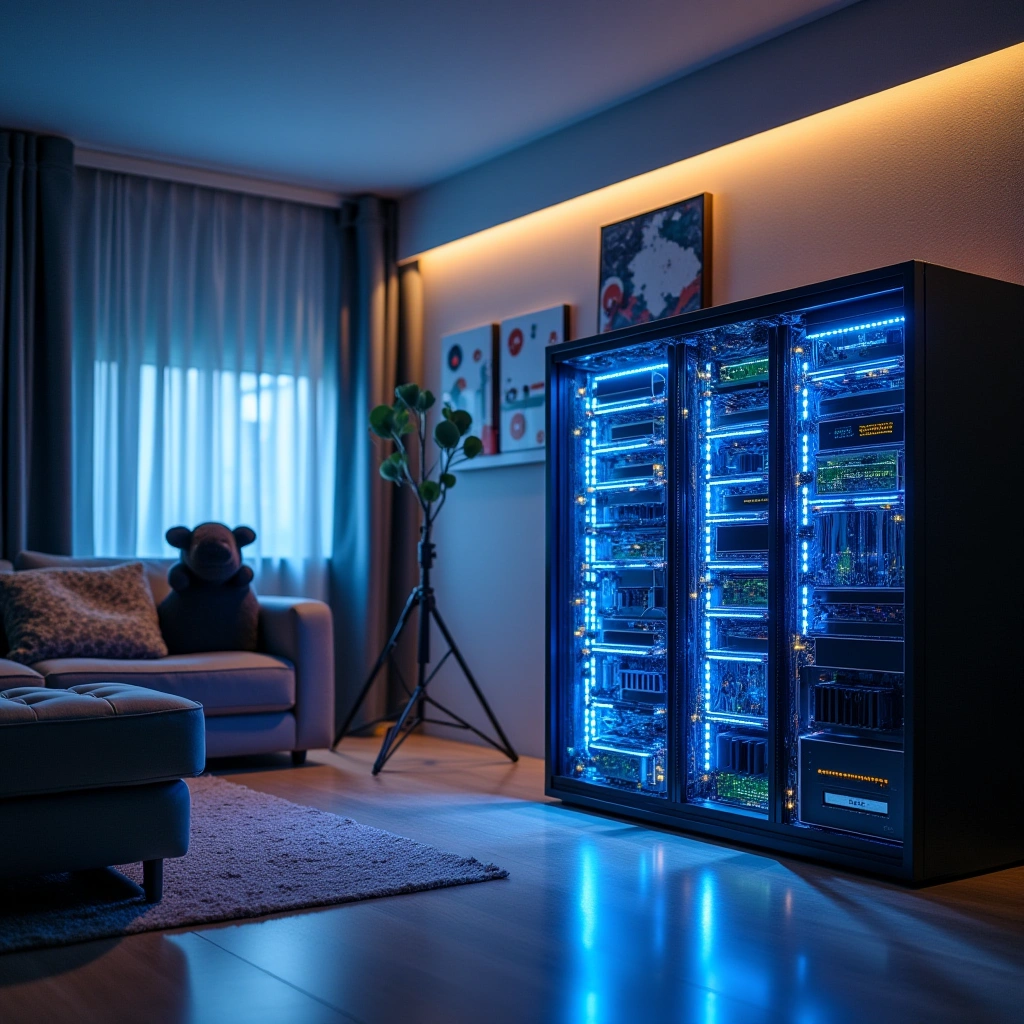
  • The Rise of Tiny Data Centers: Why Startups Are Invading Your Living Room

    The Rise of Tiny Data Centers: Why Startups Are Invading Your Living Room

    Hey there, my tech-savvy friend! Grab your favorite snack, because we’re diving into a topic that sounds like it jumped straight out of a sci-fi movie: tiny data centers popping up in our homes, thanks to startups with dreams bigger than their budgets!

    Picture this: you’re binge-watching your favorite show, and instead of just the usual array of snacks and cozy blankets, you’ve got a miniature data center humming away in your living room, like a pet cat that doesn’t need feeding but has the potential to disrupt the entire tech landscape. Sounds like a plot twist, right?

    Now, let’s break this down. Why on Earth would a startup think it’s a good idea to squeeze a data center into your already cramped living space? Well, the answer lies in the magical world of edge computing. You see, as the internet of things (IoT) takes over, processing data closer to where it’s generated becomes crucial. And what’s closer than your home? Your fridge? Your smart toaster? They could all be part of the data revolution!

    But hang on a second—before you start tossing out your furniture to make room for a tech fortress, let’s talk about the benefits. For one, having a data center at home means faster data processing. Bye-bye lag and buffering! Your online gaming experience might finally be as smooth as your friend’s excuses for why they haven’t returned your lawnmower.

    And here’s where it gets spicy: the privacy factor. With data centers at home, you have more control over your personal data than ever before. No more wondering if your data is being sold off to the highest bidder while you’re just trying to find out how to bake the perfect soufflé. You could be the master of your own digital domain!

    But wait—hold your horses! Before you throw a party to celebrate your new data buddy, let’s not forget the downsides. Imagine explaining to your grandma why her living room suddenly resembles a server farm. “No, Grandma, it’s not a fancy new coffee machine. It’s a data center!” Plus, the electricity bill? Let’s just say it might not be the best conversation starter at family gatherings.

    And what about those pesky maintenance issues? Who’s going to fix it when it goes down? Spoiler alert: it’s probably not going to be your friend who still thinks ‘turning it off and turning it back on’ is a legitimate troubleshooting method.

    So what’s the verdict? Are we ready to welcome tiny data centers into our homes, or are we just one step away from living in a sci-fi horror film where the machines take over? It’s a fine line, my friend. But if you’re an early adopter who loves tech, the chance to be a part of this revolution might just be too tempting to resist.

    In conclusion, while tiny data centers may seem like a quirky trend from the outside, they could very well shape the future of personal data management. Just remember: with great power comes great responsibility. And maybe a power strip or two!


    Inspired by: “Startups are installing tiny data centers in people’s homes” (r/technology)