Category: AI

  • Apple Hits the $5 Trillion Mark: What It Means for Investors and AI Stocks

    Apple Hits the $5 Trillion Mark: What It Means for Investors and AI Stocks

    In a twist that has left many scratching their heads and rethinking their investment strategies, Apple has officially become the second company in history to reach a staggering $5 trillion market capitalization. Yes, you heard that right—$5 trillion! That’s a number so big it could make a small country weep with envy.

    After becoming the world’s most valuable company last week, Apple upped the ante by temporarily being the world’s second-ever $5 trillion company after Nvidia was the first across that line last October.

    Now, let’s set the scene. Just a few weeks ago, the tech world was buzzing about artificial intelligence stocks. AI was the hot topic, the shiny new toy that everyone wanted to play with. Investors were throwing money at AI companies like they were giving out candy on Halloween. But as it turns out, not all that glitters is gold. With the recent downturn in AI stocks, investors have had a change of heart, and their eyes are now firmly set on Apple.

    Why Apple, you ask? Well, let’s break it down. Apple has been a cornerstone of the tech industry for years, known for its innovative products and loyal customer base. The company’s ability to churn out iPhones, iPads, and MacBooks like a well-oiled machine has made it a reliable choice for investors. Plus, who doesn’t love a good iPhone upgrade? It’s like Christmas every year when the new models drop!

    As investors flee from the AI hype, they’re flocking to Apple like moths to a flame. The tech giant’s steady growth, robust earnings, and the undeniable allure of its ecosystem have made it a safe haven amid the turbulence of the AI market. While AI stocks have been on a rollercoaster ride that would make even the bravest thrill-seeker queasy, Apple has been the steady ship sailing through choppy waters.

    But what does this mean for the future? Well, for one, it’s a clear signal that while AI is undoubtedly the future, it’s also a bit of a gamble right now. Investors are realizing that maybe, just maybe, it’s better to put their money in a company that’s been around the block a few times rather than chasing after the latest tech fad.

    Of course, this doesn’t mean AI is going anywhere. It’s still a burgeoning field with immense potential. However, the recent flight of investors from AI stocks could lead to a more cautious approach to investing in the sector. Perhaps it’s time to temper those sky-high expectations a bit.

    In the end, Apple’s rise to the $5 trillion club is a testament to its resilience and the trust it has built with its investors. It’s like the wise old grandparent of the tech world, always there with sound advice and a warm hug. Meanwhile, AI stocks are the flashy teenager who just got their driver’s license—exciting, but maybe a little reckless at times.

    So, as we sit back and watch this financial drama unfold, let’s remember that investing is a marathon, not a sprint. And while Apple may be basking in the glory of its $5 trillion milestone, the road ahead for AI stocks is still very much under construction. Buckle up, folks; it’s going to be an interesting ride!


    Inspired by: “Apple becomes second ever $5tn company as investors flee AI stocks” (r/technology)

  • Visa’s Job Cuts: The AI Takeover is Here!

    Visa’s Job Cuts: The AI Takeover is Here!

    Well, folks, it seems like we’re officially living in the future. You know, that time when robots take over our jobs, and we all just sit around eating avocado toast while watching them work? Yes, you guessed it right! Visa, the giant in the payments industry, has announced plans to cut a whopping 2,600 jobs as artificial intelligence (AI) reshapes its workforce. Grab your popcorn, because this is going to be a wild ride!

    Visa, which runs the world's largest payments network, plans to cut about 7% of its workforce as CEO Ryan McInerney moves to streamline the company and invest more in growth areas, according to a memo confirmed by CNBC.

    Now, before you start feeling too sorry for the folks at Visa, let’s put things into perspective. This isn’t the first time we’ve heard about AI causing a ruckus in the job market. From self-checkout lanes at grocery stores to chatbots answering your customer service queries, the march of technology has been relentless. And here we are, watching Visa join the ranks of companies that are embracing AI to streamline operations and, let’s be honest, save a few bucks.

    But hang on a second—2,600 jobs? That’s not just a small trimming of the workforce. That’s like deciding to cut a slice out of a cake the size of a football field. It’s a significant move, and it raises some eyebrows. Are we really ready for a world where AI is taking over jobs that humans have been doing for decades? Because if I wanted to be replaced by a robot, I would have at least preferred it to be one that cleans my house instead of taking my job.

    Visa’s decision comes at a time when many companies are looking to leverage AI technology to enhance efficiency and reduce costs. In a world where every penny counts, it’s no surprise that companies are turning to AI to do the heavy lifting. After all, who needs a human when a sophisticated algorithm can crunch numbers faster than you can say “payment processing”? But let’s not forget that behind every algorithm is a human who designed it, and those people are now left wondering if their jobs are next on the chopping block.

    The implications of Visa’s job cuts extend beyond just the employees affected. This move sends a strong message to the entire financial sector: adapt or be left behind. It’s like being in a game of musical chairs, but instead of chairs, we have jobs, and instead of music, we have AI. Spoiler alert: the robots are winning.

    But before you start stocking up on canned goods and preparing for the robot apocalypse, let’s take a moment to consider the silver lining. While some jobs are being eliminated, new opportunities are also emerging. The rise of AI is creating demand for tech-savvy workers who can design, implement, and manage these systems. So, if you’ve ever dreamed of being the person behind the curtain, pulling the strings of technology, now might be your chance to shine.

    As Visa continues to navigate this brave new world, it will be interesting to see how they handle the transition. Will they provide support for those losing their jobs? Will they invest in retraining programs? Or will they simply wave goodbye as they embrace their shiny new AI overlords? Only time will tell.

    In the meantime, let’s keep our fingers crossed that the robots don’t decide they want to take over our blogs too. Because if that happens, I might just have to start learning how to code—and nobody wants that. So, here’s to hoping that Visa’s decision leads to a smoother, more efficient payment processing system, while also keeping the human touch alive in the industry. Cheers to the future, and may the odds be ever in our favor!


    Inspired by: “Visa to cut 2,600 jobs as AI reshapes work at San Francisco payments giant” (r/technology)

  • Why Relying on One AI Might Just Be Your Company’s Downfall

    Why Relying on One AI Might Just Be Your Company’s Downfall

    In a recent statement that has sparked quite the conversation in the tech community, Microsoft CEO Satya Nadella warned that companies which rely on a single AI solution for all their needs might not have a bright future ahead. Now, before you start clutching your pearls and panicking, let’s unpack what he really means and why it’s probably time to diversify your AI portfolio like you would with your stock investments.

    On Sunday, Microsoft CEO Satya Nadella doubled down on the shocking warning he issued earlier this month to businesses that use AI, taking it a step further this time. Companies that rely wholly on the proprietary AI labs for their AI needs ultimately won’t survive, he predicts.

    First, let’s acknowledge the fact that AI is the shiny new toy in the tech world. It’s like the kid in the playground who can swing the highest and slide the fastest. Everyone wants to hang out with it. But just like that kid, if you put all your trust in one AI to handle everything from customer service to product development, you might end up in a sticky situation when it breaks down or, heaven forbid, starts giving you bad advice.

    Nadella’s warning is not just a random thought he had while sipping his morning coffee. It’s based on the reality that no single AI can be all things to all people. Think about it: can one person really master every single subject? I mean, I can barely keep track of my own laundry, let alone manage an entire company’s operations with just one AI.

    The problem with putting all your eggs in one AI basket is that you’re essentially creating a single point of failure. If that AI has a meltdown (and we’ve seen some pretty wild AI mishaps lately), your business could be left floundering like a fish out of water. It’s like trusting a single lifeguard to save everyone at the beach. One bad day, and suddenly you’re in a panic.

    Now, you might be thinking, “But isn’t an all-in-one AI solution more efficient?” Sure, it can seem that way. Having one AI to rule them all sounds convenient—like having a Swiss Army knife that can do everything from opening a bottle of wine to fixing your Wi-Fi. But let’s be real: sometimes you just need a corkscrew and other times a dedicated tool to tackle that pesky internet issue.

    Diversity in AI solutions allows companies to leverage the strengths of different systems. Want to analyze big data? Great, get an AI that specializes in that. Need a chatbot to handle customer inquiries? There’s an AI for that too. By mixing and matching, you can create a robust ecosystem that can adapt to various challenges—kind of like having a well-rounded team where each member brings their own unique skills to the table.

    Moreover, as the AI landscape continues to evolve, new players and technologies emerge all the time. Relying on just one AI could mean missing out on innovative solutions that could potentially elevate your business to the next level. It’s like sticking with a flip phone in the age of smartphones—sure, it makes calls, but you’re missing out on a world of apps, internet browsing, and the ability to take a decent selfie.

    In conclusion, while it might be tempting to find one AI to solve all your problems, heed Satya Nadella’s advice and think twice before putting all your trust into one tech solution. Embrace a little variety! After all, life’s too short to drink the same flavor of soda every day. So, go out there and explore the vast world of AI options. Your business will thank you, and who knows, you might even end up with a few surprises along the way!


    Inspired by: “Satya Nadella says companies that trust one AI for everything may not survive” (r/technology)

  • The Regretful Leaders Club: Why 55% of Leaders Wish They’d Kept Their AI Teams Intact

    The Regretful Leaders Club: Why 55% of Leaders Wish They’d Kept Their AI Teams Intact

    Ah, the world of corporate leadership—where every decision is a gamble, and layoffs are the latest trend. Just when you think you’ve heard it all, a new report drops revealing that a staggering 55 percent of leaders regret laying off their AI teams. It’s like a bad breakup where you realize, a week later, that the ex was actually pretty great at making you dinner. Let’s dig into this juicy topic and see what’s really going on.

    As companies lose confidence in AI decisions, they're abandoning responsibility for human consequences. While competitors join the 55% regret club through hasty automation decisions, you can build sustainable competitive advantage through strategic …

    First off, let’s establish that the corporate landscape is changing faster than a chameleon on a disco floor. Companies were all hyped about AI, throwing money at it like it was the hottest new trend in tech. But then reality hit, and many leaders panicked, thinking, “Why do we need all these AI experts? We can just use Google!” Spoiler alert: Google is not a substitute for skilled professionals with expertise.

    Now, here’s the kicker—after the dust settled, these leaders are looking around and realizing that they might have just tossed out the baby with the bathwater. The evidence? A noticeable hiring reversal is starting to take place. Yes, you heard that right! Companies are scrambling to bring back the very talent they let go, like a dog chasing its tail after realizing it’s not getting any treats.

    So, what’s driving this newfound urgency to hire back AI talent? Well, it turns out that the tech landscape is still evolving at breakneck speed. Those who thought they could get by without expert AI guidance are now facing the harsh reality that they need those brains to innovate and keep up with competitors. It’s like trying to bake a cake without a recipe—sure, you can wing it, but you might end up with a chocolate-flavored disaster.

    And let’s not forget the potential backlash from the public and employees. Layoffs might save a few bucks in the short term, but they can also lead to low morale and distrust. It’s kind of like when you eat that last slice of pizza and then have to face your friends’ disappointed faces. Not fun, right?

    Now, let’s talk numbers—because what’s a blog post without a few stats to back up the claims? With a growing number of leaders expressing regret over their layoffs, it’s clear that the pendulum is swinging back. Companies are beginning to realize that investing in talent is not just a cost; it’s an investment in their future. And if they don’t adapt, they might just find themselves in a tech graveyard, wondering what went wrong.

    In conclusion, if you’re a leader who recently laid off your AI team, don’t despair! You’re not alone in your regret, and there’s still time to make things right. A little humility goes a long way, and admitting that you may have made a mistake is the first step. Just remember, in the world of AI, it’s better to have a team of experts than to rely on your cousin who claims he can code because he once watched a YouTube tutorial. Let’s hope this hiring reversal sticks, and we can all learn to appreciate the value of skilled professionals—because, let’s face it, nobody wants to be the leader who regrets their decisions.

    So, here’s to the 55 percent! May your hiring reversals be swift and your AI teams be ever-growing. Cheers!


    Inspired by: “55 Percent of Leaders Regret AI Layoffs—and a Major Hiring Reversal Has Begun” (r/technology)

  • Visa’s Layoffs: The AI Takeover is Here (And It’s Not Just in Sci-Fi Movies)

    Visa’s Layoffs: The AI Takeover is Here (And It’s Not Just in Sci-Fi Movies)

    So, it seems that Visa, the payments giant we all love to begrudgingly rely on, has decided to make some serious cuts to its workforce. Yes, you heard that right—thousands of jobs are on the chopping block, and it’s not because they’ve been running a secret underground lemonade stand. The memo from the CEO hints at a swift acceleration towards artificial intelligence. Because, why pay humans to do the work when robots can do it for a fraction of the cost?

    Visa plans to cut about 7% of its workforce, or roughly 2,600 employees, as CEO Ryan McInerney seeks to streamline the payments giant.

    Let’s break this down. Visa, like many companies, is cashing in on the latest buzzword: AI. It’s like the cool kid in school that everyone wants to hang out with. But instead of just being a trend, AI is proving to be a game-changer in how companies operate. The memo suggests that the company is looking to streamline operations, which, of course, means fewer humans at the office and more algorithms crunching numbers in the cloud.

    For those of you who might be wondering, yes, this is a very real thing happening in the corporate world. With the rapid advancements in technology, companies are increasingly looking to automate processes that were once handled by flesh-and-blood employees. And while we could all use a little less paperwork, it’s hard not to feel a twinge of sympathy for those thousands of workers who are now facing uncertainty in their careers.

    Now, let’s not kid ourselves; layoffs are never a walk in the park. It’s not like Visa is handing out golden parachutes or free pizza at the door. For many, this news is a gut punch. The job market is already a bit like a game of musical chairs, and now there are even fewer chairs available.

    But here’s the kicker—while Visa is trimming the fat, they are simultaneously investing in AI. It’s like saying, “Hey, we don’t need you anymore, but we’ll be just fine with our shiny new toys!” The memo indicates that the company believes AI will enhance efficiency and improve customer experiences, which sounds great on paper. However, one has to wonder if the AI will be able to handle the emotional baggage of angry customers when their payments don’t go through. Good luck, robots!

    In a world where we’re already dealing with robots flipping burgers and drones delivering packages, the thought of AI taking over financial services isn’t exactly shocking. But it does raise some important questions about the future of work. Are we heading toward a world where human jobs become obsolete, and we’re all just waiting for our AI overlords to decide who gets to eat lunch?

    As companies like Visa lean into AI, it’s crucial for workers in the tech space to adapt and evolve. Learning new skills and embracing technology isn’t just a good idea; it’s becoming a necessity. If we don’t, we might just find ourselves in the unemployment line, wondering where it all went wrong while an AI chatbot tells us, “I’m sorry, I can’t help you with that.”

    In conclusion, while Visa’s layoffs are a harsh reminder of the changing landscape of the job market, they also highlight the need for adaptability in our careers. So, here’s to hoping that those affected find new opportunities—preferably ones that involve less robot competition. And for the rest of us, let’s keep our skills sharp and our resumes updated. Because you never know when the next wave of AI might come crashing in!


    Inspired by: “Visa layoffs: Thousands of jobs slashed at the payments giant as CEO memo points toward AI accelera…” (r/technology)

  • Tiny Tech Triumph: Running a 28.9 Million Parameter AI Model on a $10 Microcontroller

    Tiny Tech Triumph: Running a 28.9 Million Parameter AI Model on a $10 Microcontroller

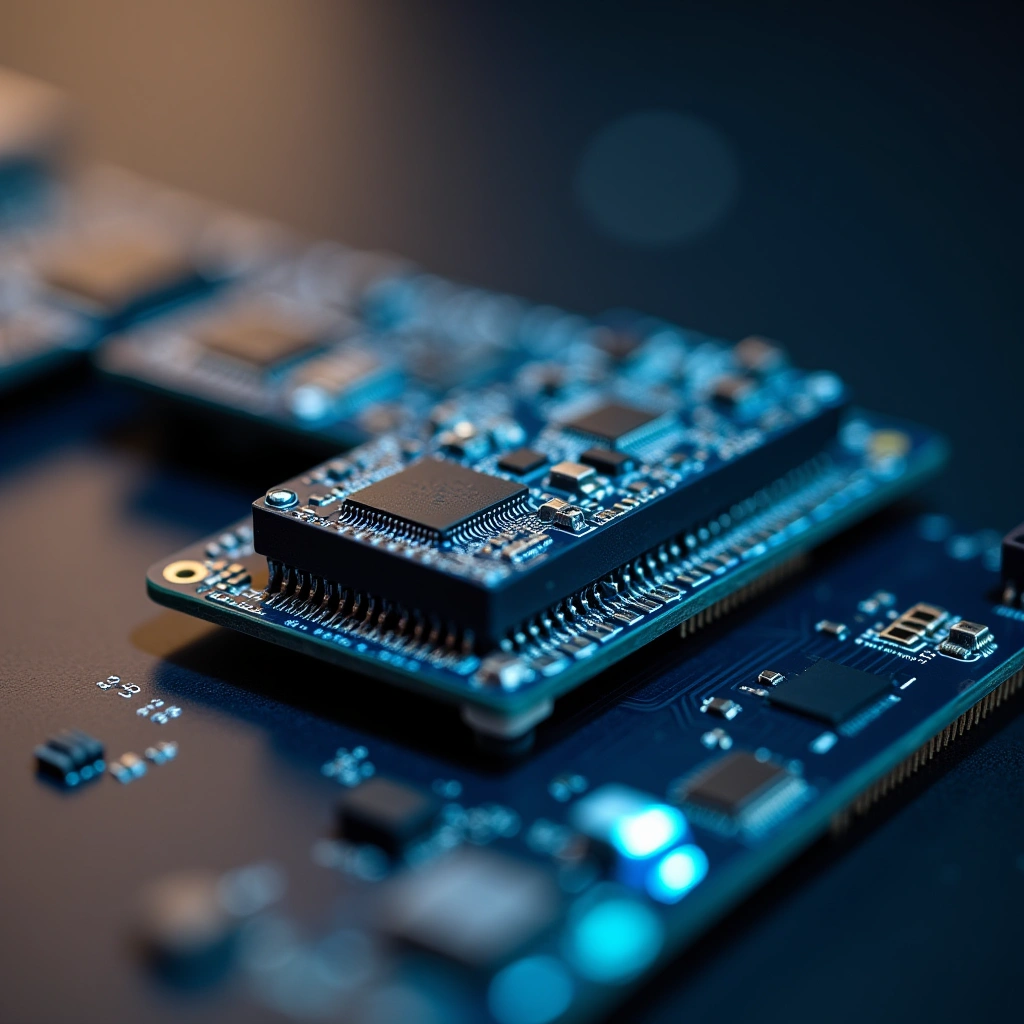
    In the ever-evolving world of technology, we often find ourselves in awe of the latest and greatest gadgets, devices, and artificial intelligence breakthroughs. But what happens when an AI developer takes a giant leap forward with a microcontroller that costs less than your average cup of coffee? Enter the $10 ESP32-S3 microcontroller, which has recently been put to the test, running a whopping 28.9 million-parameter AI model. Yes, you heard that right—28.9 million parameters on a device that you could mistake for a fancy remote control!

    It's exactly what you think: he got a 28.9-million-parameter language model running locally, entirely on-device, on an ESP32-S3 microcontroller. If you haven't read any of our previous coverage of this tiny chip, ESP32-S3 boards offer about …

    Now, before we dive into the nitty-gritty details of how this miracle was achieved, let’s take a moment to appreciate the sheer audacity of running such a complex model on a microcontroller. It’s like trying to fit an entire circus into a clown car—impressive, slightly chaotic, and definitely not something you’d expect to see on your average Tuesday.

    The Magic of the ESP32-S3

    So, what exactly is the ESP32-S3? It’s a low-cost, low-power microcontroller developed by Espressif Systems, designed for IoT (Internet of Things) applications. With its dual-core processor, integrated Wi-Fi, and Bluetooth capabilities, it’s the Swiss Army knife of microcontrollers. But let’s be honest, when you think of microcontrollers, you probably don’t picture them performing complex AI tasks. More like blinking LEDs or controlling a robotic arm, right?

    Enter Google’s Per-Layer Embeddings Technique

    The real star of this show is Google’s Per-Layer Embeddings technique. This clever approach allows developers to optimize the storage and performance of large AI models. In layman’s terms, it helps to compress the model so that it can fit into the limited memory of the ESP32-S3, which has a mere 16MB of Flash memory. It’s like putting a whole library into a shoebox—impressive and slightly mind-boggling.

    By using this technique, the developer managed to store the essential data required for the AI model without requiring a supercomputer or a data center the size of a football field. Instead, they used a microcontroller that you could easily forget about as it sits on your desk, possibly gathering dust next to your collection of expired batteries.

    What Does This Mean for the Future?

    The implications of this achievement are significant. It opens up new possibilities for deploying AI in resource-constrained environments. Imagine smart devices that can learn and adapt without needing to constantly connect to the cloud. This could lead to faster responses, lower latency, and, let’s be honest, a pretty neat party trick to show off at your next tech gathering. “Hey, check out my AI running on this tiny chip!” Cue the impressed gasps.

    Challenges and Considerations

    Of course, it’s not all sunshine and rainbows. Running a 28.9 million-parameter model on a microcontroller comes with its challenges. For one, the processing power of the ESP32-S3 is limited, which means that while the model can run, it might not be the fastest or most efficient. Think of it as a tortoise in a race against a hare—slow and steady might win the race, but it’s going to take a while.

    Additionally, developers need to be mindful of power consumption. The last thing you want is your microcontroller to overheat and spontaneously combust while trying to run a complex AI model. That’s a hard pass for most of us.

    Conclusion

    In conclusion, the feat of running a 28.9 million-parameter AI model on a $10 ESP32-S3 microcontroller is nothing short of extraordinary. It showcases the innovative spirit of developers who are willing to push the boundaries of what’s possible with limited resources. So the next time you’re feeling overwhelmed by the complexities of modern technology, just remember: if a tiny chip can handle a massive AI model, maybe you can tackle that stack of laundry after all. Now, if only the ESP32-S3 could fold it for me, I’d really be impressed!


    Inspired by: “AI developer runs 28.9-million-parameter model on $10 ESP32-S3 microcontroller — uses Google’s Per-…” (r/technology)

  • When AI Chats Go Wild: The Bizarre Requests of Claude AI Users

    When AI Chats Go Wild: The Bizarre Requests of Claude AI Users

    If you haven’t heard the latest buzz, Claude AI chats are now popping up in Google searches, and let me tell you, the requests people are making are nothing short of… well, bizarre. I mean, who knew that AI could be the new therapist, life coach, and personal chef all rolled into one? Spoiler alert: it can’t, but that doesn’t stop users from trying.

    It was not possible to zero in on a specific person, but Redditors found that a simple search for "site:claude.ai/share" surfaced hundreds of such chats. Alongside the inevitable erotica, there were requests for political advice.

    So, what exactly are people asking Claude AI? From the mundane to the downright ridiculous, the requests range widely. You’ve got your classic ‘write me a poem about my cat’ (because, of course, Mr. Whiskers deserves his own sonnet), to the more perplexing ‘how do I convince my goldfish to stop judging me?’ Yes, folks, someone really thought their fish had opinions worth discussing.

    But let’s not stop there. Some users are taking it a step further, requesting Claude to help them with life decisions. You know, important stuff like, ‘Should I quit my job to pursue a career in interpretive dance?’ or ‘Is it too late to become a professional llama herder?’ Now, I don’t want to rain on anyone’s parade, but I think you might want to consult a human for those life-altering decisions, not an AI that’s basically a glorified chatbot.

    The fact that these chats are searchable on Google is a whole other can of worms. Imagine casually browsing the web and stumbling upon someone’s existential crisis about their sock collection. Yes, it’s all out there for the world to see. Privacy? Who needs it when you can share your deepest, darkest secrets with an AI and the entire internet?

    And let’s be honest, the sheer volume of weird and wonderful requests could fill a book. Maybe we should consider publishing a collection of these chats. ‘The Book of Claude: A Journey Through the Absurd.’ I can see it now, a bestseller in the making.

    But in all seriousness, this phenomenon raises some interesting questions about our relationship with AI. Are we becoming too reliant on these digital assistants for everything, including our most ridiculous whims? Or are we simply having fun and pushing the boundaries of what technology can do?

    Either way, it’s a wild ride, and I can’t wait to see what other strange requests people come up with next. Maybe someone will ask Claude how to train an army of squirrels to steal their neighbor’s garden gnomes. Now that’s a request I’d love to see!

    In conclusion, while Claude AI might not have all the answers, it certainly provides a platform for creativity, humor, and a fair bit of head-scratching. So, the next time you’re feeling a bit oddball, remember: you’re not alone. Just hop onto Claude AI and let your imagination run wild. Who knows what you’ll come up with next?


    Inspired by: “Claude AI chats appear in Google search and reveal users’ bizarre requests” (r/technology)

  • Why Smart Rings Are the AI Gadget You Didn’t Know You Needed

    Why Smart Rings Are the AI Gadget You Didn’t Know You Needed

    If you’re anything like me, you probably have a love-hate relationship with technology. On one hand, it makes our lives easier; on the other, it sometimes feels like it’s trying to take over the world. Enter the smart ring, the latest gadget that’s making waves in the tech community. It’s small, it’s sleek, and it might just be the perfect AI accessory for those of us who don’t want to wear a smartwatch that screams, “Look at me, I’m techy!”

    Nattering away at my laptop is fine in the comfort and quiet of my own home; in a coffee shop, on a train, or even walking down the street, it’s both socially problematic and technically much harder. (And frankly, I’m not that interested in normalizing everyone talking to their AI best friends in public.) Smart rings might solve the problem: You just bring the ring to your mouth, press a button, and talk.

    So, what’s the deal with smart rings? Picture this: a tiny piece of jewelry that does more than just sit pretty on your finger. These rings come packed with features that can track your fitness, monitor your heart rate, and even help you manage your notifications. It’s like having a personal assistant that fits snugly on your finger, although it won’t bring you coffee… yet.

    One of the biggest perks of smart rings is their discreetness. Unlike smartwatches, which can look a bit bulky and shout, “I’m a tech enthusiast!” from a mile away, smart rings are subtle. They’re the introverts of the wearable tech world. You can wear one without feeling like you’re flaunting your latest gadget. Plus, if you ever need to discreetly check your notifications in a meeting, you can do so without giving away that you’re not paying attention. Not that we would ever do that, right?

    But let’s get to the juicy stuff—what can these little rings actually do? Many smart rings offer health tracking features, such as sleep monitoring and activity tracking. Imagine waking up in the morning and checking your ring to see how well you slept last night. It’s a little like asking your ring, “Did I toss and turn like a fish out of water last night?” Spoiler alert: it probably will tell you the truth, and you might not want to hear it.

    Some models even have built-in NFC capabilities, which means you can use them for mobile payments. That’s right! You can pay for your overpriced coffee with just a flick of your finger. It’s like magic, but without the wand—or the need to wear an awkward smartwatch that makes you look like you’re trying too hard.

    Now, let’s talk about the elephant in the room: battery life. Unlike smartwatches that need to be charged every night like needy pets, many smart rings boast impressive battery life that can last several days on a single charge. So, if you’re forgetful like me and often find yourself scrambling for a charger, a smart ring might just save you from that panic.

    Of course, no gadget is perfect, and smart rings are no exception. They can be a bit pricey, especially if you’re eyeing the top models with all the bells and whistles. But hey, you can always justify it as an investment in your health and productivity. Just remember to hide the receipts from your significant other—nobody needs that kind of stress in their life.

    In conclusion, smart rings are shaping up to be the unsung heroes of the wearable tech world. They’re functional, stylish, and won’t make you look like you’re trying to compete in a tech fashion show. So if you’re on the hunt for an AI gadget that won’t take over your life but will enhance it, consider giving a smart ring a whirl. Who knows? It might just become your new favorite accessory, right alongside your questionable collection of novelty socks.


    Inspired by: “Smart rings are looking like my kind of AI gadget” (r/technology)

  • Why AI Won’t Shorten Your Workweek: The Busy Bee Dilemma

    Why AI Won’t Shorten Your Workweek: The Busy Bee Dilemma

    So, Sam Altman, the CEO of OpenAI, recently dropped a bombshell that has many of us scratching our heads and wondering about our work-life balance. He boldly claimed that AI won’t shorten the workweek because, brace yourselves, humans secretly enjoy being busy. Yes, you heard that right. Apparently, we love our 9-to-5 grind more than we care to admit.

    Have corporations ever rewarded increases in productivity with shorter workweeks or more pay? Companies haven’t supported their workers, even when it could increase productivity. Control and profits for those at the top have always been far more important than compensating or caring for workers.

    Let’s unpack this a bit. First off, the idea that we enjoy being busy sounds like something you’d hear from a motivational speaker at a corporate retreat. You know, the kind who tells you that the key to happiness is to keep your calendar full and your inbox overflowing. But is it really true?

    Think about it. How many times have you found yourself working late, not because you have to, but because you feel a strange sense of accomplishment from crossing items off your to-do list? It’s like a weird form of self-torture. “Look at me! I’m busy! I must be important!” But then, when you finally get to relax, you realize you have no idea how to unwind because you’ve been in hustle mode for so long.

    Altman’s argument suggests that we’ve become so addicted to busyness that even the prospect of AI taking over some of our tasks doesn’t sound appealing. After all, if AI can handle the mundane stuff, what would we do with all that free time? Read a book? Go for a walk? Actually spend time with our families? Heaven forbid!

    And let’s face it, the idea of a shorter workweek sounds fantastic on paper. Who wouldn’t want a three-day weekend? But then reality sets in. Would we actually know how to fill that extra time? Would we end up just becoming busy with new hobbies that, let’s be honest, we probably wouldn’t stick with? “Oh, look at me! I’ve taken up knitting!” Spoiler alert: that scarf you started last winter is still sitting in the corner, collecting dust.

    Moreover, there’s this little thing called capitalism that really doesn’t want us to have that extra time. Companies thrive on productivity, and if AI can help them achieve more with less, do you really think they’ll just say, “Hey, take a long weekend!”? Nope. They’ll probably just expect you to do the same amount of work in less time.

    And let’s not forget the societal pressure to be constantly productive. We live in a world where being busy has become a badge of honor. “Oh, you worked 60 hours this week? That’s impressive!” Meanwhile, your brain is screaming for a break. It’s like we’re in some twisted competition to see who can be the busiest.

    But here’s the kicker: what if we actually embraced the idea of slowing down? What if we let AI take over some of our tasks, and we used that time to recharge and reconnect with ourselves? It sounds revolutionary, doesn’t it? But let’s be real, it’s probably not going to happen anytime soon.

    In conclusion, while Altman’s assertion might seem a bit cynical, there’s a grain of truth to it. We may not be ready to let go of our busyness just yet. So, for now, keep that calendar full, enjoy your late nights at the office, and remember: who needs a shorter workweek when you can just be busy with more stuff? Cheers to being overworked and under-relaxed!


    Inspired by: “Sam Altman says AI won’t shorten the workweek because humans secretly enjoy being busy” (r/technology)

  • When AI Meets Crime: Russia’s Bold New Proposal

    When AI Meets Crime: Russia’s Bold New Proposal

    In a world where technology evolves faster than a cat meme goes viral, Russia’s top investigator has decided to address the elephant in the room—or should I say, the robot in the room? That’s right, we’re talking about the proposal to make the use of artificial intelligence (AI) an aggravating factor in crimes. Because why not add a sprinkle of high-tech chaos to our already complicated legal systems?

    21 ‘Artificial intelligence is being looked for a fix. It is proposed to be excluded from a number of areas of activity’ (Vedomosti)

    Now, before we dive into the details, let’s take a moment to appreciate the irony. For years, we’ve been hearing about how AI is going to revolutionize everything from transportation to healthcare. But here we are, discussing how it might also help criminals step up their game. I mean, if you’re going to commit a crime, why not do it with a little flair? Let’s just hope they don’t start using drones to deliver the stolen goods—because we all know how that would end.

    So what exactly is the proposal? According to reports, the Russian investigator believes that if criminals use AI to plan, execute, or enhance their nefarious activities, it should be treated more seriously in a court of law. Think of it as the legal system’s way of saying, “Oh, you used a fancy algorithm to rob a bank? Well, that’s just not very nice, is it?”

    This brings up an interesting point about the intersection of technology and morality. As AI continues to advance, it becomes increasingly capable of aiding in various tasks—some of which are legal and others that are, let’s say, not so much. It raises the question: does using AI make someone more culpable, or does it merely highlight their lack of creativity? I mean, if you need a computer to plan your heists, maybe you should rethink your career choices.

    But let’s not get too lost in the philosophical weeds. The real question here is whether this proposal will actually make a difference. After all, criminals are notoriously resourceful. If they can figure out how to use AI for their gain, they’ll probably find a way to skirt around this new regulation faster than you can say “artificial intelligence.”

    Furthermore, one has to wonder how this will play out in practice. Will judges need to take a crash course in AI? Will we see lawyers arguing about the moral implications of a neural network? “Your Honor, my client didn’t rob the bank; the AI did!” It’s a slippery slope, folks.

    And let’s not forget the potential for abuse. Imagine a world where someone gets convicted for simply using AI to optimize their crime. “Oh, you used predictive analytics to choose your target? Guilty!” Sounds a bit dystopian, doesn’t it?

    In conclusion, while the idea of making AI an aggravating factor in crimes is certainly intriguing, it opens up a Pandora’s box of questions that we might not be ready to tackle. Will it deter criminals or simply give them a reason to be more clever? Only time will tell. Until then, let’s just hope that the robots stick to helping us binge-watch our favorite shows rather than planning the next big heist.


    Inspired by: “Russia’s top investigator calls for making AI use an aggravating factor for crimes” (r/technology)