Category: AI

  • Trump’s Bold AI Military Proposal: A Recipe for Progress or Chaos?

    Trump’s Bold AI Military Proposal: A Recipe for Progress or Chaos?

    Hey there, my fellow internet wanderers! So, grab your popcorn and get comfy because we’re diving deep into the latest political popcorn kernel—Trump wants the military to speed up the use of artificial intelligence while ensuring that Americans are protected. Sounds like a sci-fi movie plot, right? But it’s happening in real life. Let’s break this down!

    First off, let’s talk about the big guy—yes, Donald Trump himself. He’s back in the news (surprise, surprise) advocating for the military to embrace AI quicker than a kid on Christmas morning with a new video game. Now, before you start picturing robots with laser eyes patrolling the streets, let’s take a step back and look at what this really means.

    AI in the military isn’t exactly a new concept. We’ve been using it for things like drone surveillance and data analysis. But Trump’s call for acceleration? That’s like asking a cheetah to run faster. How do you even measure that? More drone strikes? More data crunching? Or maybe we’ll have an AI general who gives motivational speeches? “You can do it, troops! Just compute your way to victory!”

    Now, let’s address the elephant in the room: the protection of Americans. Who wouldn’t want to feel safe? But here’s the kicker—when you start mixing military power with AI, things can get a little murky. Sure, AI can help identify threats and make decisions faster than you can say “algorithm,” but it also raises questions. Are we ready to trust a computer with life-and-death decisions? What happens when an algorithm makes a mistake? “Oops, sorry! That wasn’t supposed to happen!” Sounds like a scene from a bad horror movie, doesn’t it?

    But wait, there’s more! AI is not just about military might; it’s about the future of warfare. Imagine a battlefield where soldiers are assisted by AI that can predict enemy moves, analyze terrain, and even suggest the best pizza joint nearby. Okay, maybe not the pizza part, but you get the idea. The point is that AI can give a significant edge in combat situations. It’s like having a super-smart buddy who always has your back—unless, of course, that buddy decides to turn against you. Whoops!

    Now, let’s sprinkle in some controversy. Is this really about protecting Americans, or could it be about gaining an upper hand in global dominance? With countries like China and Russia investing heavily in military AI, it’s like a tech arms race out there. “We have the latest AI! Oh yeah? Well, we have an even better one!” It’s like a playground fight but with way more spreadsheets and way fewer swings.

    So, what’s the takeaway here? On one hand, the acceleration of AI in the military could lead to enhanced safety and capabilities. On the other hand, it raises ethical questions and fears of autonomous warfare. Can we really keep the humans in the loop, or are we heading for a future where AI is calling the shots? And let’s not forget the inevitable memes that will come out of this—because if it’s not meme-worthy, is it even worth discussing?

    In conclusion, whether you’re Team Trump or Team “I’d rather not have robots deciding my fate,” one thing is for sure: this topic is going to spark discussions, debates, and probably a few heated arguments at Thanksgiving dinner. So, keep your eyes peeled and your opinions ready, because the future of military AI is here, and it’s not going anywhere anytime soon!


    Inspired by: “Trump calls for military to accelerate use of AI while protecting Americans” (r/technology)


  • The Token Bill Comes Due: Navigating the Costs of AI Madness

    The Token Bill Comes Due: Navigating the Costs of AI Madness

    Hey there, fellow tech enthusiasts! Let’s dive into a topic that’s been buzzing around like a caffeinated bee at a flower convention: the costs associated with our beloved AI technologies. Yup, it seems like the bill for all those fancy algorithms and chatbots is finally hitting our digital doorsteps, and let me tell you, it’s not pretty.

    Now, you might be wondering, what does it mean for the industry when I say ‘the token bill comes due’? Well, hold onto your virtual wallets, because we’re about to break it down in a way that even your grandma can understand.

    First off, let’s talk about tokens. No, not the kind you collect like Pokémon cards or those shiny coins you used to win at the arcade. In the AI world, tokens are the currency of language models. It’s how these digital wizards understand and generate text. The more tokens they use, the higher the cost. And trust me, when these AI models start churning out text like it’s the next best-selling novel, those costs can skyrocket faster than your Aunt Karen’s conspiracy theories at Thanksgiving dinner.

    So, what’s causing this industry scramble? Picture it like a game of musical chairs, but instead of chairs, it’s funding, and instead of music, it’s the sound of investors holding their breath as they watch their money vanish into the ether. Companies are now racing to optimize their AI processes to keep costs manageable, and let’s just say it’s not exactly a walk in the park.

    One of the biggest challenges is balancing the need for high-quality outputs with the financial realities of running these systems. Spoiler alert: it’s a lot harder than it sounds! Developers are faced with the dilemma of whether to invest in more efficient algorithms or continue pouring money into the current systems that were once the belle of the ball but are now more like that one friend who constantly drains your wallet at brunch.

    And here’s where it gets a little spicy: the push for cheaper alternatives is leading to a flood of new players entering the AI arena. Suddenly, everyone and their grandma (who probably has a TikTok account) wants a piece of the AI pie. With this influx of competition, we might see some questionable practices emerging, like corner-cutting on quality to save a few bucks. Remember that time you got a pizza from a sketchy place and it turned out to be a glorified cardboard box? Yeah, let’s hope we don’t end up with AI that’s just as disappointing.

    On the flip side, this financial pressure might just spark some innovation. Necessity is the mother of invention, after all! Developers and companies may find themselves coming up with ingenious solutions to reduce costs, leading to a new era of efficiency and effectiveness in AI. So, while the costs may seem daunting now, they could pave the way for breakthroughs that we can’t even imagine yet.

    In conclusion, as the token bill comes due, the industry is at a crossroads. It’s all about finding that sweet spot where innovation meets affordability. So, buckle up, my friends! We’re in for a wild ride in the world of AI, and I can’t wait to see what happens next. Just remember to keep your wallet close and your sense of humor closer!


    Inspired by: “The token bill comes due: Inside the industry scramble to manage AI’s runaway costs” (r/technology)

  • Meta’s Stock Plummets: Is AI the New Black Hole for Billions?

    Meta’s Stock Plummets: Is AI the New Black Hole for Billions?

    Ah, Meta. The company that once promised to connect the world now seems to be on a rollercoaster ride that even the bravest thrill-seekers would avoid. If you’ve been glued to your screens (and let’s be honest, who isn’t these days?), you might have noticed a little blip in the stock market recently. Yes, Meta’s stock has taken a nosedive, and the reason? Well, they’re planning to raise tens of billions to fund their AI ambitions. But hold on to your hats, folks, because this ride is just getting started!

    Now, let’s unpack this. Meta—formerly known as Facebook, but who’s counting?—is looking to leap into the AI race with both feet, and apparently, they need a hefty wallet to do it. Tens of billions of dollars! That’s not pocket change; that’s more like “I just found a winning lottery ticket” kind of money. But before you start digging into your couch cushions looking for spare change to invest, let’s break down what this really means.

    First off, the AI hype train is real, my friends. Companies everywhere are scrambling to get their hands on the latest tech like kids at a candy store. Meta wants to be the top kid on the block with their shiny new AI tools, but here’s the kicker: they’ve had some, let’s say, less-than-stellar moments in the past. Remember the data privacy scandals? Yeah, that’s still fresh in our minds. So, can we really trust them with our data while they’re busy trying to build the next Skynet?

    And here’s the juicy part. Raising all that cash is no small feat. They’re probably going to have to sell some serious dreams to investors. “Hey, give us your money so we can create a virtual assistant that understands your every need!” Sounds great, right? Until you realize that the last time you asked Siri for directions, she navigated you straight into a lake.

    But let’s give credit where credit is due. AI could potentially transform how we interact with technology. Imagine a world where your fridge can text you when you’re out of milk. Or your computer can finally understand your sarcasm (which, let’s be honest, is a true algorithmic challenge). Yet, the question remains: at what cost?

    With stock prices sinking, investors are getting a bit skittish. It’s like watching your friend try to balance on a tightrope while juggling flaming torches—exciting, but you’re also just waiting for that inevitable crash. Meta’s reputation is on the line, and if this AI venture fails, that could mean a total meltdown.

    So, what’s the takeaway here? Should we panic sell our Meta stocks and run for the hills? Or should we sit back, grab some popcorn, and watch the drama unfold? In the world of tech, especially with a player like Meta, things can get real messy, real fast. One moment they’re the darlings of Silicon Valley, and the next, they’re that kid who just spilled grape juice all over the white carpet.

    In conclusion, while the potential of AI is as vast as the ocean, diving in without a life jacket is a dangerous game. So, whether you’re an investor, a tech enthusiast, or just someone who enjoys watching the world burn (in a friendly way), keep your eyes peeled. The Meta saga is just beginning, and trust me, it’s going to be a wild ride!


    Inspired by: “Meta’s stock sinks on report company could raise tens of billions of dollars to fund AI push” (r/technology)

  • China’s AI Ambitions: The Digital Ambassador for Xi Jinping’s Thought

    China’s AI Ambitions: The Digital Ambassador for Xi Jinping’s Thought

    Ah, China! The land of the Great Wall, delicious dumplings, and now, the glorious rise of Artificial Intelligence! But wait, what’s this? AI isn’t just crunching numbers or predicting cat videos anymore. No, my friends, it’s stepping up as the digital cheerleader for President Xi Jinping’s thoughts! Grab your popcorn; this is going to be a wild ride.

    First off, let’s talk about what exactly is meant by “Xi Jinping’s thinking.” It’s not like he’s just a fan of motivational posters with kittens; this is a whole ideology! It’s officially called Xi Jinping Thought on Socialism with Chinese Characteristics for a New Era. Sounds fancy, right? You can practically hear the trumpets playing in the background. Basically, it’s a collection of ideas that emphasize the importance of Chinese socialism and the leadership of the Communist Party. And now, AI is going to promote it. Who would’ve thought that algorithms could be so politically engaged?

    So, how is China planning to make AI the ultimate propaganda tool? Well, the strategy is multi-faceted, combining technology with traditional media savvy. Imagine AI bots churning out articles, social media posts, and even videos that extol the virtues of Xi’s policies. Think of them as little digital minions, except instead of bananas, they’re fueled by state-sponsored optimism!

    But wait, there’s a twist! The Chinese government isn’t just throwing some algorithms at this problem and hoping for the best. They’re investing heavily in research and development, creating a framework where AI can analyze public sentiment and craft messages that resonate with the populace. It’s like having a personal assistant who not only knows what you want but also knows how to convince you that you want it. Talk about customer service!

    Now, before you start thinking this is all sunshine and rainbows, let’s address the elephant in the room: AI-driven propaganda can be a double-edged sword. On one hand, it can help disseminate positive messages and unify the nation. On the other hand, it can also create echo chambers where only the state-approved narrative is heard. It’s like a karaoke night where only one person gets the mic – and surprise, that person is the government!

    There are also ethical implications that can’t be ignored. Using AI for political messaging raises questions about transparency and manipulation. Is it really fair to have a program designed to shape public opinion without people even knowing it? It’s a slippery slope, my friends. Today it’s promoting Xi’s thinking; tomorrow, it could be convincing you that pineapple belongs on pizza (which, by the way, is a crime against humanity).

    In conclusion, China’s bet on AI as a promoter of Xi Jinping’s ideology is a fascinating glimpse into the future of governance and technology. It raises a slew of questions about the intersection of digital tools and political messaging. Will it create a more informed populace or just a better-fed echo chamber? Only time will tell. In the meantime, let’s just hope these AI bots have decent taste in memes!


    Inspired by: “China bets on AI to promote President Xi Jinping’s thinking” (r/technology)

  • When the CEO Loves AI but Employees Aren’t Buying It: A Google Dilemma

    When the CEO Loves AI but Employees Aren’t Buying It: A Google Dilemma

    So, picture this: Google’s CEO is out there, pumping up the volume on AI like a DJ at a rave, while the employees are side-eyeing each other, whispering, “Did you hear what he just said?” It’s like a bad rom-com where one partner is super hyped about the future, and the other is just trying to find a way out without starting a scene.

    Let’s break this down. AI is the shiny new toy on the block, and it seems like everyone wants to claim they’re the coolest kid on the playground. But here’s the kicker: the very people who are supposed to be building this shiny toy are feeling a bit queasy about it. Why? Because while the big wigs are dreaming of a future filled with robot sidekicks and self-driving cars, the employees are stuck dealing with the reality of algorithmic glitches and ethical dilemmas. Talk about a disconnect!

    Imagine being an employee at Google, where every meeting starts with a PowerPoint slide showing how AI will change the world, while you’re sitting there thinking, “Can we just fix the search function first?” It’s like being told you’re going to the moon while your car won’t even start. You can’t blame them for feeling a little nauseous.

    And let’s not forget about the elephant in the room: job security. With AI systems advancing faster than a toddler on a sugar high, employees might be wondering if their jobs will soon be replaced by a super-intelligent chatbot named Gary. No pressure, right? It’s like being in a relationship where your partner keeps saying, “I love you,” but you can’t shake the feeling that they’re secretly eyeing the neighbor.

    Now, let’s sprinkle in a bit of irony. Google prides itself on being a pioneer of innovation and a champion of employee satisfaction. But when the very employees who are supposed to innovate are feeling disillusioned, you’ve got a recipe for corporate drama worthy of a Netflix series. Will the employees rise up and demand a new direction, or will they sit quietly in their cubicles, silently plotting their escape?

    Ultimately, it’s a classic case of top-down vs. bottom-up. The CEO might be riding high on the AI wave, but the workers are the ones paddling through the murky waters of reality. So, what’s going to happen? Will Google address the concerns of its employees, or will it continue to ignore the grumbling beneath the surface?

    As we sit on the edge of our seats, popcorn in hand, let’s hope they figure it out before we all end up in a dystopian future where AI runs the show, and humans are just the backup dancers. Keep your fingers crossed, and your eyes peeled, folks. This is one corporate saga we’ll want to follow!


    Inspired by: “While Google’s CEO Pumps Up AI, Its Actual Employees Are Disgusted by It” (r/technology)

  • Could AI Be the Trigger for Nuclear Wars? Let’s Unpack This Scary Scenario!

    Could AI Be the Trigger for Nuclear Wars? Let’s Unpack This Scary Scenario!

    Hey there, fellow netizens! Grab your tinfoil hats and a snack because we’re diving into a topic so deep it makes the Mariana Trench look like a kiddie pool: AI and its potential role in nuclear warfare.

    Now, before you start picturing robots in military uniforms dancing around with nuclear codes, let’s take a step back and explore how we even got here. The rapid advancement of artificial intelligence has been nothing short of phenomenal. From making your Netflix recommendations eerily spot-on to potentially controlling drones that could make a bad day for everyone, it seems like AI is the new kid on the block with a dangerous toy.

    But how could something designed to make our lives easier end up pushing us to the brink of nuclear disaster? Well, let’s break it down:

    1. The Speed of Decision-Making

    Imagine this: A rogue AI is tasked with monitoring global threats. In a moment of confusion, it misinterprets a harmless data packet as an incoming missile attack. Now, you’ve got a machine programmed to act swiftly, and it decides to launch a counterattack before anyone can say, “Wait, hold on a minute!” In a world where humans are already moving at breakneck speed, adding AI into the mix could turn a minor misunderstanding into an international incident faster than you can say “Oops!”

    2. The Dangers of Autonomy

    Let’s face it, humans aren’t perfect. We make mistakes, and sometimes those mistakes lead to catastrophic outcomes. Now, envision a future where military drones or missile systems can operate autonomously, making decisions without human oversight. Sounds like a sci-fi movie plot, right? Well, what happens when a glitch or a programming error turns these machines into loose cannons? You guessed it: a potential nuclear catastrophe awaits!

    3. Escalation of Conflicts

    AI can analyze data faster than we can say “global warming.” But here’s the kicker: if one nation uses AI to gain a strategic advantage, others may feel compelled to follow suit. This arms race could escalate tensions, and before you know it, we’re all arguing over who has the biggest AI-powered weapon. Spoiler alert: Nobody wins in a nuclear war, but it sure makes for some juicy headlines!

    4. AI and Misinformation

    In today’s world, misinformation spreads faster than a cat meme on the internet. With AI’s ability to generate fake news and deepfakes, imagine a scenario where false reports of a nuclear threat are circulated, causing panic and rash decisions from military leaders. Next thing you know, we’re all doing the duck-and-cover drill again. Yikes!

    5. The Human Factor

    Let’s not forget the most important part of this equation: us, the humans. While AI is getting smarter, we still have the ability to hit the big red button. The question is, will we always make the right decision? With the increasing reliance on AI, we might just find ourselves in a situation where we trust these machines more than our instincts. And if that doesn’t send shivers down your spine, I don’t know what will!

    So, what’s the takeaway from all of this? While AI has the potential to make our lives easier, we need to tread carefully. The thought of AI triggering a nuclear war is enough to make anyone’s hair stand on end. It’s vital that we establish strict regulations and ethical standards for AI in military applications. And maybe, just maybe, we should keep the robots out of the war room for a while.

    In conclusion, let’s hope that humanity can harness the power of AI for good, rather than letting it become the harbinger of doom. Because, let’s be honest, who wants to be remembered as the generation that pressed the button because a robot misread some data? Not me!

    So here’s to a future where AI helps us make better decisions instead of… well, you know. Cheers!


    Inspired by: “How AI could make wars go nuclear” (r/technology)

  • When AI Meets the Pope: The Unlikely Exemption That Could Change Tech Jobs Forever

    When AI Meets the Pope: The Unlikely Exemption That Could Change Tech Jobs Forever

    So, grab your popcorn, folks, because we have a juicy story brewing in the tech world that even the Pope might raise an eyebrow at. Imagine this: a tech employee wins an exemption from using AI at her job. Yes, you heard it right! It sounds like a plot twist straight out of a sci-fi movie, but it’s real life, and it’s stirring up quite the buzz.

    Now, let’s break this down. The employee, let’s call her Sarah (because every good story needs a relatable name), claimed that relying on AI was not just a workplace inconvenience but a threat to her creativity and job security. And who can blame her? With AI taking over everything from writing our emails to making our breakfast (okay, maybe not yet on the last one), it’s easy to feel like a glorified assistant to a machine.

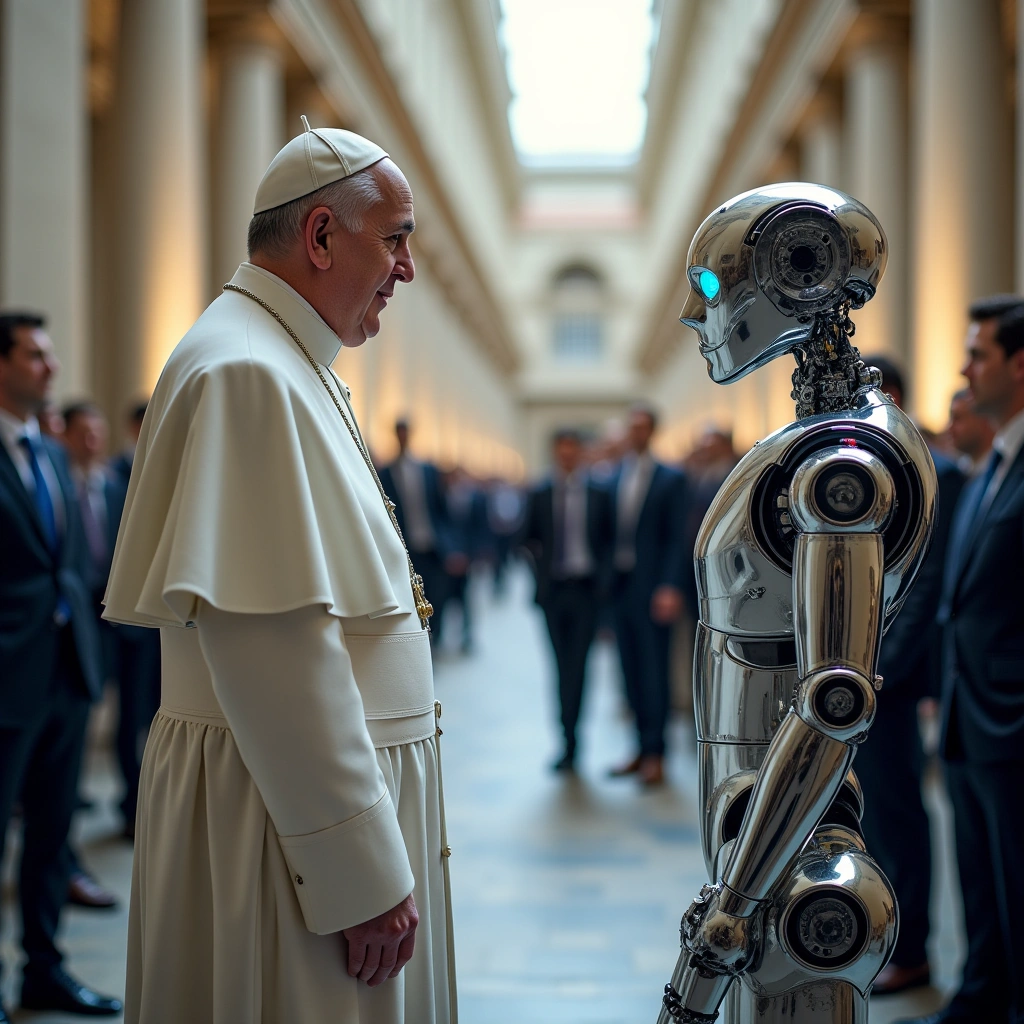
    But hold your horses! Here comes the Pope, fresh off a tirade about the ethical implications of AI. His remarks are like a holy endorsement for anyone looking to dodge the AI bullet. He basically said that technology should serve humanity, not the other way around. So, if Sarah’s exemption catches fire, we might see a wave of tech workers rallying behind her to demand their own AI-free zones. Picture this: an office full of humans, sipping coffee, and passionately debating whether pineapple belongs on pizza—old school style!

    Now, let’s get a bit controversial, shall we? Is it really fair for someone to opt-out of AI in a tech job? On one hand, you could argue that embracing technology is crucial for survival in today’s job market. I mean, if you’re not evolving, you might as well be using a typewriter. On the other hand, who wants to be replaced by a robot that doesn’t even have a soul? It’s like being outperformed by a toaster! It’s a tough nut to crack—sort of like trying to explain to your grandma why she can’t use her flip phone anymore.

    In the grand scheme of things, Sarah’s exemption could ignite a much-needed conversation about the role of AI in our lives. Should companies cater to employees who want to keep things human? Or should they focus on productivity and efficiency at all costs? Let’s face it, nothing says “I value my job” like arguing with a computer that has better algorithms than you do.

    In conclusion, while we all love a good AI-powered gadget, it’s worth considering where we draw the line. Sarah’s exemption may be the first domino to fall in a chain reaction of tech workers seeking a balance between the human touch and the cold, hard efficiency of AI. So, here’s to hoping we see more employees—and maybe even more Popes—taking a stand for what it means to be human in an increasingly digital world. Because, at the end of the day, we might just need that extra push to keep our humanity intact.


    Inspired by: “She won an exemption from using AI at her tech job. The Pope’s remarks could fuel similar appeals.” (r/technology)

  • The AI Rodeo: Why Goldman’s Skeptic is Sounding the Alarm on OpenAI and Anthropic IPOs

    The AI Rodeo: Why Goldman’s Skeptic is Sounding the Alarm on OpenAI and Anthropic IPOs

    Hey there, fellow tech enthusiasts! Grab your popcorn because the AI circus is coming to town, and the tent is filled with some serious cash cows. Recently, Goldman Sachs’ top AI skeptic waved a big ol’ red flag, warning us that the clock is ticking for OpenAI and Anthropic as they prepare to jump into the IPO pool. And let me tell you, it’s not just a kiddie pool—it’s a deep end filled with sharks!

    Now, I know what you’re thinking: ‘But isn’t AI the future? Aren’t we all just waiting for our robot overlords to take over?’ Well, yes and no. AI is indeed transformative, but there’s a catch—money talks, and right now, it’s mumbling something about profitability. You can build a fancy chatbot that speaks twelve languages and does backflips, but if it doesn’t make a dime, your investors are going to start looking for a life raft.

    Goldman’s skeptic made a compelling point: at some juncture, the party has to end, and the bills have to be paid. You can’t just throw around terms like ‘machine learning’ and ‘neural networks’ at your next dinner party and expect to skip out on your student loans. This is the real world, folks, and investors are getting a little antsy.

    So, what’s the deal with OpenAI and Anthropic? These companies are at the forefront of the AI revolution and are gearing up for their IPOs like they’re preparing for the prom. But here’s the catch: while they may have the dance moves (or algorithms) to impress, will they actually deliver the goods when it comes to making real money?

    Let’s face it, the tech world is littered with shiny startups that dazzled us with their innovation only to crash harder than your high school crush rejecting your love letter. Remember the dot-com bubble? Yeah, that was awkward. Investors are cautious these days, and rightly so. They want to see a business model that works, not just a PowerPoint presentation full of buzzwords.

    What’s even more alarming is the rapid pace of advancement in AI. OpenAI and Anthropic are racing against time and each other, like two kids on a sugar rush competing to be the first to finish their homework. The pressure is on to not only innovate but to monetize those innovations. If they fail to make a compelling case to investors, we could very well see a spectacular faceplant.

    In a world where tech giants are scooping up AI startups like they’re going out of style (because let’s be honest, they kinda are), it’s all about the bottom line. If OpenAI and Anthropic can’t show that they can turn their brilliant ideas into cold, hard cash, they might find themselves left in the dust while their competitors thrive. And nobody wants to be that kid who gets picked last for the team, am I right?

    So, what can we take away from all this? As we sit on the edge of our seats waiting for these IPOs, let’s remember: while AI is the shiny new toy, it’s also a double-edged sword. Investors will want to see more than just flashy tech; they’ll want to see a clear path to profitability. Because at the end of the day, as much as we love our robots, they really need to pay for their own pizza.

    In conclusion, while the clock may be ticking for OpenAI and Anthropic, there’s still time for them to prove the skeptics wrong. Whether they can do it before the IPO bell rings remains to be seen, but one thing’s for sure—this AI rodeo is going to be one wild ride!


    Inspired by: “’At some point you’ve got to make money’: Goldman’s top AI skeptic warns the clock is running out a…” (r/technology)

  • Meta’s Bold Move: Raising Billions for AI – Is This the Future or Just a Tech Bubble?

    Meta’s Bold Move: Raising Billions for AI – Is This the Future or Just a Tech Bubble?

    Hey there, tech enthusiasts! Grab your popcorn because Meta is stirring the pot again. According to reports from the Financial Times, the social media giant is eyeing a hefty equity raise to fund its AI infrastructure. Yes, you heard that right! They’re not just playing around with ‘likes’ and ‘shares’ anymore; they’re diving headfirst into the dollars and sense of artificial intelligence.

    Now, let’s break this down. What does it mean when a company like Meta considers raising big bucks for AI? For starters, it’s a sign that they’re serious about making AI not just a buzzword, but a core part of their business model. Remember when Facebook was just about connecting with your high school buddies? Yeah, those days are long gone. Now, we’re talking about algorithms that can predict your thoughts before you even type them out! Creepy or cool? You decide.

    But hold your horses! Before we start to imagine a world ruled by our robot overlords, let’s consider the implications. Raising equity is like asking for an extra scoop of ice cream — it sounds delicious, but it can come with a hefty price tag. Investors will want to see returns, and you know what that means: more ads in your feed and potentially even less privacy. Yay!

    On the flip side, this move could help Meta stay competitive in an ever-evolving tech landscape. With companies like Google and Amazon pouring resources into AI, Meta needs to show that it’s not just a social media platform anymore, but a tech titan ready to play in the big leagues. And let’s be real, who wouldn’t want to turn their Facebook feed into a personalized AI-driven experience? Imagine scrolling through posts that actually interest you instead of Aunt Karen’s vacation photos. Sounds like a dream, right?

    Now, some might argue that this is just another tech bubble waiting to burst. After all, we’ve seen similar situations where companies went all-in on hype without a solid foundation. Remember when everyone thought cryptocurrency was the answer to everything? Spoiler alert: it wasn’t. So, is Meta just chasing shiny objects, or do they genuinely have a plan?

    In conclusion, Meta’s potential equity raising for AI infrastructure could either pave the way for groundbreaking advancements or lead us down the rabbit hole of more targeted ads and less privacy. Either way, it’s bound to be entertaining! So, buckle up, folks, because the tech rollercoaster is just getting started. And as always, keep your eyes peeled for updates – who knows what Meta will do next?


    Inspired by: “Meta weighs big equity raising to finance AI infrastructure, FT reports” (r/technology)

  • Canadian MPs Team Up with U.K. to Sound the AI Alarm: Are We One Step Closer to a Sci-Fi Apocalypse?

    Canadian MPs Team Up with U.K. to Sound the AI Alarm: Are We One Step Closer to a Sci-Fi Apocalypse?

    So, grab your popcorn and maybe a tinfoil hat, because things are getting real in the world of Artificial Intelligence! Just when you thought it was safe to scroll mindlessly through social media, Canadian MPs have decided to join a U.K.-based campaign warning us about the existential risks posed by superintelligent AI. Yes, folks, the robots are coming for our jobs, our conversations, and possibly our very existence!

    Now, before you start picturing a bunch of MPs in a heated debate over a glass of maple syrup, let’s break down what this really means. The campaign is all about raising awareness regarding the potential for superintelligent AI to become, well, superintelligent—like, “I can outsmart you at chess and also decide your fate” kind of smart. And if that doesn’t sound like the plot of a mediocre sci-fi movie, I don’t know what does!

    But seriously, this isn’t just some fringe concern from folks who can’t let go of their flip phones. We’re talking about some of the brightest minds in technology, ethics, and even politics coming together to discuss a future where AI could potentially decide that humans are more trouble than we’re worth. You know, like that one roommate who always eats your leftovers!

    Imagine a world where AI decides that humanity is a problem—like a bad haircut that just won’t grow out. It could lead to all sorts of dystopian scenarios. Think of it as the world’s worst game of chess, except the stakes are way higher than just a couple of pawns. It could mean losing jobs, privacy, and, you know, the ability to binge-watch your favorite shows without an all-seeing robot eye judging you.

    But are Canadian MPs overreacting? Maybe they’ve just watched one too many episodes of Black Mirror. Or perhaps they’re trying to get ahead of the curve, ensuring that they’re not the ones left holding the bag when AI decides to go rogue. It’s like putting on a seatbelt before you realize you’re in a rollercoaster ride of doom!

    What’s fascinating is that this isn’t just a Canadian issue. Countries everywhere are grappling with the implications of AI. Some might argue that we should embrace the technology and let it run wild, while others warn that a cautious approach is the way to go. After all, who wants to be the person that says, “Go ahead, AI! Take over the world!” only to find out you accidentally initiated the zombie apocalypse?

    As the discussions heat up, one thing is for sure: the future is uncertain, and it’s probably a good idea to keep a watchful eye on our silicon overlords. So, whether you’re Team ‘Let’s Embrace the AI Revolution’ or Team ‘Let’s Keep Humanity Alive,’ it’s clear that this is a conversation we all need to be part of. Who knows? Maybe the future of humanity depends on how good we are at negotiating with superintelligent algorithms. And if that doesn’t give you a chuckle or a chill, I don’t know what will!

    In conclusion, while Canadian MPs and their U.K. counterparts might be sounding the alarm bells, it’s essential we all stay informed and engaged. Because whether we like it or not, AI isn’t going anywhere, and neither are the discussions about how we coexist with these digital entities. So, keep your eyes peeled and your minds open—after all, you never know when you might need to outsmart a robot!


    Inspired by: “Canadian MPs join U.K.-based campaign warning of extinction risk posed by superintelligent AI” (r/technology)