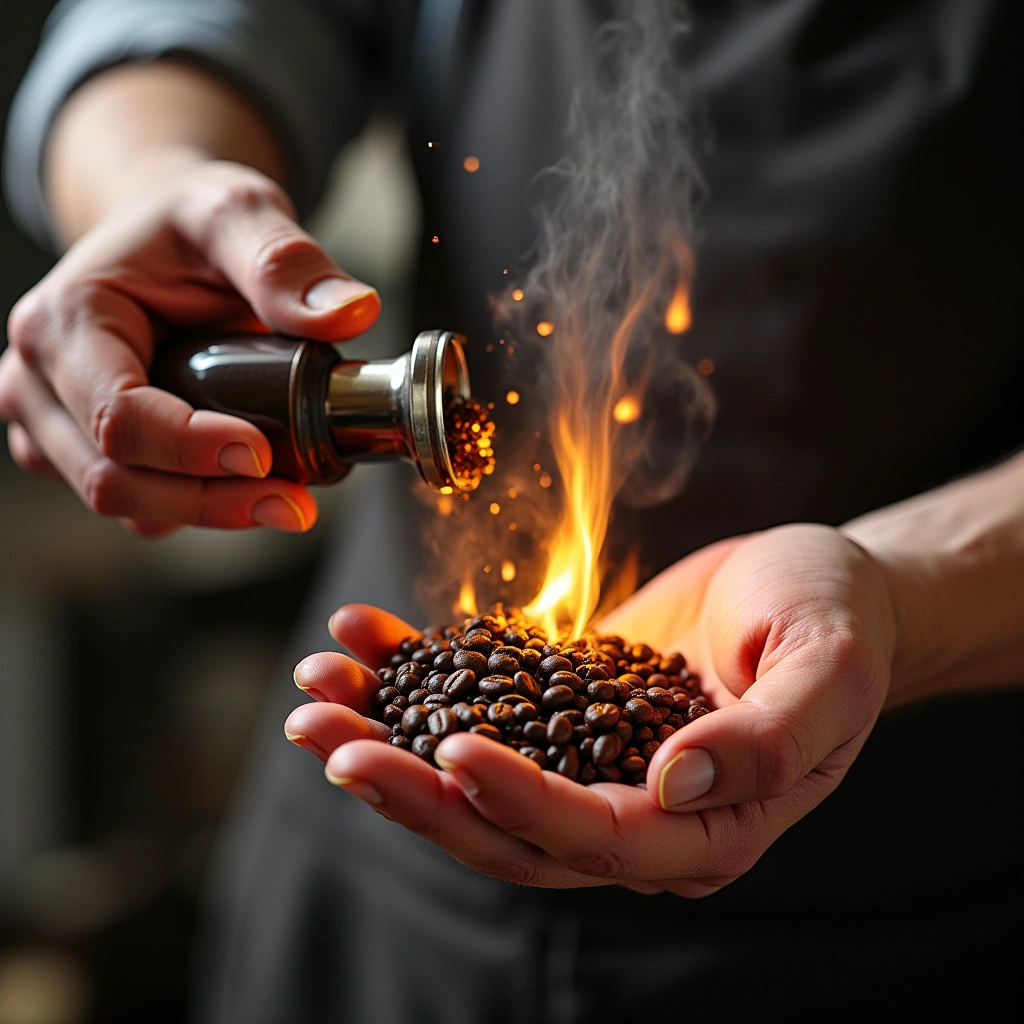
Carbon – negative coffee roasting is increasing in popularity as specialty coffee roasters aim to reduce the impact on their local environments.
Ah, coffee—the magical elixir that transforms us from grumpy gremlins into functioning human beings. But what if I told you that our beloved coffee could also have a green thumb? A recent discussion on Reddit has sparked my interest, and it seems there’s a budding project in Wyoming that might just be brewing up a carbon-negative coffee roasting process. Intrigued? You should be!
Now, let’s break this down. The project in question is collecting spent coffee grounds from local shops (because let’s face it, those grounds have more potential than just being dumped in the trash). They dry these grounds using solar energy and then convert them into fuel for an indirectly heated coffee roaster. Sounds like a scene straight out of a sustainability fairy tale, right? The energy produced from these grounds is then used to roast the next batch of beans. Talk about recycling on steroids!
But wait, there’s more! This process cleverly leaves behind a portion of carbon in the form of biochar, which is basically the superhero version of compost. Instead of the carbon just floating back into the atmosphere like a bad sequel to a movie, it gets sequestered in the soil. So, on paper, this loop looks pretty compelling. Coffee plants absorb carbon, spent grounds are transformed into energy, and biochar enriches the soil. It’s like a coffee circle of life!
But before we all start doing a happy dance about being carbon-negative, we need to have a serious chat about the fine print. The term “carbon-negative” is as slippery as a greased pig at a county fair. It depends heavily on the system boundary, which in layman’s terms means we have to account for all the nitty-gritty details. Collection, drying, transportation, equipment manufacturing, combustion emissions, and the stability and final use of the biochar all need to be factored in. It’s like trying to calculate how many licks it takes to get to the center of a Tootsie Pop—there are just too many variables!
Now, here’s where it gets personal: the original poster of this Reddit thread is actually involved in developing this process. So, there’s a bit of bias here, but that’s okay. We all have our favorite coffee blends, and sometimes, we want them to be extra special. They’re genuinely seeking feedback from the community on what it would take for this process to be considered credibly carbon-negative. Would an independent lifecycle analysis do the trick? Or does the biochar require third-party measurement and verification? And how do we even account for the avoided disposal emissions and displaced propane?
As coffee lovers, we want our brew to not only taste good but also feel good. It’s like the perfect relationship—great flavor, and it doesn’t leave you feeling guilty about the environment. So, as we sip our lattes, let’s ponder this: Could coffee roasting become a beacon of sustainability?
In conclusion, while the idea of carbon-negative coffee roasting is brewing, we need to ensure that it’s not just a frothy claim topped with a dollop of wishful thinking. It’s essential for these processes to be rigorously analyzed and verified. And until then, let’s keep our cups full and our hopes high. After all, whether it’s a morning pick-me-up or a step towards a greener planet, coffee is always a good idea!
Inspired by: “Can coffee roasting ever be legitimately carbon-negative?” (r/climatechange)