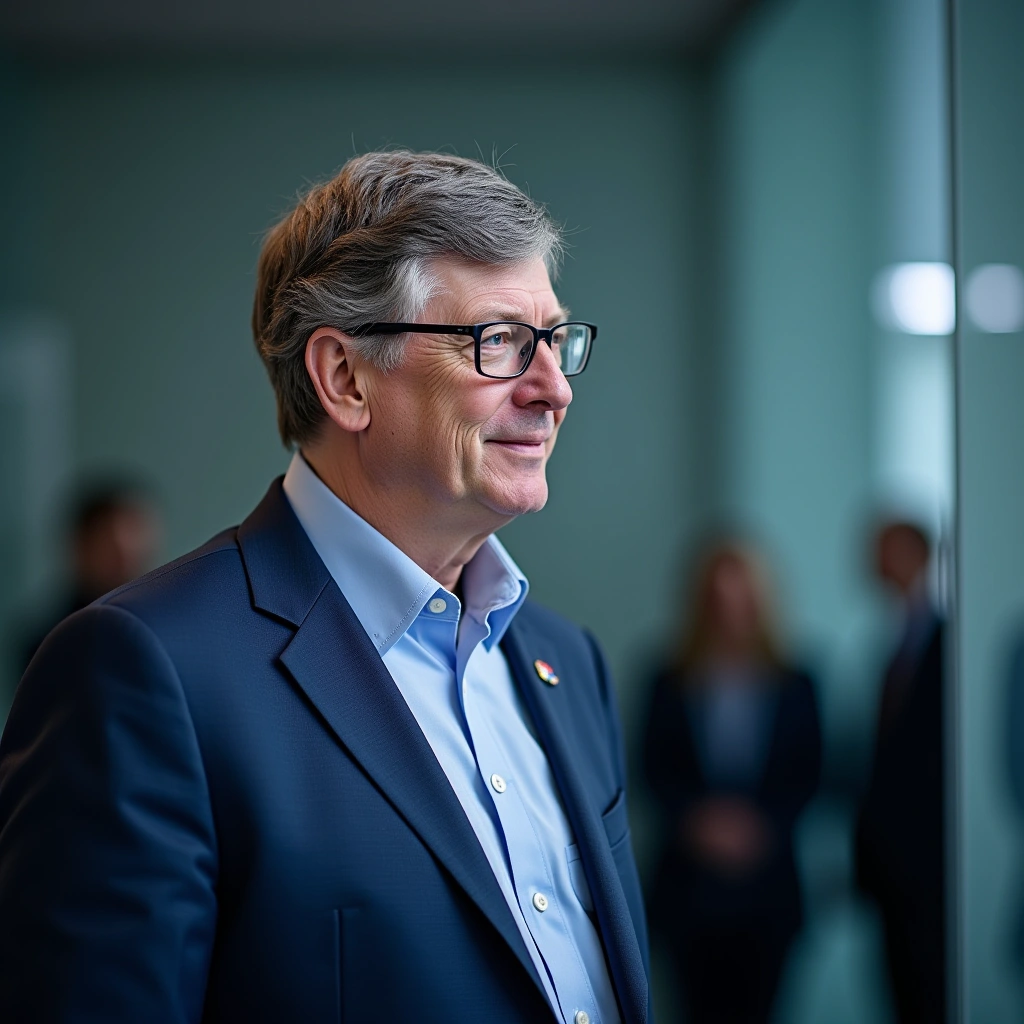
Ah, Bill Gates. The man who made a fortune encouraging us to not open emails from Nigerian princes now wants to combine biometric digital IDs, bank accounts, and our health records into one big happy family. Sounds like a recipe for a tech-savvy utopia, or a privacy nightmare. Let’s dive into this, shall we?
First off, Gates argues that merging these systems will help monitor people’s health records. I mean, who wouldn’t want a digital watchdog keeping tabs on their flu shots and broccoli consumption? But let’s be real: if we really wanted to monitor our health, we’d probably just have to stop binge-watching reality TV shows, right?
Now, the idea of keeping tabs on farmers to tackle climate problems is compelling. After all, agriculture is a significant contributor to greenhouse gases. But do we really think farmers are going to embrace a system that tracks their every move while they’re trying to keep their crops alive? I can see it now: “Hey farmer Joe, your corn is over the limit on carbon emissions. Time to plant a new crop!”
Then there’s the security aspect. Gates assures us this system is the key to keeping our information safe. Sure, because we all know how well that worked out for the Target data breach and those pesky little hacks that made our lives a living hell. Who needs privacy when you can have a digital ID that tells everyone what you had for breakfast?
And don’t even get me started on the “convenience” factor. Yes, I can see the appeal of having everything in one place. But this is the same guy who brought us Windows Vista, so forgive me if I’m a tad skeptical about the seamless integration of my health records with my bank account. What could possibly go wrong?
Moreover, it’s interesting how Gates is positioning this as a solution for climate change. Don’t get me wrong, we need to tackle climate issues, but is tracking every individual’s health really the way to go? It feels a bit like using a sledgehammer to crack a nut. Maybe we should focus on reducing emissions at the corporate level first instead of turning every citizen into a walking, talking data point.
In conclusion, while the idea of merging biometric digital IDs, bank accounts, and health records sounds like a futuristic dream, we must approach it with caution. Let’s not forget the age-old saying: “If it sounds too good to be true, it probably is.” So before we start handing over our biometric data like candy on Halloween, let’s have a good, hard think about the implications. And maybe keep a few secrets to ourselves—like the number of times we’ve ordered pizza on a Tuesday night.