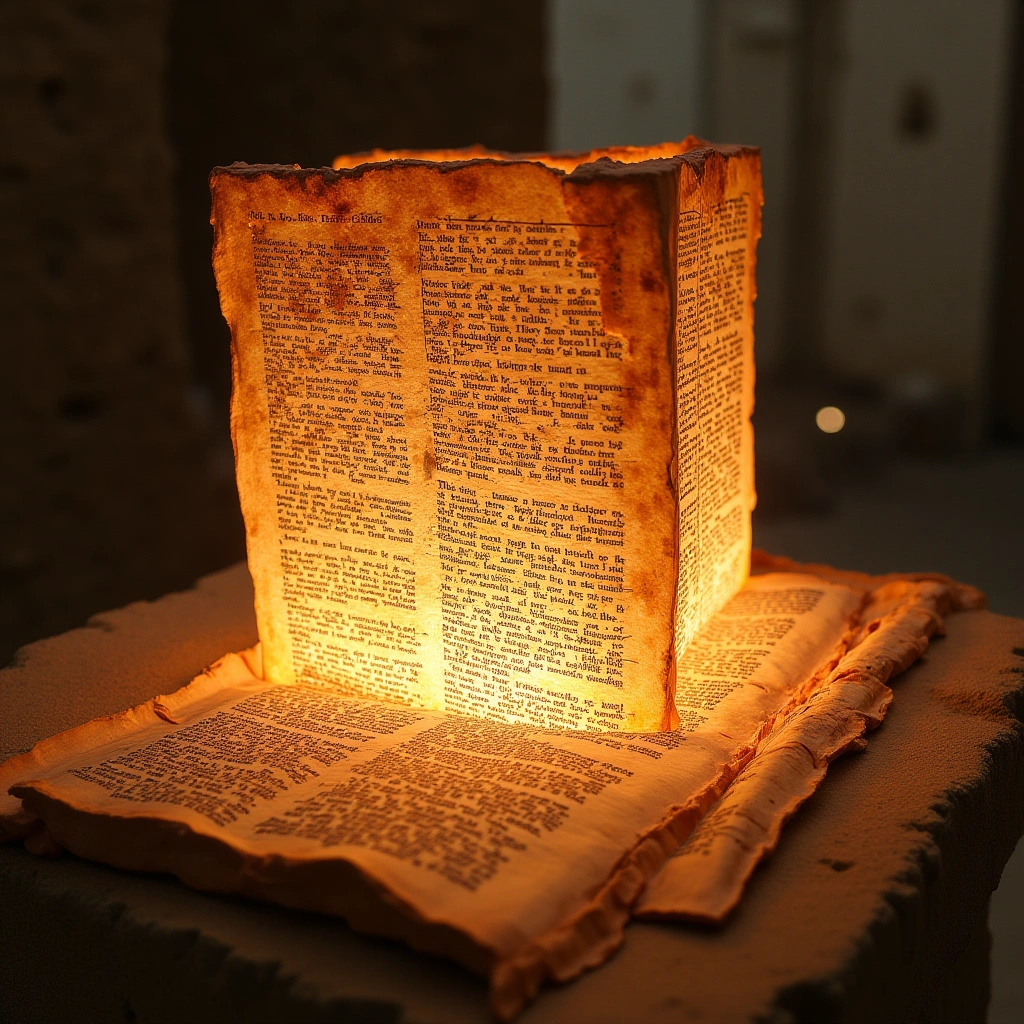
Imagine a world where you can read texts that were written over two millennia ago—texts that have been reduced to charred remnants by a volcanic eruption. Sounds like the plot of a sci-fi movie, right? Well, hold onto your hats, folks, because thanks to artificial intelligence, this is no longer just a fantasy.
The surviving part of an ancient … intelligence. Researchers uncovered 20 columns of previously hidden text covering more than a metre of charred papyrus without physically unrolling the scroll….
In a remarkable intersection of technology and history, researchers have leveraged AI to decipher papyrus scrolls that were destroyed during the catastrophic eruption of Mount Vesuvius in 79 AD. Yes, you heard that right! Those scrolls, once thought to be lost forever, are now getting a second chance at life, all thanks to some clever coding and a sprinkle of machine learning magic.
The scrolls were found in the ruins of Herculaneum, a town that was buried under volcanic ash along with Pompeii. These scrolls were carbonized and turned into crispy critters, making them nearly impossible to read with the naked eye. It’s like trying to read a book that’s been left in a toaster—good luck with that!
Enter the AI heroes of our story. Researchers have been utilizing advanced imaging techniques combined with machine learning algorithms to analyze the scrolls. By using techniques like X-ray phase contrast tomography, they can create 3D images of the scrolls without even unrolling them. Seriously, this is the kind of tech that makes you feel like you’re living in the future.
Once they have these images, the AI steps in to help decipher the text. It analyzes the patterns and ink traces that are barely visible to human eyes. The AI essentially plays a high-stakes game of “Where’s Waldo?” with ancient letters. And just like that, words that have been silent for centuries are starting to speak again.
But let’s take a moment to appreciate how wild this is. We’re talking about a technology that can read burnt papyrus scrolls, while some of us still struggle to read the fine print on our phone contracts. It’s a humbling reminder of how far we’ve come—and how much we still need to work on our reading comprehension skills.
Now, you might be wondering what kind of juicy secrets these scrolls hold. While the researchers are still in the early stages of deciphering the texts, some believe they could contain philosophical writings, literary works, or even lost plays by ancient playwrights. Imagine finding a long-lost comedy by a Roman equivalent of Shakespeare! That would surely make for an interesting dinner conversation.
Of course, there are skeptics out there who might raise an eyebrow at the thought of AI deciphering ancient texts. After all, can a machine truly understand the nuances of human language and culture? Well, while AI might not be ready to write the next great novel (or maybe it is, and we just don’t know it yet), it certainly has proven itself to be a powerful tool for historians and archaeologists.
In conclusion, the resurrection of these ancient texts is a phenomenal testament to the capabilities of modern technology. Who would have thought that a bunch of burnt scrolls could lead to such a groundbreaking collaboration between AI and human curiosity? So, the next time you think about the ancient world, just remember that even the dustiest remnants of history can be brought back to life with a little help from artificial intelligence. And who knows? Maybe one day, AI will help us solve the mystery of why we still can’t find our car keys.
Stay tuned for more updates on this incredible journey into the past, and keep your eyes peeled for those ancient scrolls—who knows what they might reveal next!
Inspired by: “AI helps read papyrus scroll burnt to crisp during Vesuvius eruption | AI (artificial intelligence)” (r/technology)