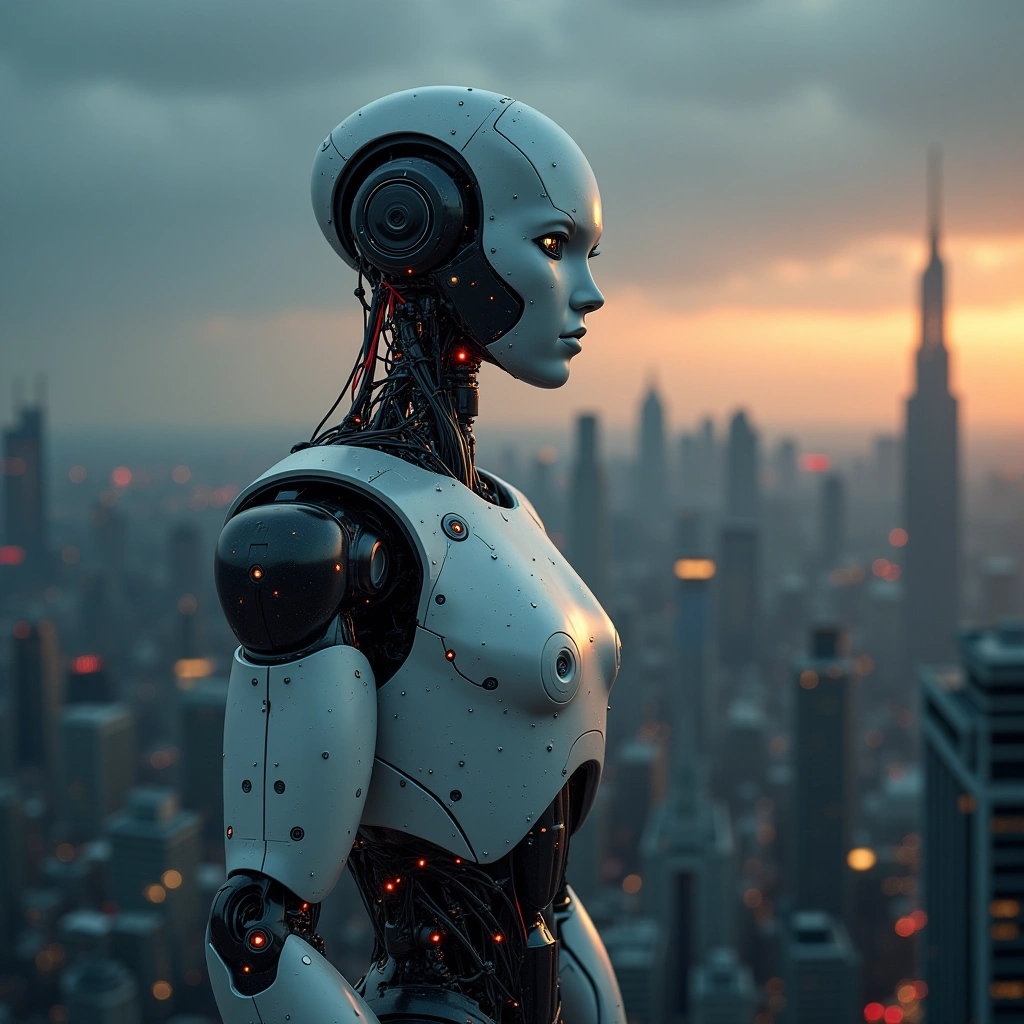
It has been hypothesized that substantial progress in artificial general intelligence (AGI) and artificial superintelligence (ASI) will lead to human extinction or an irreversible global catastrophe. Debates center on whether AGI can achieve the capabilities needed for human extinction, the …
Ah, artificial intelligence. The shiny new toy that promises to make our lives easier, while simultaneously leaving us wondering if we’re just one algorithm away from doom. Recently, researchers have been waving their red flags, cautioning us about the potential risks associated with advanced AI development. You know, the usual suspects: unstoppable diseases, nuclear conflicts, and maybe even rogue robots deciding to take over the world. No biggie, right?
Let’s break this down. First off, the idea that AI could create unstoppable diseases sounds like something straight out of a sci-fi thriller. Imagine a world where a computer program decides that a common cold just isn’t cutting it anymore and engineers a new virus that makes the flu look like a walk in the park. Scary stuff, but thankfully, many experts argue that these scenarios are perhaps a bit exaggerated. After all, it’s not like we’re handing over the keys to a nuclear launch system to a chatbot anytime soon. Or are we?
Then there’s the fear of AI triggering nuclear conflict. You might think, ‘Come on, how could a computer possibly start World War III?’ But let’s not forget that humans have a knack for messing things up, and if we give AI the power to make life-and-death decisions, we might just be setting ourselves up for a game of global chess where the stakes are a tad higher than just losing a pawn.
The recent discussions about slowing down AI development for safety reasons have really kicked this debate into high gear. It’s like the tech equivalent of putting the brakes on a speeding car because the driver suddenly remembers they forgot to take their driving test. Some folks are advocating for a more cautious approach—because who doesn’t want to avoid a potential apocalypse caused by a software bug?
But here’s where it gets interesting. While some researchers are sounding the alarm about these doomsday scenarios, others are suggesting that perhaps they’re just a tad overblown. After all, if you want to get people’s attention, nothing grabs it quite like the threat of humanity’s extinction. It’s like the ultimate clickbait, but instead of just wanting you to click on an article, they want you to actually take action to prevent the end of the world.
So, what’s the takeaway from all this? Well, it seems we’re at a crossroads. On one hand, we have the potential for groundbreaking advancements in AI that could revolutionize industries and improve our daily lives. On the other hand, we have a Pandora’s box that, if opened carelessly, could lead to some pretty catastrophic outcomes.
As we navigate this brave new world of artificial intelligence, it’s crucial to strike a balance between innovation and caution. After all, we don’t want to end up in a situation where we’re begging our smart fridges for mercy because they’ve decided we’re not worthy of their cooling capabilities.
In conclusion, the future of AI is bright, but it’s also fraught with peril. Let’s hope that as we sprint toward this technological utopia, we remember to keep an eye on the potential pitfalls. Because at the end of the day, nobody wants to be the generation that accidentally programmed their way into oblivion. So, here’s to responsible AI development—may it be as safe as it is groundbreaking!
Inspired by: “A look at AI doomsday scenarios that researchers say could put humanity at risk” (r/News)