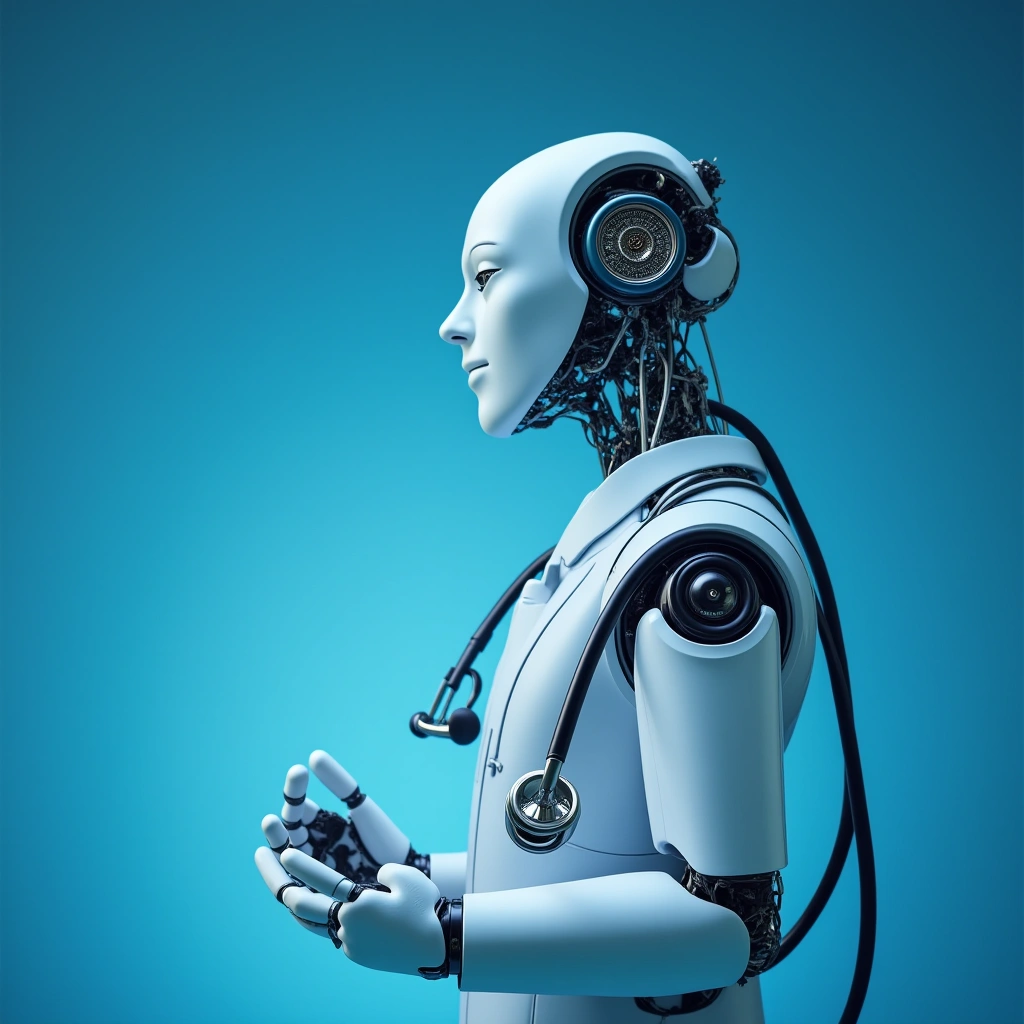
Hey there, fellow health enthusiasts and digital explorers! Let’s dive into a topic that’s hotter than a jalapeño in a sauna: AI doctors. You might be wondering, ‘Are these algorithmic wizards going to replace my friendly neighborhood physician, or are they just glorified calculators with a white coat?’ Well, buckle up because we’re about to embark on a wild ride through the future of medicine!
Related reading: Original source
First things first, let’s talk about what AI doctors actually are. No, they’re not robots performing surgery with robotic precision like something out of a sci-fi flick. Instead, they’re advanced algorithms and machine learning models designed to analyze medical data, diagnose conditions, and even suggest treatments. Think of them as the nerdy best friend of your regular doctor—always there to lend a hand, but maybe not quite ready to take over the party.
Now, some of you might be thinking, ‘But can they do my doctor’s job better?’ Well, in some ways, yes! AI can analyze vast amounts of data faster than you can say ‘healthcare crisis.’ They can sift through millions of patient records, research papers, and clinical studies to find patterns that a human might miss. It’s like having a medical Sherlock Holmes, minus the deerstalker hat.
However, let’s not get too carried away with this tech takeover. While AI can diagnose illnesses with impressive accuracy, it lacks the human touch. You know, that comforting pat on the back or the ability to tell you that, yes, those weird rashes are probably not a sign of an alien invasion. Empathy is something that AI just can’t replicate, at least not yet. So, while your AI doctor might give you a perfect diagnosis, it won’t suggest a hot cup of tea and a cozy blanket for your cold.
Now, let’s address the elephant in the room: Will AI doctors take over the medical field? Well, while they might be able to assist in diagnosing and even monitoring patients, they’re unlikely to replace human doctors entirely. Think of AI as a trusty sidekick—like Robin to Batman, or the fries to your burger. They enhance the experience but don’t steal the show!
On the flip side, the implementation of AI in healthcare does raise some eyebrows. Privacy concerns? Check! Who wants their medical history floating around in the cloud like a bad reality show? Misdiagnosis? Double check! After all, no one wants to be the patient who walks in for a check-up and walks out with a prescription for a unicorn horn.
So where does this leave us? Well, it looks like the future of medicine is going to be a blend of human compassion and AI efficiency. Picture this: You walk into your doctor’s office, sit down, and the AI has already analyzed your health data, flagged potential issues, and even suggested some preventive measures. Your doctor then swoops in like a superhero, armed with empathy and the ability to understand your fears and concerns. It’s the best of both worlds!
In conclusion, AI doctors are here to stay, but they’re not about to kick your family practitioner to the curb anytime soon. Instead, they’ll be working together, and that’s a partnership worth celebrating. So, the next time you hear about AI in medicine, don’t panic! Embrace the nerdy sidekick who’s here to help make healthcare better for all of us—just as long as it doesn’t start diagnosing us with ‘the TikTok syndrome’!
Inspired by: “How good are ‘AI doctors’ — and will they take over medicine?” (r/technology)