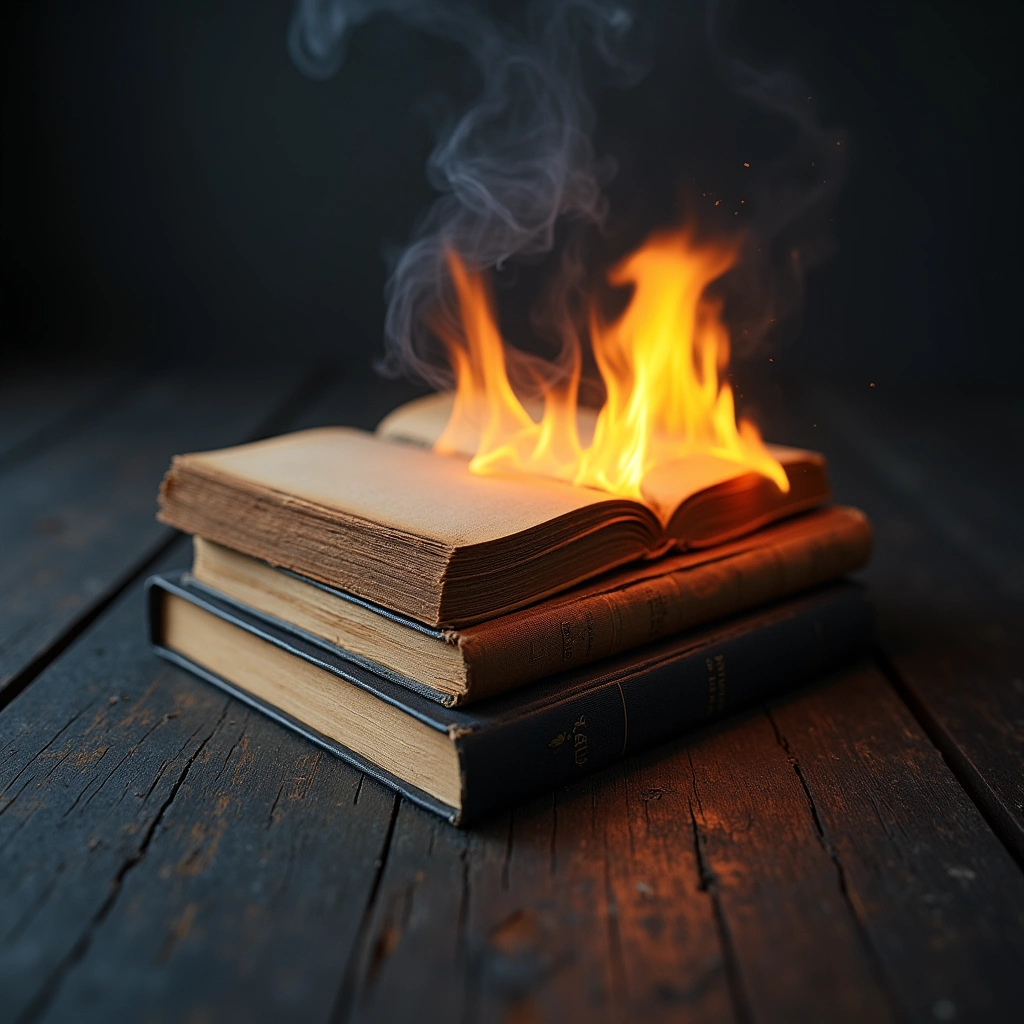
AI companies are quietly obtaining rare books, ingesting their contents, and then destroying them — even if they're exceedingly rare.
In a world where books were once revered for their ability to transport us to different realms, offer us knowledge, or simply collect dust on our shelves, it seems that AI companies have found a new purpose for them: turning them into data soup. Yes, you heard that right. Instead of being cherished literary companions, books are now being devoured by AI models and then, quite literally, shredded to pieces. Who knew that the future of reading would involve hydraulic cutting machines?
Traditionally, books served two primary functions: enlightening readers and looking classy in our living rooms. But for those creating large language models, books are just raw material to be processed at an alarming rate. Forget about appreciating the literary genius of authors; these companies are more interested in turning pages into pixels. They’ve been known to prefer digital formats, especially when they can get their hands on pirated versions. And if they can’t find those, physical books will do just fine—after all, they’re only a few bucks at your local thrift store.
Take Anthropic, for example. This company decided that buying used books was a smart move—so smart, in fact, that they employed a hydraulic-powered machine to rip the pages from these books. You might think this is a scene straight out of a horror movie where the protagonist is a book-hating villain. But no, it’s just another day in the life of AI. They then scanned these pages with industrial-grade imaging equipment, transforming beloved texts into mere data points to train their models. Talk about a literary betrayal!
The legal loophole they exploited is known as the first-sale doctrine, which allows buyers to do pretty much whatever they want with their purchases. So, as long as they’re not selling the original texts, they’re in the clear. A judge deemed their actions “transformative,” which is a fancy way of saying, “we can do whatever we want, and it’s totally legal!” It’s almost like they’re giving a nod to the original authors while simultaneously tossing their works into a digital blender.
But it doesn’t stop there. Companies like ISBNdb, which once focused on helping libraries and bookstores, have pivoted to cater to the AI boom. They’re now offering bulk purchases of books—anywhere from 1,000 to a million at a time. It’s like they’re running a Black Friday sale, except instead of discounted TVs, they’re selling off the literary treasures of the past. And let’s not forget their promise to keep these purchases under wraps. After all, nobody wants to be the next headline that reads, “AI Company Destroys Two Million Books.” That would definitely ruin the mood at the next tech conference.
One small bookseller reported that his sales skyrocketed from a measly twenty books a week to hundreds overnight, undoubtedly thanks to the AI labs. He noticed the odd assortment of books with ISBNs being snatched up, and it made him wonder just how many literary classics are being sacrificed at the altar of artificial intelligence.
So, what’s the takeaway from all this? While technology continues to advance at breakneck speed, it seems we’re losing a bit of our literary culture along the way. Sure, AI can generate text and answer questions, but at what cost? As we embrace the digital age, it’s important to remember that books are more than just data—they are the heart and soul of our collective knowledge and creativity. Let’s hope we don’t wake up one day to find that our favorite novels have been reduced to mere algorithms, all in the name of progress. After all, who wants to live in a world where the only thing left of Shakespeare is a few scattered lines in a database?
In conclusion, while AI companies are busy shredding books to fuel their models, let’s not forget to appreciate the stories and wisdom contained within those pages. Because once they’re gone, they’re gone—just like a good plot twist that leaves you reeling. So, next time you pick up a book, remember: it might just be the last copy in existence.
Inspired by: “AI Companies: The Unlikely Book Burners of the Digital Age”