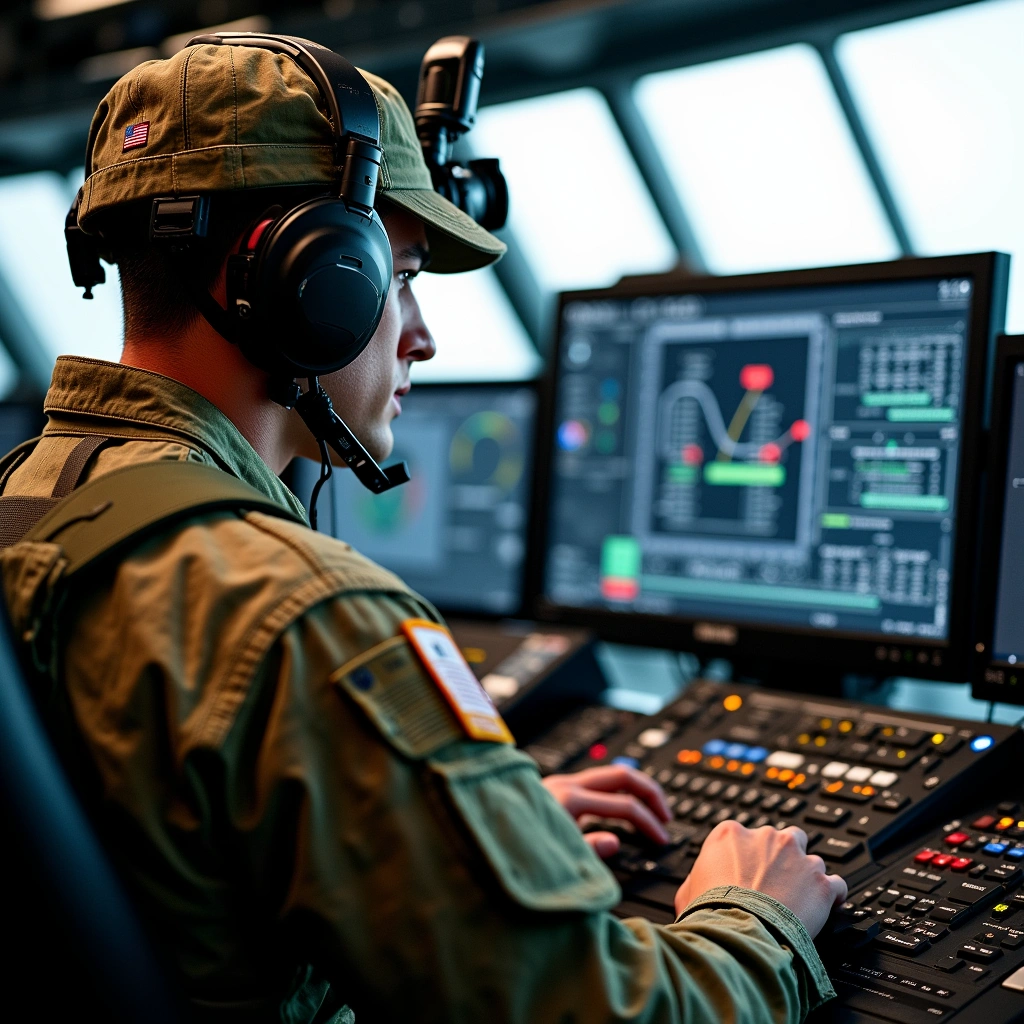
Alright, folks, grab your helmets and get ready for a wild ride through the world of military tech. You know, that realm where robots might one day be the ultimate battle buddies (and yes, I’m talking about the kind that don’t steal your fries). Recently, a little birdie—or should I say a memo from the US Army—chirped about the Anduril and Palantir battlefield communication system being labeled as ‘very high risk.’ Now, before you start imagining a scene from a sci-fi movie where everything goes haywire, let’s unpack this juicy tidbit, shall we?
So, picture this: Anduril, the cool kids on the block noted for their drone and surveillance tech, team up with Palantir, the data-crunching wizards who probably know what you had for breakfast yesterday. Together, they’ve been working on a battlefield communication system that aims to make the chaos of war a little less chaotic. Sounds like a recipe for success, right? Well, hold your horses because it seems the Army isn’t exactly popping the champagne just yet.
According to the memo, which I can only assume was written on a typewriter and delivered via carrier pigeon, there’s a laundry list of risks associated with this tech. And when I say ‘very high risk’, I’m not talking about my chances of finishing a marathon after binge-watching Netflix for a week. We’re talking about the kind of risks that could make or break a military operation.
First off, we’ve got the classic fear of tech not playing nicely together. You know, like when you try to connect your Bluetooth speaker to your phone and it just won’t cooperate? Now imagine that scenario on a battlefield where soldiers are relying on this tech to communicate vital information. Talk about a recipe for disaster! In the heat of the moment, the last thing you want is for your comms to drop out like your Wi-Fi during a crucial Zoom call.
Then there’s the whole data security aspect. If there’s one thing we’ve learned from watching movies like ‘Hackers’ and ‘WarGames’, it’s that hackers can be sneaky little devils. The Army memo hinted that the system might be vulnerable to cyberattacks. So, while soldiers are trying to coordinate their next move, some basement-dwelling genius could be playing around with their communications, just for kicks. Not cool, dude!
And let’s not forget the human element. With all this tech, there’s a risk that soldiers might become overly reliant on it, like the guy who can’t remember his own phone number because he’s too busy relying on his contact list. What happens when the tech fails? Are our brave soldiers going to be left standing there, staring blankly at the battlefield, like a deer in headlights?
Now, some might argue that innovation is essential in modern warfare. After all, the world is evolving faster than you can say ‘what’s the Wi-Fi password?’ But with great power comes great responsibility, or so Uncle Ben from Spider-Man would say. The Army is right to be cautious. We can’t just throw tech at a problem and hope it magically makes everything better. We need to ensure that it’s safe, reliable, and effective—like the ultimate Swiss Army knife of military communication.
In conclusion, while the partnership between Anduril and Palantir has the potential to revolutionize battlefield communication, the Army’s memo serves as a stark reminder that with innovation comes risk. It’s a delicate balance, much like trying to eat soup with a fork. So let’s keep our fingers crossed that these tech geniuses can iron out the kinks before we find ourselves in a real-life action movie.
As always, stay tuned for more updates, and remember: in the world of military tech, it’s not just about being cool; it’s about being safe too. And if you happen to see someone with a tinfoil hat talking about how the robots are taking over, just smile, nod, and maybe offer them a cookie. It’ll make their day!