Ah, the 1970s—a decade filled with bell bottoms, disco balls, and questionable hairstyle choices. But let’s take a detour from the dance floors of Studio 54 and slip into something a little more surreal, shall we? Picture this: a lavish soirée at the opulent Château de Ferrières, hosted by none other than the enigmatic Marie-Hélène de Rothschild. This wasn’t just any party; it was the Surrealist Ball, a night that still baffles historians, fashionistas, and partygoers alike.
Now, if you’re wondering what a Surrealist Ball entails, imagine a gathering where the only dress code is ‘eccentricity.’ Guests were encouraged to unleash their inner Dali, to don costumes that would make even the most avant-garde fashion designers raise an eyebrow. Marie-Hélène, a member of the illustrious Rothschild banking family, took her role as hostess to a whole new level, transforming her home into a fantastical landscape where the bizarre met the beautiful.
The invitations alone were a work of art—delivered in a black velvet box, they teased attendees with the promise of an unforgettable night. And boy, did it deliver! As guests arrived, they were greeted by surrealist decor: tables adorned with peculiar objects, odd sculptures, and an eclectic mix of art that would make any museum curator weep with envy.
Among the notable attendees were some of the most famous figures of the time, including Salvador Dalí himself. You know, the guy with the mustache that could double as a small animal? His presence added an extra layer of surrealism, as he mingled with society’s elite, likely discussing dreams, time, and other existential dilemmas over champagne.
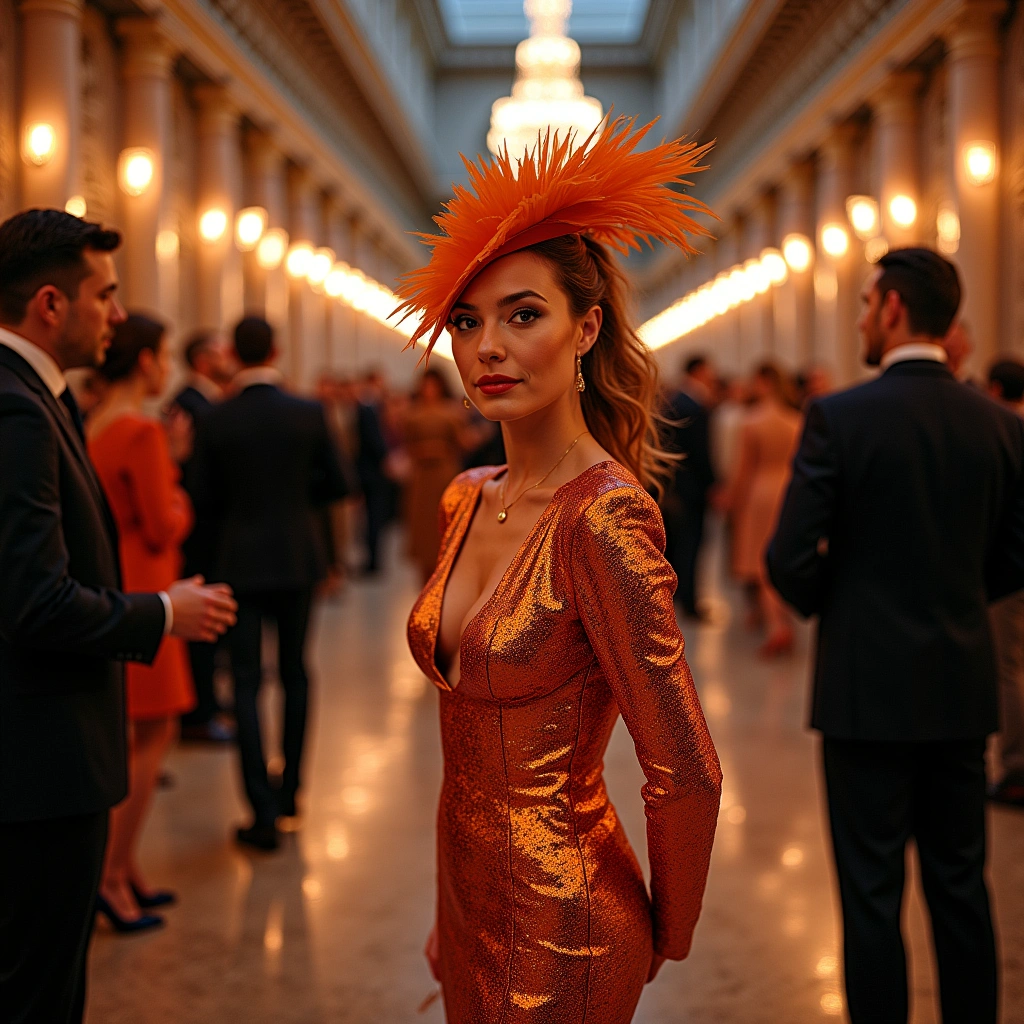
Now, let’s talk about the fashion—oh, the fashion! Guests turned up dressed as if they had just stepped out of a Salvador Dalí painting. Think wigs that defied gravity, makeup that could scare a Picasso, and costumes that were so over-the-top they could make a Broadway production look like a pajama party. Marie-Hélène herself wore a stunning gown that seemed to float in the air, while her guests donned everything from feathered headdresses to oversized hats that could double as small satellites.
As the night progressed, the line between reality and imagination blurred. The music was an eclectic mix of the bizarre and the beautiful, with sounds that made you question if you were at a ball or in a dream sequence of a David Lynch film. And let’s not forget the food—dishes that looked more like art installations than meals. Guests were probably wondering if they should eat the salad or just appreciate it as a masterpiece.
But what makes the Surrealist Ball so legendary? Was it the outrageous fashion? The eclectic guests? Or was it the sheer audacity of hosting a night that celebrated the absurd? Perhaps it was a bit of all three, wrapped in a fog of mystery that still envelops the event today.
In the end, Marie-Hélène de Rothschild’s Surrealist Ball was more than just a high-society event; it was a celebration of creativity, a defiance of convention, and a reminder that sometimes, life should be as surreal as a Dali painting. So, the next time you think about throwing a party, remember: why not take a leaf out of Marie-Hélène’s book and add a touch of surrealism to your soirée? Just make sure to have enough champagne on hand to keep the dream alive!
Now, who’s ready to don a giant hat and dance the night away in a castle? Let’s make it happen!