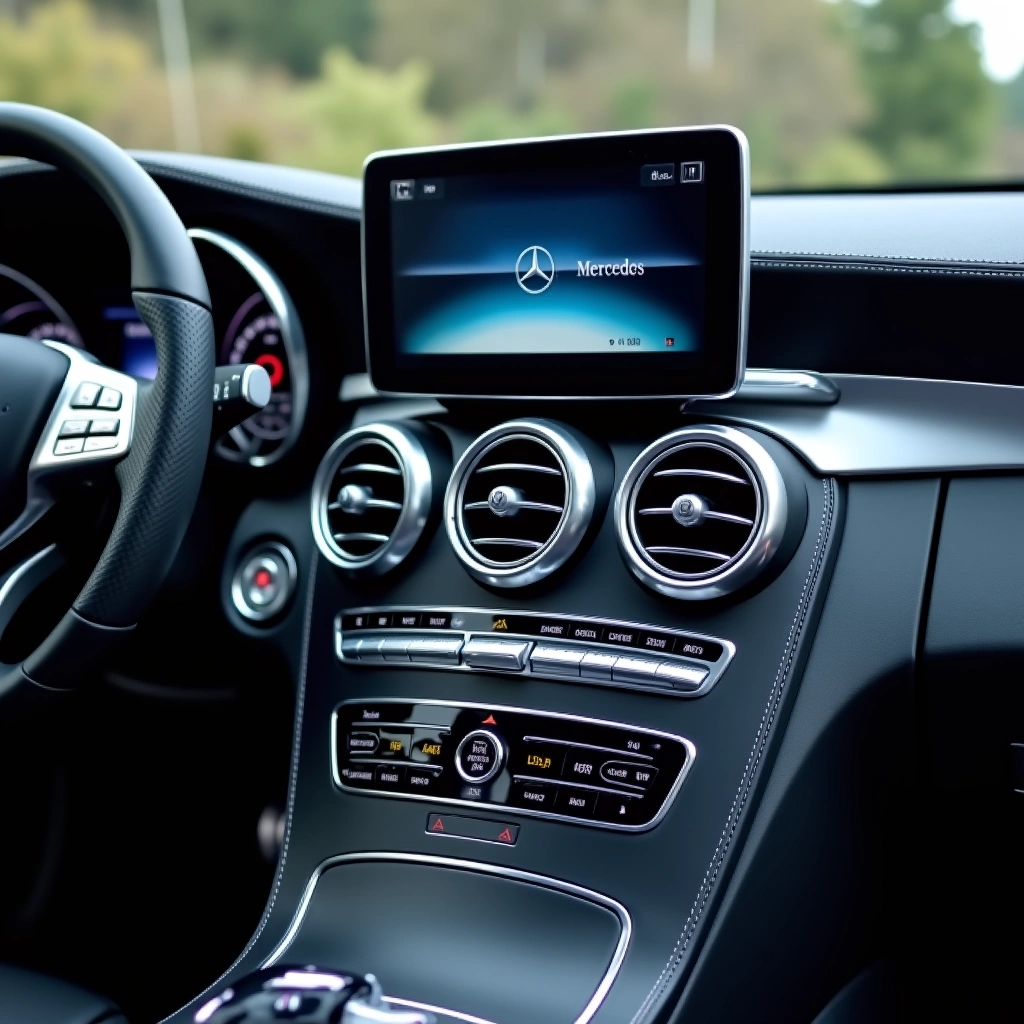
Alright, folks! Gather around, grab your favorite snack, and let’s chat about something that’s steering the automotive world into an interesting direction: Mercedes-Benz is hitting the brakes on touchscreens! Yep, you heard that right! The luxury automaker is pulling the plug on those fancy touch interfaces that have become as common in cars as bad dad jokes at family gatherings.
Now, before you roll your eyes and think this is just another boring corporate decision, let’s unpack why this is as juicy as a summer barbecue. The decision comes as safety concerns rise. Apparently, trying to adjust your seat temperature while simultaneously avoiding that pesky squirrel crossing the road is a bit more challenging when your fingers are dancing around a glass panel. Who knew?
The Touchscreen Tango
Remember when we all thought touchscreens were the bee’s knees? They were the shiny, sleek best friend of every car’s interior, making us feel like we were piloting a spaceship. But here’s the kicker: as it turns out, they can also be about as practical as a chocolate teapot when you’re trying to navigate through a crowded parking lot.
Mercedes-Benz has realized that while looking like a futuristic jet pilot is cool, having your eyes glued to a screen while driving isn’t exactly the safest practice. Who would’ve thought? They’re shifting gears (pun absolutely intended) back to physical buttons! Yes, buttons – those delightful little tactile wonders that let you know you’ve actually accomplished something!
Why Buttons Are Back in Style
Let’s be honest, pressing a button feels like a mini celebration compared to swiping on a screen like you’re trying to unlock a secret level in a video game. You can feel the click and hear the satisfying *thunk* of a button being pressed. It’s tactile, it’s comforting, and let’s face it, it allows you to keep your eyes on the road.
Plus, have you ever tried using a touchscreen while driving over a pothole that feels like you just hit a meteor? Good luck aiming for that button when you feel like you’re riding a bull at a rodeo! Physical buttons promise a bit of stability – something that every driver desperately needs.
The Future of Car Interiors
This shift is not just a fleeting trend, my friends. It’s a full-on revolution in the car interior design world! Automakers are starting to rethink not just the screens, but the entire user experience. Instead of a spaceship cockpit where you need a pilot’s license to operate, we might be heading back to a simpler, more intuitive layout.
Imagine a world where you can adjust your seat, crank up the volume, and activate the heated seats without feeling like you need a degree in technology. Sounds dreamy, right?
The Controversial Side
Now, let’s stir the pot a bit. Some might argue that going back to physical buttons is a step back in innovation. They’ll say, “But, but, touchscreens are the future!” To them, I say, “Have you ever tried driving while your car’s touchscreen is updating its software?” That’s right, it can feel like you’re waiting for a dial-up connection to load. No, thank you!
So, while some may see Mercedes-Benz’s decision as a regression, others might just see it as a return to common sense in a world that’s gone a little too tech-crazy.
In Conclusion
As we steer into this new era of automotive design, it’ll be fascinating to see how other manufacturers respond. Will they follow Mercedes-Benz’s lead and embrace the tactile, or will they continue to push the envelope with tech that sometimes feels more like a frustration than a feature? For now, let’s relish in the fact that buttons are making a comeback, and maybe, just maybe, we’ll be seeing more of that glorious click-click sound in our cars soon enough!
So, buckle up, folks! The future of driving is looking a little more… buttoned up. And who knows, maybe this will be the start of a new fashion trend – ‘The Buttoned Up Look’ in car interiors. Just imagine the Instagram posts!