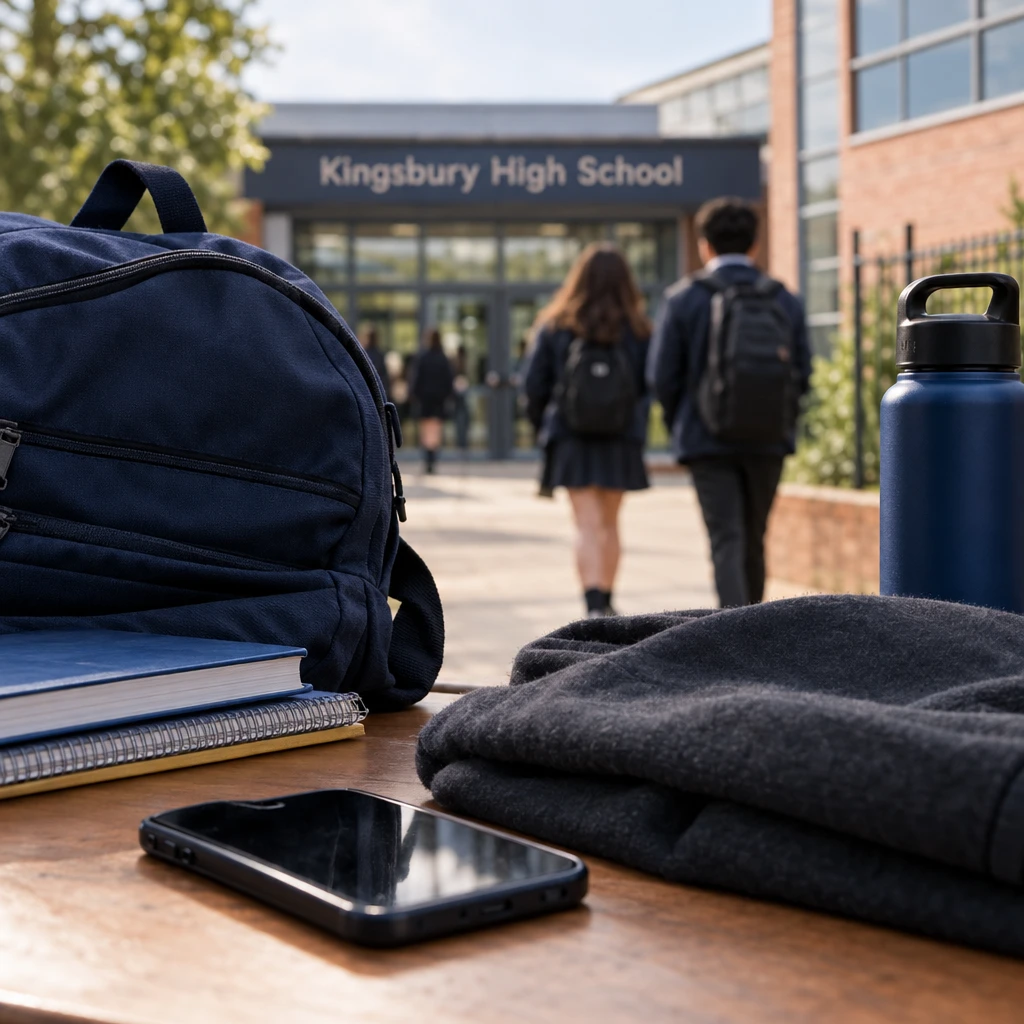
A 13-year-old boy walked into a school with a knife and insect spray and stabbed two children in the neck in an act of terrorism , a court has heard. The attack at Kingsbury High School in Brent, north-west London, on February 10, left children …
If you’ve scrolled past a headline this week about a teenager, a knife, and a London school, you probably felt that familiar lurch in your stomach. It’s the kind of story that hits hard because it involves children, a school that should have been a safe place, and a level of violence that is hard to picture happening on an ordinary weekday.
Here’s what has been reported. A 13-year-old boy is accused of stabbing two schoolchildren in the neck at Kingsbury High School in Brent, northwest London, on February 10. Prosecutors allege he shouted ‘Allahu Akbar’ during the attack. According to the reports, he had previously been excluded from the school because of behavioural issues. One student was reportedly targeted in a classroom and another in the playground. Both victims survived. Prosecutors allege the offence was attempted murder as an act of terrorism.
That’s the core of it. Now let’s talk about the parts that deserve a bit more care, because this is where a story like this can quickly turn into something messier than it needs to be.
Start with the word ‘allegedly.’ It’s doing a lot of heavy lifting here, and it’s not just legal boilerplate. Under the presumption of innocence in England and Wales, the boy has not been convicted of anything. The charges are what prosecutors have put forward, and the case will be tested in court. That process matters, even when the public already feels certain. It also matters for the victims, who deserve a fair, accurate account of what happened to them and a justice process that isn’t shaped by rumour.
Then there’s the question of how the story is being told. Three different outlets covered it, and the headlines varied quite a bit. Some led with the shouted phrase, some with the knife, and at least one with a detail about bug spray that the core reporting doesn’t spell out in the same way. Headlines are built to grab attention, and they’re often the only thing many people read. When a story involves a child accused of violence and a religious phrase, it’s worth noticing which details are being put front and centre and why. A phrase shouted during an attack is a fact that prosecutors will weigh. It is not a reason to make broad judgements about any religion or any community. Most people who read that headline will never meet the boy, the victims, or anyone involved, and they should be careful not to fill the gap with stereotypes.
The school exclusion detail is also worth a closer look. Exclusions are meant to be a last resort, but they’re sometimes the only tool schools feel they have when a pupil’s behaviour becomes unmanageable. The reports say the boy had been excluded before. That raises the obvious question of what support was in place, what happened after he was removed from the school, and whether the warning signs were picked up early enough. Those are questions for the investigation and any later review, not for a comments section. Still, they’re the questions parents, teachers, and councillors will be asking, and they deserve real answers.
It’s also worth knowing how the UK approaches cases like this. Schools and local authorities have safeguarding duties, and the government’s Prevent strategy is designed to stop people, including young people, being drawn into terrorism. Whether that framework was relevant in this case is not something the reports have established. But the basic idea, that children who show signs of radicalisation or serious distress need intervention before they reach the point of violence, is the reason these systems exist.
Finally, spare a thought for the two students at the centre of this. They were children going to school, and they were badly hurt. Both survived, which is a relief, but surviving a stabbing to the neck is not a small thing. Physical recovery is only part of it. Being in a classroom or a playground and suddenly becoming the target of an attack can leave lasting fear, and their families are likely dealing with that too.
So, no tidy conclusions here, and honestly, that’s probably the right place to land. A boy is accused of a shocking act of violence against two children. The court will decide what happened. Schools will be asked hard questions. And the rest of us should read the headlines with a healthy dose of scepticism, keep the facts in order, and remember that behind every alarming phrase in a news story there are real kids, real families, and a legal process that still has a long way to go.
Inspired by: “Teen ‘stabbed two classmates in the neck while shouting “Allahu Akbar” after storming school with k…” (r/World)