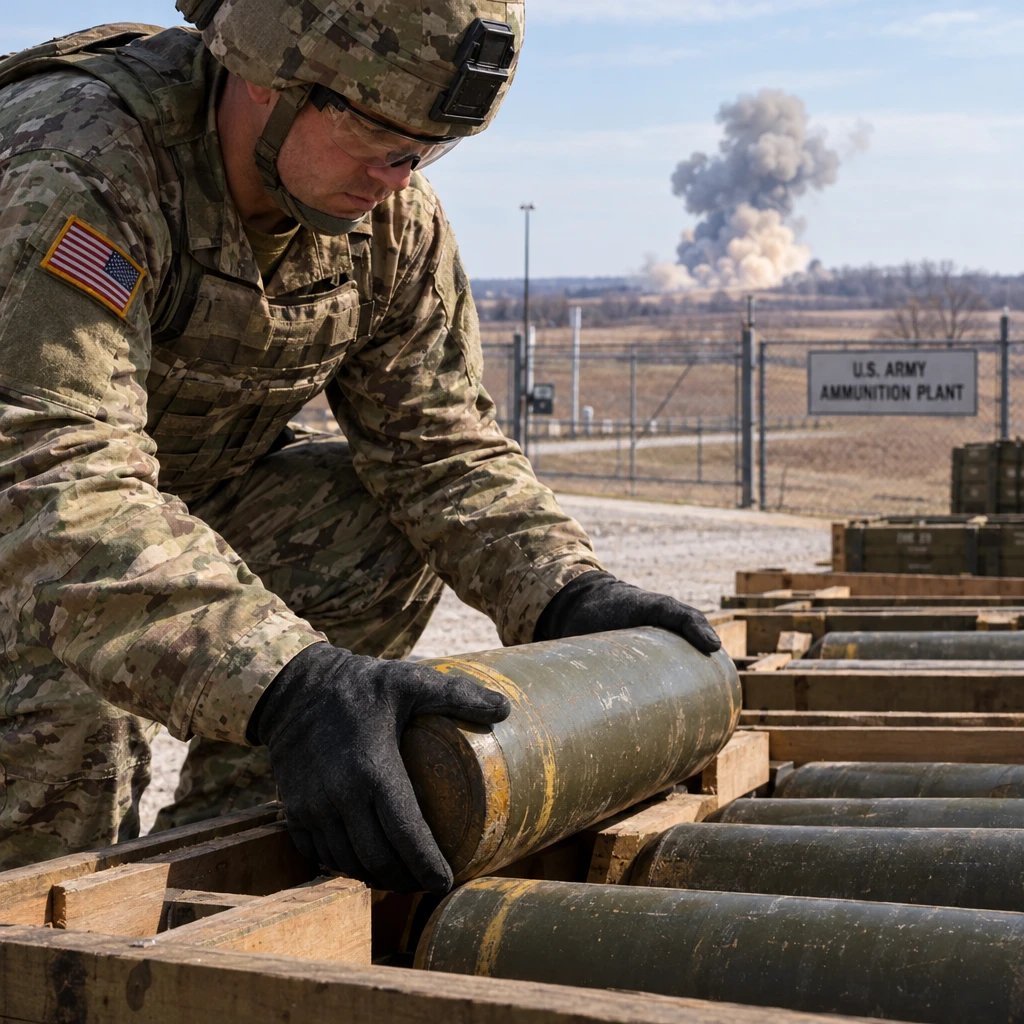
A federal appeals court on Monday rejected environmental groups’ bid to block the US Army from blowing up deteriorating explosives at an Iowa ammunition plant, clearing a legal hurdle for the planned detonation.
If you were hoping for a quiet Friday in Middletown, Iowa, I have bad news. A federal appeals court has lifted the blockade that had been holding up the U.S. Army’s plan to detonate roughly 5 tons of deteriorating lead azide explosives at the Iowa Army Ammunition Plant. Translation: the boom is back on the calendar.
The short version is that the Iowa Environmental Council and the Sierra Club challenged an emergency permit issued by the Environmental Protection Agency, and the court stepped in to pause the detonation while it considered the case. The detonation was originally set for Friday, but it got delayed while the judges worked through the issues. Now the court has cleared the way, even while acknowledging that the chemicals involved could pose public health risks. So the legal system has basically said, ‘Yes, this could be a problem, go ahead anyway.’ Not the most comforting sentence a person can read over breakfast.
Why all the fuss? Lead azide is a primary explosive, meaning it is designed to be very sensitive. It is the kind of material used to set off larger charges, and it is not something you want sitting around forever. Over time, explosives like this can degrade, which makes them harder to predict and potentially more dangerous to handle. That is the core of the problem here: the material is getting less stable the longer it waits, so the Army wants it gone, and the environmental groups wanted a closer look at how that disposal would be done.
This is where the story gets a little messy. The emergency permit from the EPA was the central target of the challenge, and the court’s decision reflects a balancing act between urgency and caution. On one hand, you have a deteriorating stockpile that nobody wants to keep babysitting indefinitely. On the other, you have people living nearby who would understandably like assurances that a controlled detonation will not turn into an uncontrolled problem. Both sides can make a reasonable argument, which is exactly why this ended up in court in the first place.
Then there is the political angle, which is where things get really entertaining. Headlines covering the ruling did not just focus on the court. Several pointed to the state’s incoming leadership. One outlet framed it as the appeals court clearing the way, but noted that Governor-elect Sand was punting on the decision. Another headline put it even more bluntly, saying the Democratic governor-elect won’t sign off. In other words, even with the legal obstacle removed, the political question of who stands behind this decision remains open. It is a little like getting permission from the referee and then discovering the coach still has to approve the play.
That tension says a lot about how these projects work. Federal agencies, state officials, courts, and advocacy groups all have a say, and each one brings different priorities to the table. The Army is focused on safely eliminating a hazardous material. Environmental groups are focused on whether the process protects air, water, and nearby communities. Courts are focused on whether the legal process was followed. And state leaders are focused on how the decision will look to the people they represent. Getting all of those to line up is harder than detonating anything.
So where does that leave Middletown? For now, the legal path to the detonation is open, but the broader debate has not gone away. Residents, watchdog groups, and state officials are still paying close attention, and the public will likely want clear information about safety measures, monitoring, and what happens next. Transparency is not just a nice-to-have in a situation like this. It is the thing that keeps a court ruling from turning into a rumor mill.
If you are following this story, keep an eye on updates from the Army, the EPA, and the court filings themselves, because headlines tend to compress complicated legal reasoning into a few punchy phrases. The gist is clear enough: the court says the detonation can move forward, the public health concerns are real enough to acknowledge, and the state’s political leadership has not fully embraced the decision. That is a lot of moving parts for a single explosion, and it is a reminder that the most dramatic part of a story is sometimes the paperwork.
Inspired by: “Appeals court clears way for Army to detonate unstable lead explosives in Iowa” (r/Politics)