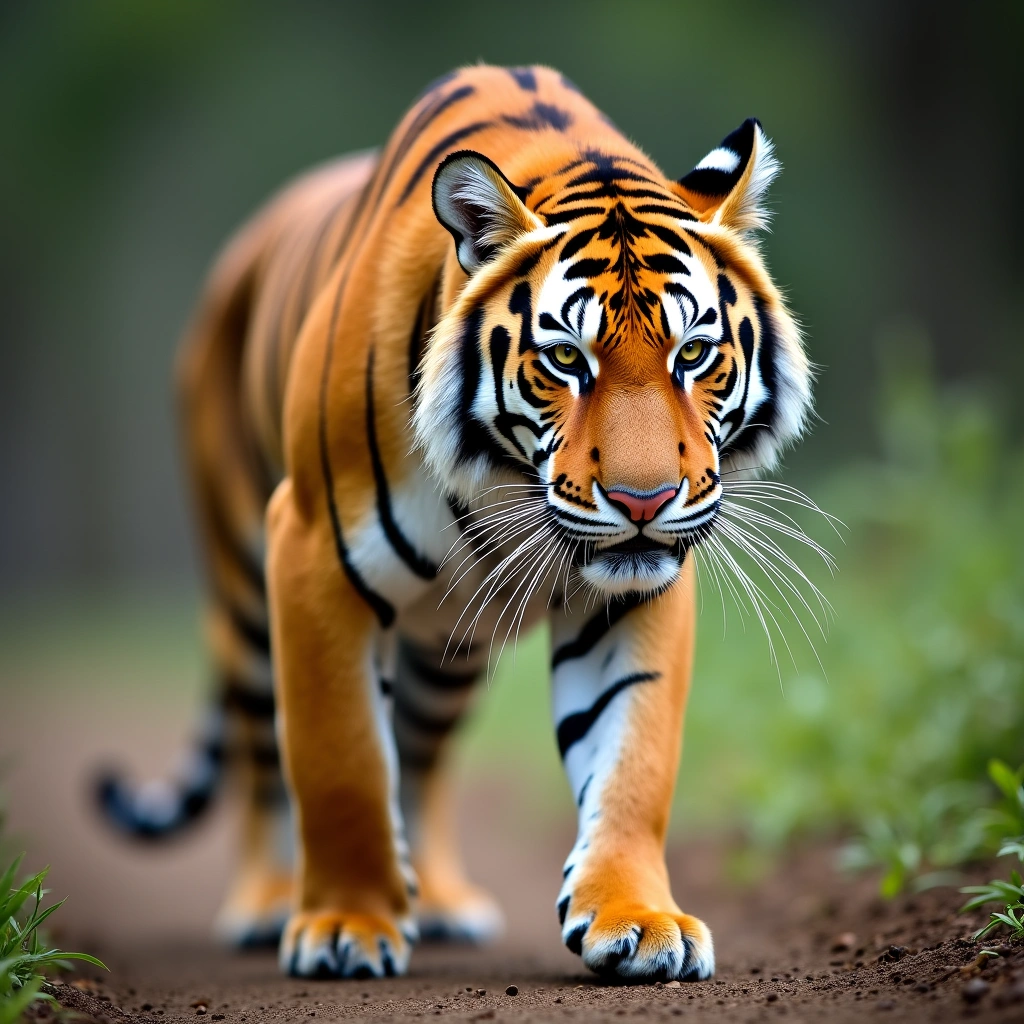
When you think of dangerous animals, your mind probably goes straight to the magnificent tiger, prowling through the jungle with its sleek body and piercing gaze. But, hold your horses—or should I say, hold your tigers—because there’s a heavyweight champ in town that might make the striped feline look like a cuddly house cat. Enter the gaur, also known as the Indian bison. Yes, you heard that right! The big, burly bovine is turning heads and raising eyebrows as it struts around with a reputation that might just put our beloved tigers to shame.
First off, let’s talk size. Gaurs can weigh up to 2,200 pounds (that’s about the weight of a small car or, you know, a very large, overfed dog). They stand around 6 feet tall at the shoulder, which means they could probably take your average human and use them as a toothpick. On the other hand, while tigers are indeed fearsome, they tip the scales at around 500 pounds, making them look like a snack next to a gaur. So, you see, when it comes to sheer mass, the gaur wins hands down.
Now, let’s get to the juicy part—attitude. Gaurs are known for their rather temperamental disposition. They are not just big; they’re also feisty! Imagine being a tiger, quietly stalking your prey, when suddenly a 2,200-pound muscle machine charges at you because you dared to cross its path. It’s like a game of dodgeball, but with much higher stakes and way fewer safety nets. These guys don’t mess around, and they’ve been known to defend themselves aggressively against predators, including tigers. Who knew the real ‘king of the jungle’ was a hulking bison?
In terms of habitat, gaurs roam the forests and grasslands of South and Southeast Asia, often in herds. This social structure adds another layer of complexity to their danger factor. When you encounter one, you might actually be facing a whole gang of them, all ready to rumble. Good luck trying to convince a herd of gaurs that you’re just passing by with a friendly wave. They’re more likely to view you as a buffet item—only they’re not the kind of buffet you want to be a part of.
But wait, there’s more! Gaurs have this incredible ability to go from zero to furious in a matter of seconds. They might be calmly grazing one moment, and the next, they’ve turned into a stampede of chaos, charged with adrenaline and ready to cause a scene. It’s like watching a peaceful yoga class turn into a mosh pit at a rock concert. You don’t want to be caught in the crossfire, trust me.
So, why do we often overlook the gaur when talking about dangerous wildlife? Maybe it’s because they don’t have the same sleek lines and killer looks as a tiger. After all, beauty is in the eye of the beholder, and if you’re partial to stripes, a big brown bison might not exactly make your heart flutter. But let’s be real here: if you had to choose between a tiger and a gaur in a dark alley, I’d wager you’d pick the tiger—after all, it looks more glamorous. But in terms of raw power and the potential to mess you up, the gaur is the dark horse (or should I say, dark bison?) you never saw coming.
In conclusion, while tigers may reign supreme in the beauty department, gaurs are the unsung heroes of danger. So next time you find yourself in the jungles where these beasts roam, remember to keep your distance. You may just find that the real danger lies not in the sleek, striped predator but in the hefty, horned protector of the forest. And who knows, you might just have a newfound respect for these muscular giants. Just make sure to keep your distance—or else you might end up as the next viral video of a ‘tourist gets charged by a gaur.’ Trust me, you don’t want to be that guy!