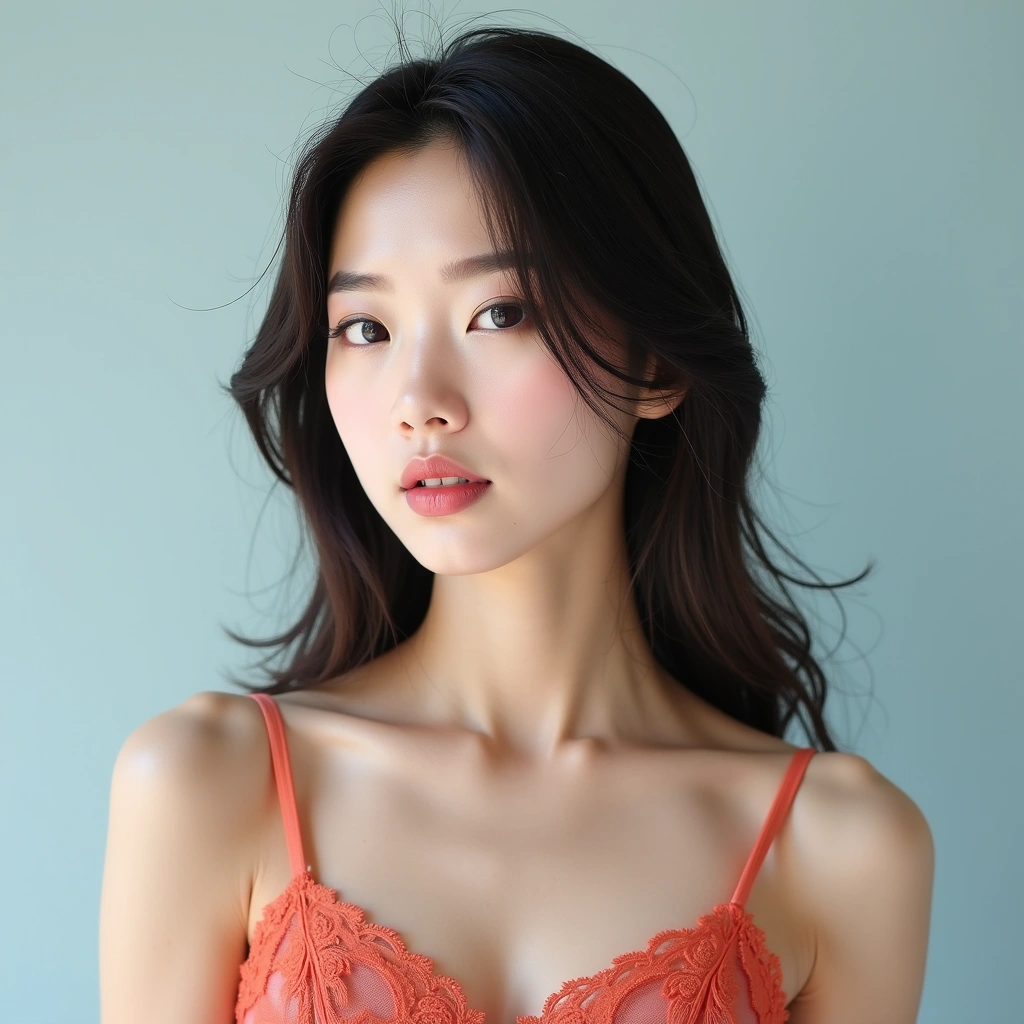
Ah, the world of K-pop! It’s a universe where the music is catchy, the dances are sharper than your grandma’s cooking knives, and the beauty standards? Well, let’s just say they could make even a supermodel feel a tad insecure. Today, we’re diving into the realm of Aespa, a girl group that’s been making waves not just for their catchy tunes but also for their transformation to fit the ever-evolving Korean beauty standards. Buckle up, folks!
Now, before you roll your eyes and think, ‘Here we go again with the beauty standards debate,’ let’s be real: K-pop is not just about the music. It’s a full-on performance art that combines visuals, style, and talent. Aespa, with members Karina, Winter, Ningning, and Giselle, has taken this concept and run with it, even if that means undergoing a bit of a makeover to fit into the K-pop mold.
When Aespa debuted in 2020, the buzz around them was electric. But soon after, fans began to notice a few things that made them raise an eyebrow or two. You see, Korean beauty standards can be as rigid as a board stuck in a snowstorm. Clear skin, sharp jawlines, and those enviable double eyelids are just a few of the benchmarks that seem to be set in stone. And let’s not forget the ever-reliable beauty filters that can make anyone look like they’ve just stepped off the cover of a magazine—because who needs reality, am I right?
As Aespa’s journey unfolded, it became apparent that the members underwent a transformation that aligned them with these ideals. Whether it was subtle changes in makeup, hairstyles, or even fashion choices, the evolution was visible to the keen-eyed fans. And while some might argue that this is just part of the K-pop package, others raise eyebrows (and possibly pitchforks) about the implications of such transformations on self-image and societal pressures.
But here’s where it gets juicy! The transformation debate isn’t just black and white. Sure, Aespa has been polished to fit a certain aesthetic, but it’s also important to consider the marketing aspect. The K-pop industry is a fierce battleground where only the best survive. It’s like a gladiator arena, but instead of swords, they wield microphones and impeccable dance moves. If looking the part helps them capture hearts and chart-topping hits, who’s to say it’s all bad?
Let’s also not forget the digital side of things. Aespa, with their concept of ‘avatars’, has really pushed the envelope. They’re not just trying to fit into the beauty standards; they’re creating their own universe where beauty is redefined through a digital lens. In a way, it’s like saying, ‘Hey, we’re not just about how we look; we’re about the experience!’ And honestly, isn’t that the ultimate flex?
However, this is not an invitation to ignore the potential dangers that come with these beauty norms. The pressure to conform can lead to a cycle of self-doubt, especially among the youth who idolize these stars. Imagine a young girl looking up to Aespa and thinking, ‘If they had to change to fit in, maybe I should too?’ Yikes! That’s a slippery slope that can lead to some unhealthy comparisons.
So, where does that leave us? Do we love Aespa’s music and performances while cringing at the beauty ideals they promote? Or do we celebrate their transformation as a necessary part of the K-pop machine? The truth is, it’s a complicated relationship—like your favorite rom-com where the couple has to overcome a myriad of obstacles before finding true love.
In conclusion, Aespa’s transformation might be a reflection of Korean beauty standards, but it also highlights the conversation around self-image, individuality, and the power of music. Let’s embrace the catchy tunes, the killer choreography, and maybe, just maybe, have a giggle about the absurdities that come with conforming to beauty norms. After all, at the end of the day, we’re all just trying to find our groove, right?
And remember, when life gets tough, just channel your inner Aespa and keep dancing through the storm!