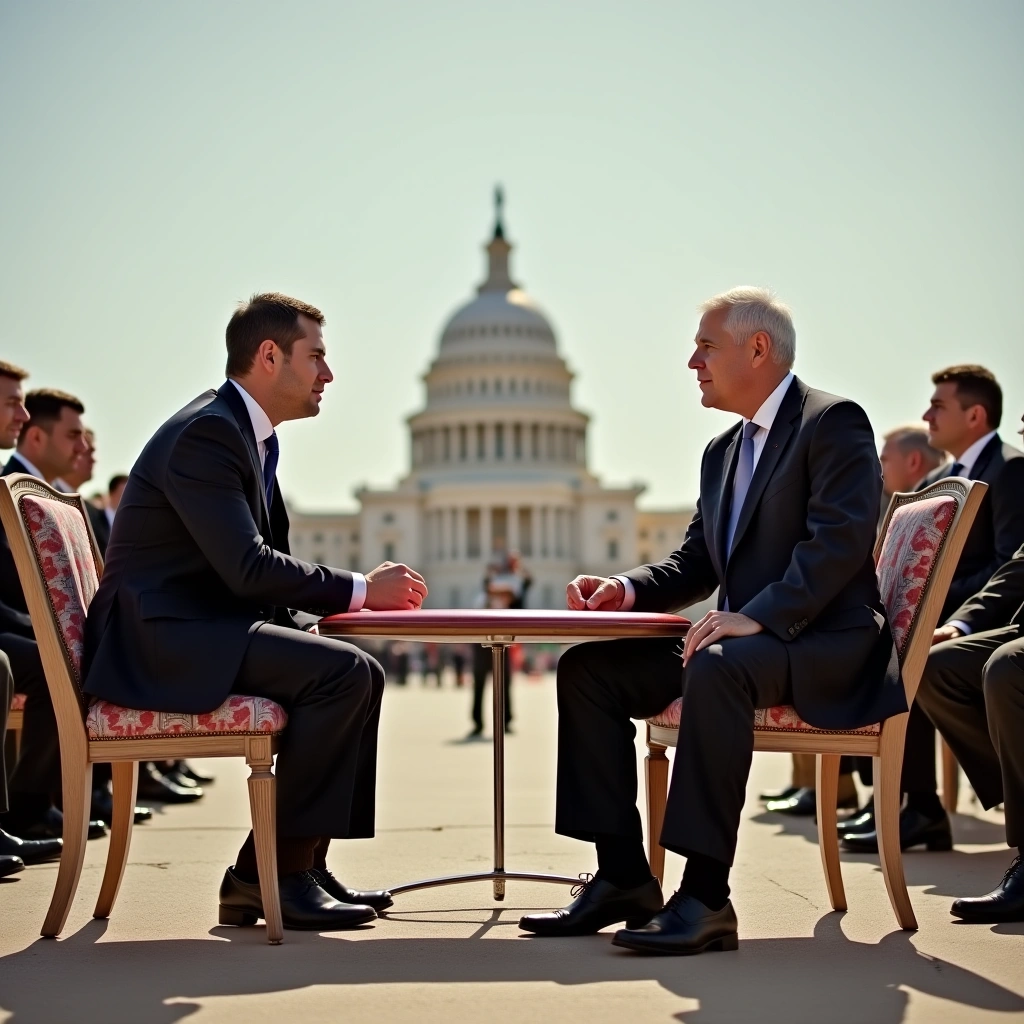
Afrasianet – The American weekly "Newsweek" went to a metaphorical representation and considered that Iran's use of the privileges of its geographical location in general, and its coastline controlling the Strait of Hormuz in particular, is a weapon that exceeds the effects of the nuclear bomb, but in the fields of restriction on the global economy, international trade, and the supply of oil, gas, and energy in general. The current scene between Washington and Tehran is enough to manage what looks like a game of musical chairs between the resumption of the war, or its suspension to go to negotiations, before the resumption of bombing and siege, and then relying again on negotiation sessions announced by the White House, and Tehran is content to deny it, not even through the foreign minister, but through the spokesman.
As the political landscape in the U.S. and Israel shifts like a game of musical chairs, one thing seems clear: Iran is preparing for more war, regardless of who ends up sitting in the coveted seats of power. Prime Minister Benjamin Netanyahu is doing his utmost to cling to his position, while President Trump is navigating a midterm fight that feels more like a wrestling match than a political campaign. But let’s be real—while these leaders are busy with their political theatrics, Iran is sitting back, popcorn in hand, and expecting little to change in terms of U.S. and Israeli policy.
You might be wondering, why does Iran think that way? Well, it turns out that political parties, elections, and all that jazz often don’t lead to significant changes in foreign policy, especially when it comes to a region as volatile as the Middle East. It’s almost as if the game is rigged, and the players just keep swapping jerseys while the rules remain unchanged. Think of it as a never-ending episode of a reality show where the contestants keep getting voted off, but the plot stays the same.
For Netanyahu, holding onto power has become a full-time job. He’s like that kid who refuses to let go of the last slice of pizza at a party, even if everyone else is done eating. His strategies are a mix of political maneuvering and a dash of fear-mongering, as he continues to paint Iran as a looming threat that must be kept in check. It’s a narrative that resonates well with his base, but it also serves as a convenient distraction from his own political challenges.
Meanwhile, across the ocean, Trump is facing his own set of challenges. The midterm elections are like a high-stakes poker game, and he’s got to play his cards just right to avoid losing everything. But here’s the kicker: no matter who wins or loses, Iran seems to believe that U.S. policy will remain largely unchanged. Perhaps they’ve done their homework and realized that the diplomatic dance between these countries is less about who’s in power and more about a long-standing game of chess that’s been going on for decades.
So, what does this mean for the average person? Well, if you’re hoping for a peaceful resolution or a sudden outbreak of diplomacy, you might want to adjust your expectations. It appears that Iran is bracing itself for more conflict, perhaps viewing it as a rite of passage in this geopolitical tug-of-war. It’s like preparing for a family reunion where you know Uncle Joe is going to start another argument about politics—inevitable and slightly exhausting.
In conclusion, while Netanyahu and Trump may be fighting their own political battles, Iran is preparing for a future that they believe will involve more skirmishes and less peace talks. So, as the elections unfold, don’t be surprised if Iran is one step ahead, ready to respond to whatever comes their way. After all, in the world of international relations, it’s always better to be prepared for war than to hope for peace. Cheers to that!
Inspired by: “Iran Braces for More War, No Matter the Outcome of the U.S. and Israeli Elections” (r/World)