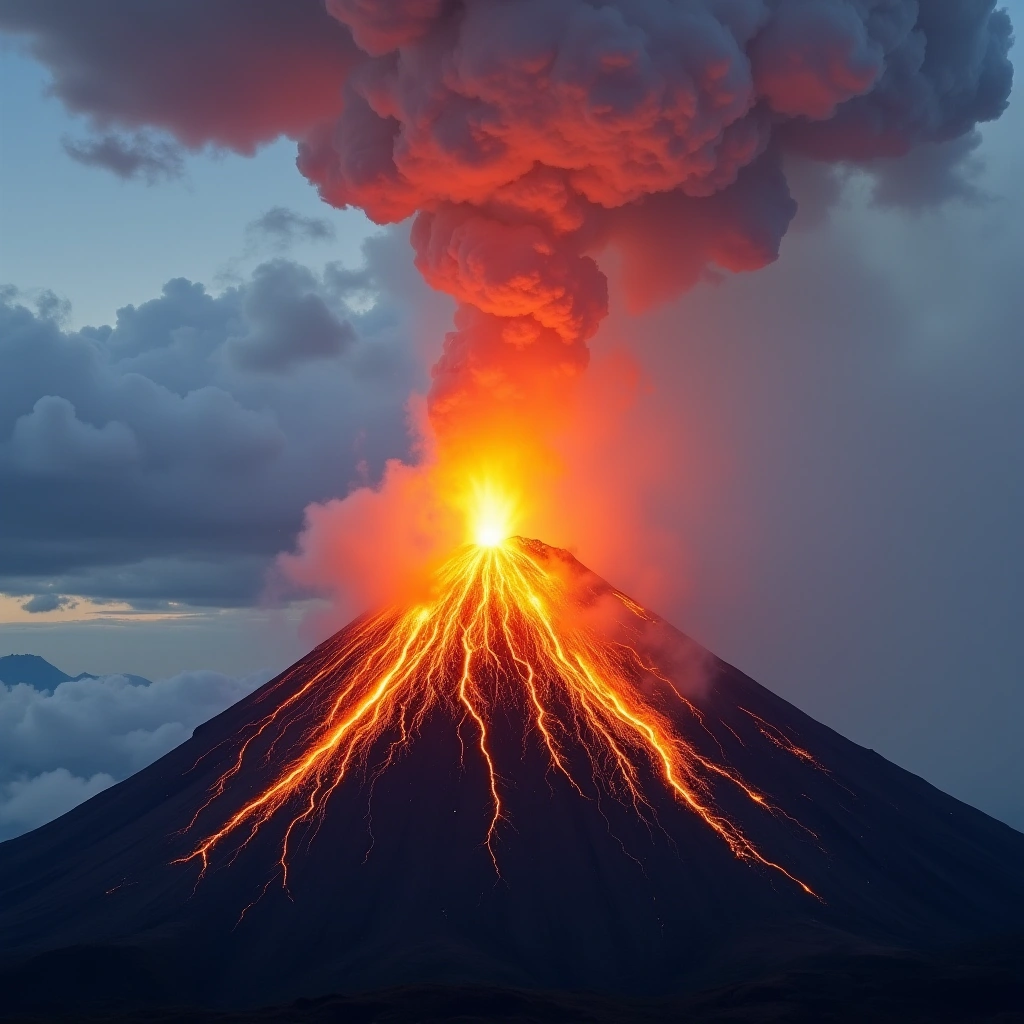
The large surface area and the abrupt elevation change to the summit influences the local weather system around the volcano and produce dazzling color, contrast, and shadow variations, creating infinite iterations of its imageability, which are enhanced and made more spectacular during Mayon’s eruptive phase, which has drawn tourists from around the world because of its dramatic nature. Criterion (viii): Mayon exhibits the outstanding simplicity and typicality of an open conduit basaltic-andesitic stratovolcano, and with its unique geographical location at the boundary of the Philippine Sea Plate and the Philippine Mobile Belt, produces a conical shape whose symmetry is evident across its circumference and represents a significant ongoing geological process in extremely close proximity to communities.
Well, folks, it seems Mother Nature decided to put on a show this past Friday, and let me tell you, she really knows how to make an entrance. The Mayon Volcano, located in the picturesque Philippines, erupted, sending an impressive ash plume soaring approximately three kilometers (or about two miles, for those of us who prefer to stick with imperial measurements) into the sky. And here we thought that only fireworks could reach such heights!
The eruption lasted nearly six minutes—perfectly timed for those who like to watch nature’s drama unfold without committing to a full-length feature film. During this performance, the Philippine Institute of Volcanology and Seismology (yes, such an institute exists, and they have a pretty exciting job) raised the alert level to 3. That’s right, folks, we’re at a level three—far from the highest level, but certainly high enough to make you reconsider that camping trip you had planned within six kilometers of the volcano.
In case you’re wondering, level 3 means it’s time to pack your bags and evacuate unless you have a strong desire to be part of a lava documentary. The authorities urged residents living within a six-kilometer radius of the crater to clear out, just to be on the safe side. I mean, who wouldn’t want to escape a potential fiery eruption? It’s not like you can just grab a marshmallow and roast it over a volcano and call it a day.
Fortunately, as of now, no casualties or damage have been reported. So, we can all breathe a sigh of relief—unless, of course, you happen to be one of those residents who didn’t heed the evacuation warning. In that case, you may want to reconsider your definition of fun.
Now, if you’re wondering what this eruption means for the local community, it’s a mixed bag. On one hand, the ashfall can be detrimental to agriculture and may cause respiratory issues for the locals. On the other hand, it provides a fantastic opportunity for social media influencers to capture some awe-inspiring shots of the volcano, all while using hashtags like #NatureIsAwesome and #VolcanoVibes. Because, let’s be honest, nothing says ‘I care about the environment’ quite like a perfectly filtered photo of an erupting volcano, right?
As we watch the events unfold, let’s keep our fingers crossed for the safety of the residents and the surrounding wildlife. And who knows? Maybe this will be the start of a new trend where volcanoes erupt not just for destruction but for the sheer thrill of it—like an extreme sport for nature. Until then, let’s just enjoy the view from a safe distance and maybe invest in some good air filters for those ash clouds. After all, a little ash in the air is fine, but too much can really ruin your day—or your lungs.
Inspired by: “Mayon Volcano erupts spewing ash plumes two miles into the sky” (r/News)