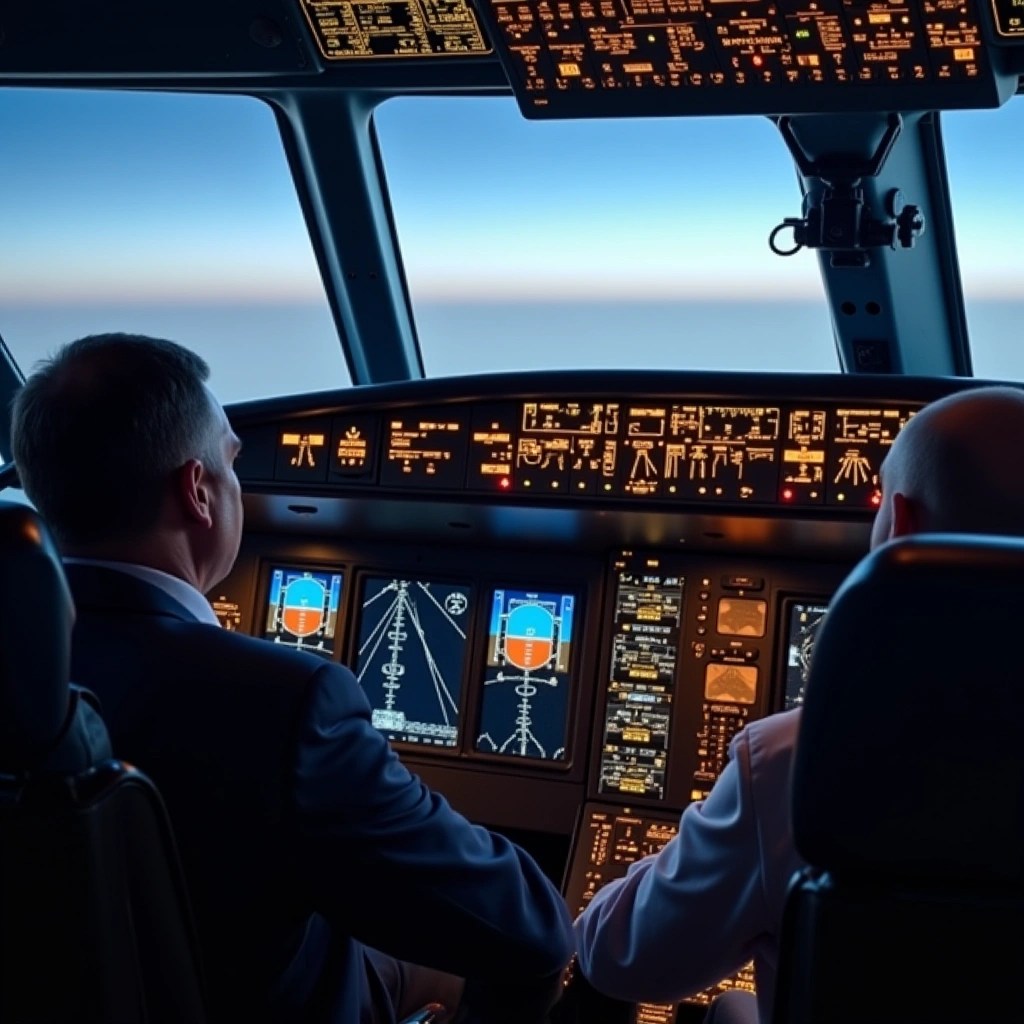
Skip to content A FlyDubai plane lands at Ben Gurion Airport in Tel Aviv, Israel, carrying passengers from flight FZ1073, which was diverted to Saudi Arabia on Sept. 30, 2026. Nir Keidar/Anadolu via Getty Images An incident in which a FlyDubai pilot is said to have stabbed the captain with the intention of crashing a plane of mainly Israeli passengers has shone a light on flight security.
In a world where headlines often read like the plot twists of a soap opera, the recent accusations against an Australian man linked to a suspected Flydubai hijacker have certainly added some drama to our daily news diet. The prosecutor claimed that the co-pilot, who allegedly had a hand in the hijacking, became radicalized while studying in Australia. Naturally, this has led to a whirlwind of reactions, including a vehement denial from the Australian man himself, who labeled these claims as ‘false accusations.’
Let’s unpack this a bit, shall we? First off, it’s not every day that you hear about a hijacking involving a co-pilot, which instantly adds a layer of intrigue. Typically, we imagine the lead pilot as the one making the big decisions, while the co-pilot is busy making sure the coffee is strong enough to keep them both awake. But here we are, discussing a co-pilot who allegedly decided that taking control of the plane was a better option than landing it safely.
The prosecutor’s narrative suggests a dramatic transformation from an innocent student in Australia to a radicalized individual who thought, “You know what would be a great idea? A hijacking!” One can only wonder how that leap in logic happens. Did he get a bad grade on a paper? Did the cafeteria run out of Vegemite sandwiches? We may never know the precise motivations, but it’s clear that the prosecutor is painting a picture that seems more like a thriller movie than reality.
The Australian man, however, is not taking these accusations lying down. He has come out swinging, rejecting any claims of ties to the alleged hijacker and denouncing the prosecutor’s remarks as completely unfounded. It’s a classic case of ‘I’m innocent until proven guilty’—and let’s be real, it’s hard to prove one’s innocence when the narrative is already set in stone, especially when it involves something as serious as a hijacking.
In the grand scheme of things, this story raises some important questions about how quickly we rush to judgment. The media, in its relentless quest for clicks and views, often runs with the most sensational aspects of a story. The facts can sometimes take a backseat to the drama, leaving individuals like our Australian friend to defend themselves against a tidal wave of public opinion.
So, where does this all leave us? With a lot of unanswered questions, a dash of skepticism, and perhaps a newfound appreciation for the complexity of human behavior. The next time you hear a headline that sounds too outrageous to be true, remember that there’s often more to the story than meets the eye. And maybe, just maybe, the next time someone accuses you of something wild, you’ll channel your inner Australian and respond with a calm, ‘That’s a false accusation!’
In conclusion, while we wait for more details to emerge about this intriguing case, let’s hope for a resolution that doesn’t involve more hijinks—pun intended. After all, the sky is supposed to be the limit, not a battleground.
Inspired by: “Australian man linked to suspected Flydubai hijacker condemns prosecutor’s ‘false accusations’” (r/News)