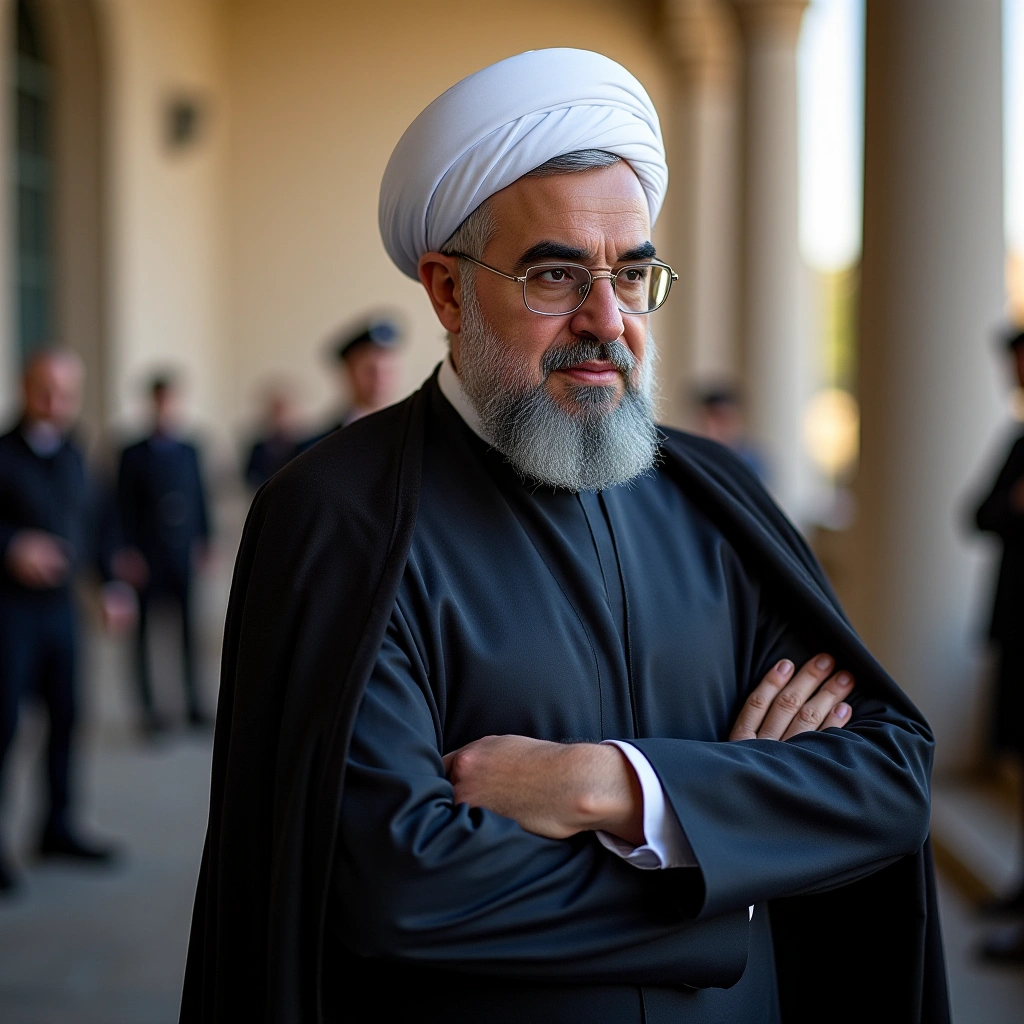
More importantly for the purposes of our analysis, the killing of Khamenei and the acceptance of it in the United States put the final nails in the coffin of the U.S. domestic ban against assassination, which has been contained in executive orders since the 1970s.
So, let’s talk about a hot topic that’s got everyone buzzing: the assassination of Iranian Supreme Leader Ali Khamenei, or as I like to call him, the man with the most unpronounceable name in politics. Israeli opposition leader Yair Golan recently chimed in on this high-stakes drama, stating that, despite Khamenei’s dubious honor of being one of the world’s most controversial figures, taking him out was a colossal blunder. Yes, you heard it right. Even in the cutthroat world of international politics, there are times when you just need to hit the brakes and think, ‘Was this really a good idea?’
Golan, who is not just any ordinary politician but a former IDF general, seemed to be channeling his inner philosopher when he declared that assassinating Khamenei doesn’t align with Israel’s interests. I mean, who knew that a military leader could also be a strategic thinker? He went on to say that while he believes Khamenei deserved to die (which, let’s be honest, is a common sentiment among many), the fallout from such an act could be more damaging than a few bad Yelp reviews.
Now, let’s unpack that a little. The assassination of a supreme leader isn’t like deciding to take a day off work. It creates a power vacuum, chaos, and a lot of angry people with nothing to lose. It’s like throwing a rock into a pond and expecting the ripples to just disappear. Spoiler alert: they don’t. Instead of toppling Iran’s government, which Prime Minister Netanyahu seems to think is a walk in the park, Golan argues that these kinds of moves are about as realistic as a unicorn appearing at a political rally.
In a world where leaders are constantly vying for power, Golan’s comments raise a crucial point: sometimes a strategic retreat is more effective than a bold advance. We’ve all had those moments where we’ve acted on impulse and then thought, ‘What was I thinking?’—and that’s just deciding to eat that extra slice of cake. Imagine if that cake slice was a country’s leadership. Oops.
So, what does this mean for Israel and the broader Middle East? It suggests that perhaps a little more diplomacy and a lot less assassination might be in order. Who knows? Maybe instead of plotting Khamenei’s demise, world leaders could sit down over a cup of coffee (or tea, if that’s more your style) and hash out their differences like civilized adults.
In conclusion, Golan’s remarks serve as a reminder that in the game of high-stakes politics, sometimes less is more. Assassinations may seem like a quick fix, but the long-term consequences could leave a sour taste far worse than the aftermath of that extra slice of cake. Let’s hope that moving forward, leaders can learn from this ‘mistake’ and opt for strategies that don’t involve a hit list. Because, really, who needs more drama in an already chaotic world?
Inspired by: “‘Khamenei’s killing was a mistake’: Israeli opposition leader” (r/World)