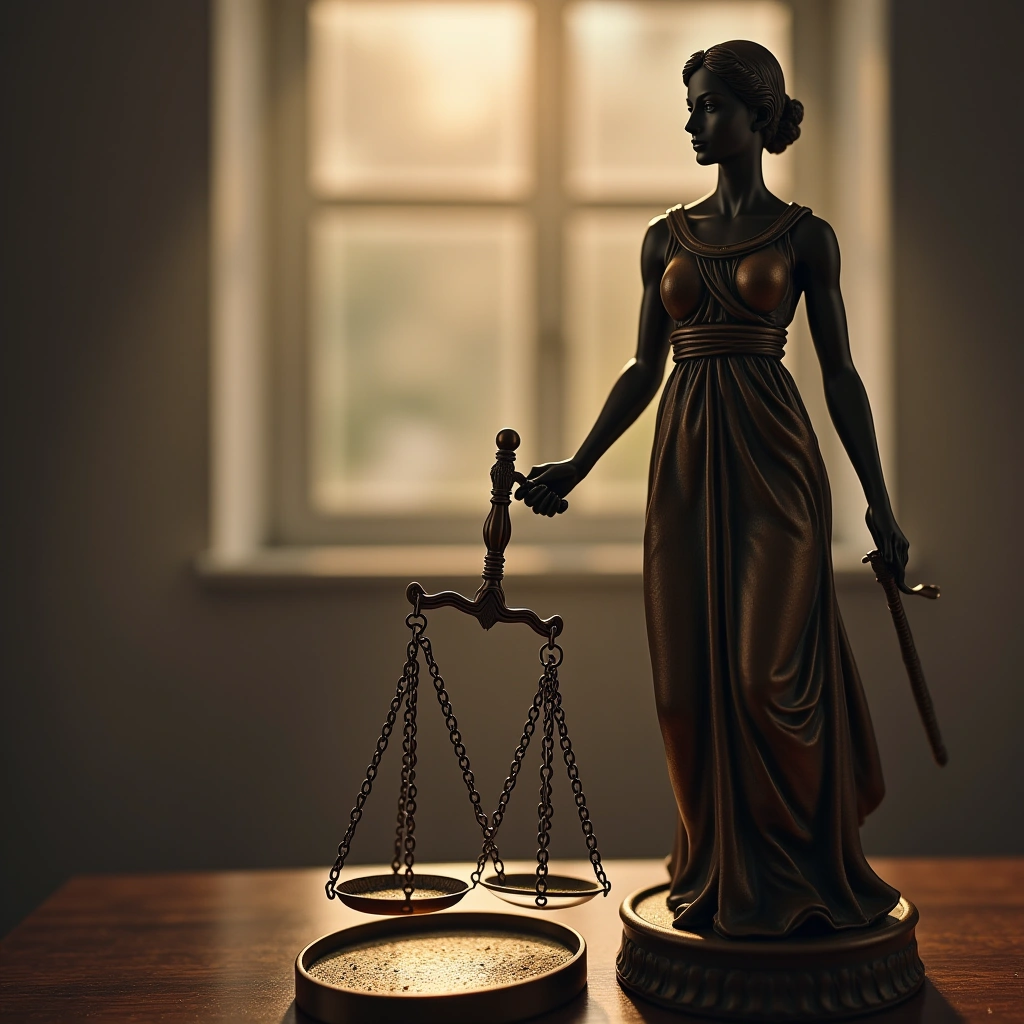
Justice is fundamentally defined as the quality of being fair, impartial, and just, rooted in the Latin justitia and historically described as the "constant and perpetual will to render to each his due." In legal and political contexts, it involves using laws to fairly judge cases, redress wrongs, and punish crimes, while also ensuring the equitable distribution of resources and rights for all members of society. This concept extends beyond mere legal procedure to encompass moral ideals of right action and social equity, aiming to protect human dignity and freedom.
Ah, the Supreme Court of India has done it again! In a move that might just make you believe in the age-old saying, ‘justice is blind,’ the court recently made a statement that everyone, regardless of their status, has an equal right to access justice. Yes, even if you were once a judicial officer who found yourself on the wrong side of the law. I mean, who knew that being a former judge wouldn’t grant you a VIP pass to the legal system?
In a recent ruling, the Supreme Court turned down a petition from a former judicial officer who was crying out for an expeditious hearing regarding his termination from service. The justices, Joymalya Bagchi and V Mohana, made it clear: whether you’re a bus conductor, a secretary of state, or someone who used to sit behind the bench doling out justice, the scales of justice are balanced for everyone. Talk about a reality check!
Now, let’s take a moment to appreciate the irony here. This former judicial officer, presumably someone who has spent years in the legal system, is now finding himself at the mercy of the very system he once upheld. It’s like a chef getting food poisoning from their own restaurant! But hey, that’s the beauty of law, right? No special treatment, no matter how many gavel bangs you’ve dished out in your career.
The former officer’s plea was aimed at speeding up his case in the Allahabad High Court, but the Supreme Court wasn’t having any of it. They emphasized that justice should not be swayed by personal connections or past titles. The court’s stance is a refreshing reminder that the law applies equally to everyone.
Of course, this doesn’t mean the judicial system is perfect. Far from it! We’ve all heard the horror stories of cases languishing in the courts for years, but the Supreme Court’s point stands: just because you used to wear a robe doesn’t mean you get to skip the line. It’s almost like the legal version of ‘no cuts, no butts, no coconuts.’
While the former judicial officer may be lamenting the delays in his case, the Supreme Court’s refusal to prioritize his plea sends a strong message: justice isn’t a fast food joint where you can place a special order and expect it to be ready in five minutes. It’s more like a fine dining experience—sometimes it takes a while, but the end result is supposed to be worth the wait.
So, the next time you think your title or position gives you any sort of edge in the justice system, remember the tale of this former judicial officer. It’s a sobering lesson that justice, in all its forms, is meant for everyone—equally. And who knows, maybe a bus conductor will end up waiting less time for their case to be heard than a former judge. Now that’s a plot twist worthy of a courtroom drama!
In conclusion, let’s raise a toast (or a gavel, if you have one handy) to the Supreme Court for reminding us that the law is a level playing field. Justice, my friends, is not just for the privileged; it’s for everyone—bus conductors, secretaries, and yes, even former judicial officers. Cheers to that!
Inspired by: “Everyone has equal right to access justice: Supreme Court refuses to entertain judicial officer’s p…” (r/News)