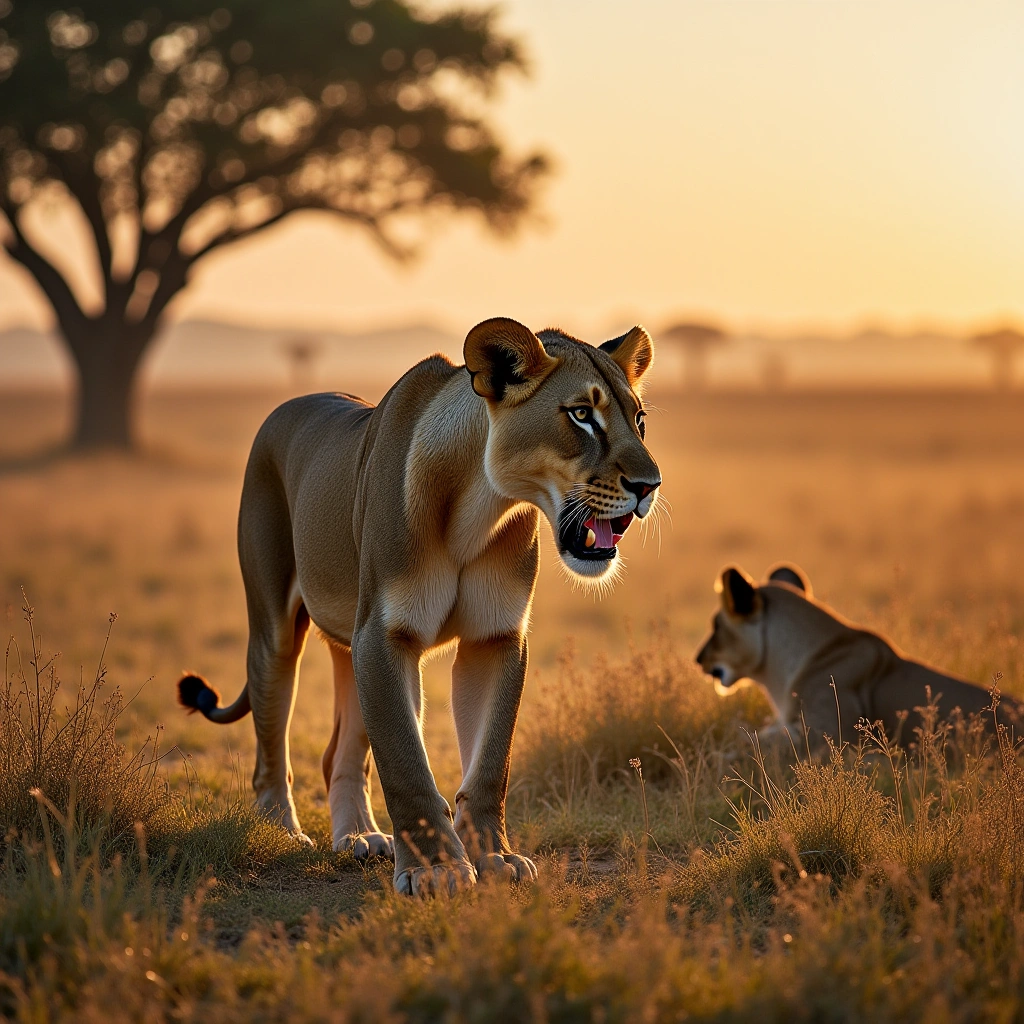
Authorities said preliminary findings suggest that the lions died after "ingesting poison", adding that an expert investigation was ongoing "to determine the cause of the incident and identify those responsible".
Hey there, wildlife enthusiasts and lovers of all things furry! Today, I bring you some rather heartbreaking news from the stunning landscapes of Tanzania’s Ngorongoro wildlife reserve. You might want to grab a tissue, or perhaps a snack—because you’ll need something to distract you from the harsh realities of our world.
Recently, a shocking discovery was made: ten majestic lions were found dead, and preliminary investigations suggest poisoning could be the reason behind this tragic event. Yes, you heard that right—poisoning! Because apparently, some folks think that if they can’t handle a lion prowling around their livestock, the best solution is to play a game of ‘who can use the most toxic substance’. Spoiler alert: nobody wins this game.
The lions were discovered on September 18 in the Ndutu area of Endulen Ward, located within the magnificent Arusha region. This area is part of the Ngorongoro Conservation Area, a UNESCO World Heritage Site that is known for its stunning wildlife and breathtaking landscapes. It’s a place where nature lovers flock to witness the beauty of African wildlife in its natural habitat. But sadly, the beauty is marred by the harsh realities of human-wildlife conflict.
Poisoning has become a recurring threat to large carnivores in East Africa, and it’s often linked to tensions between wildlife and livestock owners. You see, when lions wander too close to farms, they might just see a juicy goat or a plump cow as their next meal. And while it’s a natural instinct for lions to hunt, it doesn’t always sit well with the farmers who depend on their livestock for survival. Instead of finding a solution that works for both parties, some resort to using poison, thinking it’s a quick fix. Spoiler alert again: it’s not.
The Ngorongoro Conservation Area Authority is understandably concerned about these recent deaths. After all, lions are not just big cats lounging around; they play a crucial role in maintaining the balance of their ecosystem. They help regulate prey populations, which in turn supports the health of the entire ecosystem. So when ten lions vanish due to human actions, it’s not just a loss for the animal kingdom; it’s a loss for biodiversity and conservation efforts as well.
Now, you might be wondering what can be done to prevent such tragedies in the future. Well, it’s a complex issue that requires a multi-faceted approach. Education is key! Farmers need to understand that there are non-lethal methods to protect their livestock, like using guard animals or building better enclosures. And let’s be real, who wouldn’t want a fluffy llama or an intimidating donkey to guard their herd?
Additionally, conservation organizations and local governments need to work together to create awareness and provide resources for communities living near wildlife areas. It’s all about finding that sweet spot where humans and wildlife can coexist peacefully. Because let’s face it, we’re all sharing this beautiful planet—and it would be great if we could do so without resorting to poisoning our fellow inhabitants.
In conclusion, the tragic deaths of these ten lions serve as a stark reminder of the ongoing human-wildlife conflict and the urgent need for better conservation strategies. Let’s hope that their story sparks a conversation about coexistence and encourages action that leads to a more harmonious relationship between humans and the wildlife we share our world with. Until next time, keep your hearts open and your minds engaged! And maybe, just maybe, we can save a few more lions from a similar fate.
Inspired by: “Ten lions found dead in suspected poisoning at Tanzania wildlife reserve” (r/News)