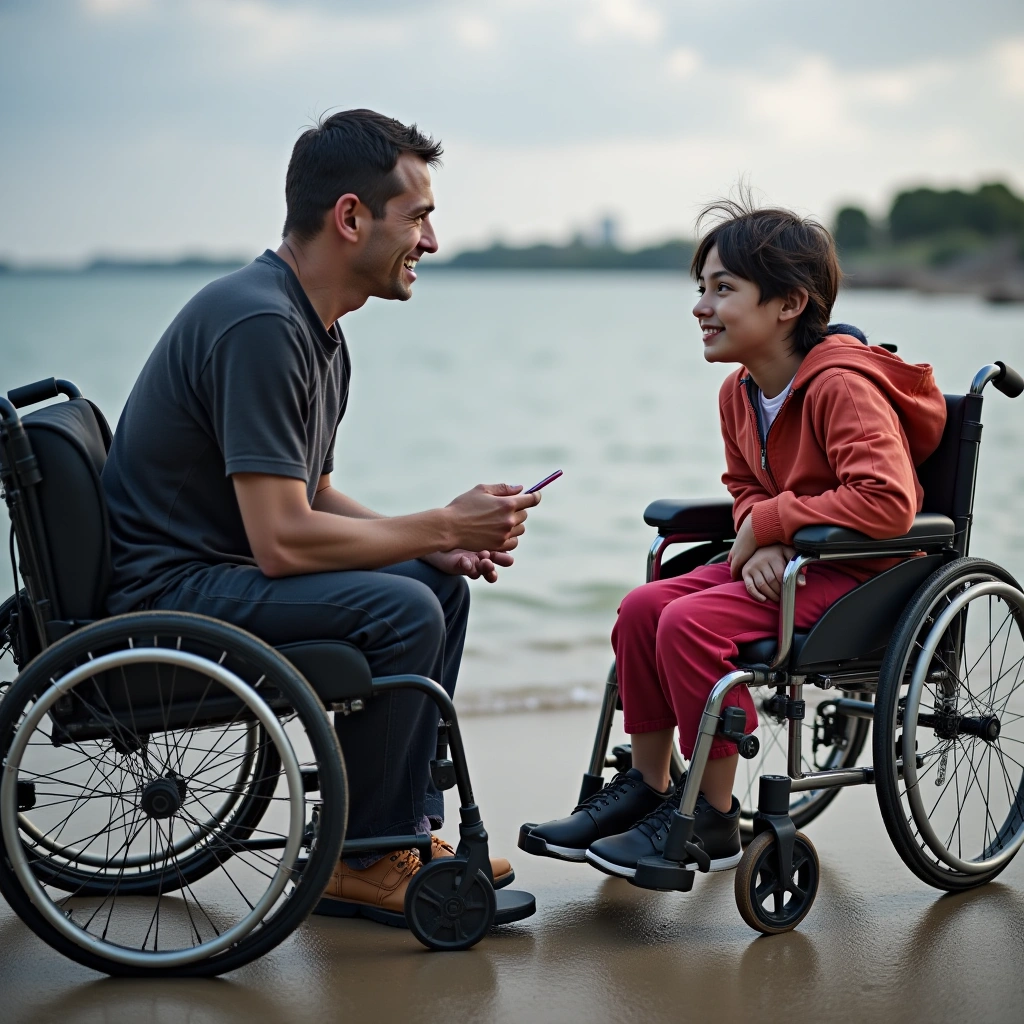
We can pass on what we know about listening to our bodies, especially with people becoming impacted by environmental illness or long Covid. They may not currently feel a sense of belonging to the disability community. These honest conversations serve as an entry point to disability-centred ways of understanding our inherent value and place in a world not made for us. This piece is a labour of love, from a disabled climate activist whose understanding of climate justice has gained so much from shared disabled wisdom.
Climate change is a hot topic—pun absolutely intended. Everyone seems to have a plan, a strategy, or at least a meme about how to adapt to our planet’s increasingly unpredictable behavior. But amidst all this chatter about sustainability, solar panels, and composting, there’s a group that often gets overlooked: people with disabilities.
Now, before you roll your eyes and think, “Oh great, another ‘let’s be sensitive’ lecture,” hear me out. The reality is that while many of us can hop on the climate change bandwagon and make lifestyle adjustments—like switching to reusable straws or biking to work—there’s a substantial portion of the population that can’t just ‘adapt’ like the rest of us.
Let’s take a moment to acknowledge that adapting often requires certain physical capabilities. For instance, if you’re a full-time wheelchair user, like the insightful poster in a recent Reddit thread, you might find that many suggestions for climate resilience aren’t exactly designed with you in mind. Sure, it’s great to talk about rebuilding society and prepping for the worst, but what does that look like for someone who can’t weight bear without fatiguing?
The conversation around climate change needs to be inclusive. It’s not enough to say, “Just be adaptable!” when the reality is that many people are already facing barriers that make simple adaptations incredibly challenging. For those who rely on mobility aids, the thought of extreme weather events or infrastructural changes can be downright terrifying. Let’s face it: trying to navigate a flooded street in a wheelchair is not exactly a walk in the park—if you catch my drift.
So, what can we do? First, we need to start by acknowledging that the climate crisis affects everyone differently. This means that solutions should be tailored to include the voices of people with disabilities. It’s not just about building ramps or accessible public transport, although those things are essential. It’s about considering the unique challenges faced by disabled individuals in climate action plans.
Policy-makers and community leaders need to prioritize accessibility in their climate initiatives. This could involve ensuring that disaster preparedness plans account for people with disabilities, or that green spaces are designed to be inclusive. Imagine a community garden where everyone can participate, regardless of their mobility. Now that’s a climate action plan I can get behind!
Moreover, we should encourage conversations that include those who are often left out of the climate dialogue. Social media platforms, community forums, and even good old-fashioned town hall meetings should be spaces where everyone’s voice is valued. When discussing climate action, let’s not just focus on the trendy solutions that make for great Instagram posts. Let’s also talk about how those solutions can be implemented in a way that doesn’t leave anyone behind.
In conclusion, while it’s easy to get caught up in the excitement of climate change solutions, we must remember that adaptability is not a one-size-fits-all approach. The climate crisis is a challenge we all face, but it’s essential to recognize that not everyone has the same tools to navigate it. Let’s strive for a future where everyone, regardless of their abilities, can contribute to and benefit from our collective efforts to save the planet. After all, a truly resilient society is one that includes everyone—wheelchairs and all.
So, as we continue the conversation about climate change, let’s make sure it’s a conversation that includes all voices, especially those of our friends who might not have the luxury of adaptability. Because at the end of the day, we’re all in this together, whether we can walk, roll, or scoot our way through it.
Inspired by: “The one thing that worries me about it all.” (r/climatechange)