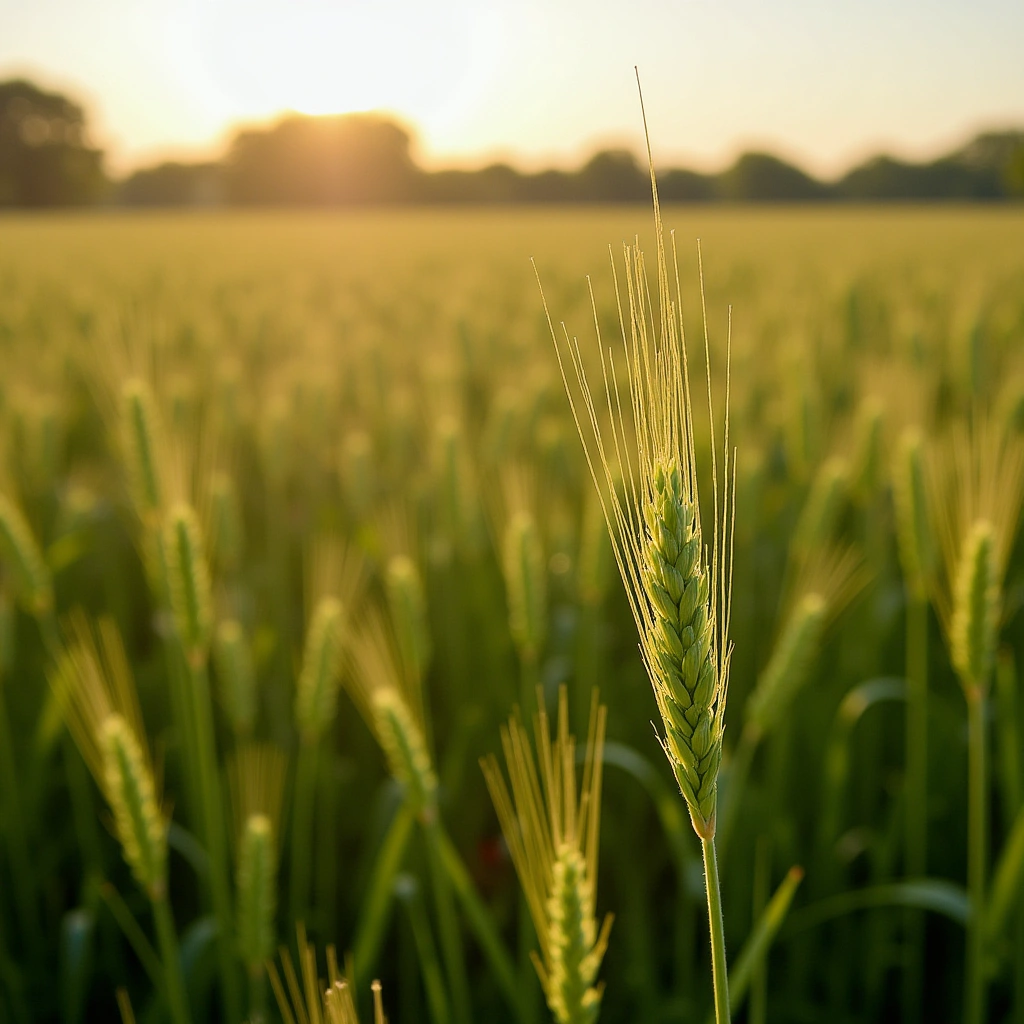
Developing perennial versions of our major grain crops would address many of the environmental limitations of annuals while helping to feed an increasingly hungry planet. Recent advances in plant breeding, such as the use of marker-assisted selection, genomic in situ hybridization, transgenic technologies, and embryo rescue, coupled with traditional breeding techniques, make the development of perennial grain crops possible in the next 10 to 20 years …
So, let’s talk about something that’s been on the minds of farmers and climate enthusiasts alike: perennial grains. If you’re scratching your head wondering what on earth those are, you’re not alone. Think of them as the cool kids on the block, the ones who don’t just show up for a season and then disappear like your New Year’s resolutions. Nope, these grains are here to stay, and they could be a game changer in our fight against extreme weather.
You see, traditional grains like wheat, rice, and sorghum are what we call annuals. They sprout, grow, and then wave goodbye to us after each harvest. It’s a bit like a friend who only visits when they need something. They leave behind a bare patch of soil, which, let’s be honest, is not doing us any favors when it comes to climate change. Enter perennial grains, which have deeper root systems that can withstand drought and heavy rainfall. It’s like they’re saying, “Rain? Drought? Bring it on!”
The beauty of perennial grains lies not just in their resilience but also in their ability to sequester carbon. This means they can suck up carbon dioxide from the atmosphere and store it in the soil, helping to combat climate change. Who knew grains could be our little superheroes? With roots that dig deep into the earth, they are essentially nature’s version of a well-grounded individual who can weather any storm—literally.
Researchers are currently working on developing perennial versions of our favorite annual grains. Imagine a world where you could plant wheat once and reap the benefits for years to come without having to replant every season. Sounds dreamy, right? The idea is that these grains would not only help farmers adapt to unpredictable weather patterns but also improve soil health over time. It’s a win-win situation, which is a rarity in the world of agriculture.
Of course, not everyone is on board with the idea. There are skeptics who argue that perennial grains might not produce yields as high as their annual counterparts. But let’s be honest, how much of that yield ends up as waste anyway? Plus, with the changing climate, we might need to rethink what we consider a good yield. Sometimes, survival trumps sheer numbers.
Farmers are already beginning to experiment with these new grains, and the early results are promising. They’re finding that these plants can thrive even when the weather is throwing tantrums. Drought? No problem! Flood? Bring it on! It’s like they’ve taken a few lessons from the most resilient among us.
As we continue to grapple with the challenges posed by climate change, it’s crucial that we explore innovative solutions like perennial grains. They may not be the silver bullet that solves all our problems, but they’re certainly a step in the right direction. And who knows? Maybe in a few years, we’ll look back and say, “Remember when we thought annual grains were the only way to go?” While we’re at it, let’s also remember to give a nod of appreciation to those researchers and farmers who are working tirelessly to make this a reality.
So, the next time you’re enjoying a bowl of rice or a slice of bread, take a moment to appreciate the potential of these incredible perennial grains. They might just save the day—and our planet—one harvest at a time. And who doesn’t want to be part of a solution that’s as good for the earth as it is for our stomachs? Cheers to that!
Inspired by: “Farmers turn to perennial grains as one solution to extreme weather. Researchers are working to dev…” (r/climatechange)