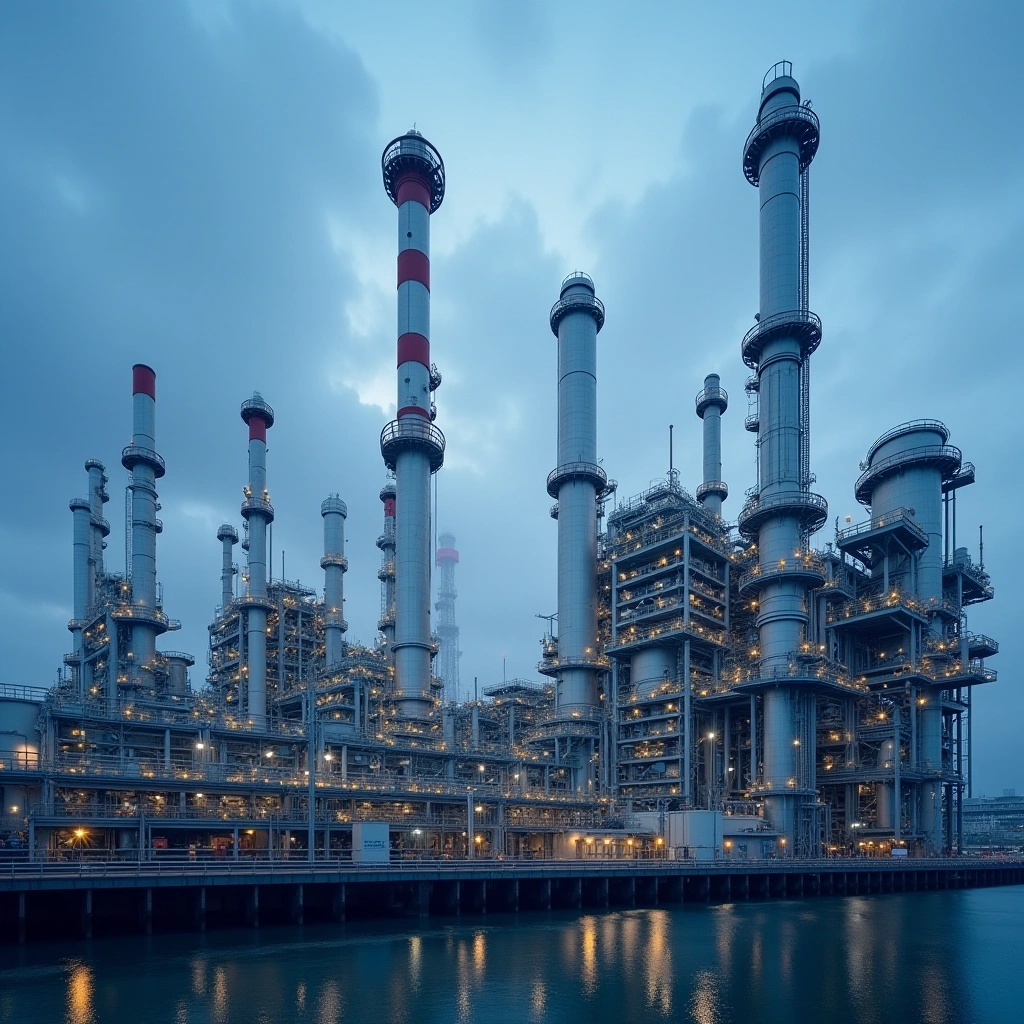
The chemical industry ‘ s carbon footprint covers greenhouse gas emissions generated across the full value chain of chemical production, from raw material extraction through manufacturing and product end-of-life. Across full Scope 1, 2, and 3 value chains, the industry emitted approximately 2.3 gigatonnes of CO₂e in 2020, representing nearly 5% of total global emissions. Without significant policy and technology intervention, that figure is projected to grow by a further 20% by 2030.
Alright, folks, let’s dive into a topic that’s as heavy as it sounds: the chemical industry and its potential to emit a whopping 3 gigatons of CO2 by 2050. Yes, you heard that right—3 gigatons! That’s a number so big it makes your head spin faster than a hamster on a wheel. But before we get too deep into the carbon abyss, let’s break this down a bit.
First off, what even is a gigaton? For those of you who might think it’s a new type of energy drink, let me clarify. A gigaton is a billion metric tons, and it’s a unit that scientists use to measure large quantities of carbon dioxide emissions. To put it in perspective, it would take about 300 million elephants to equal one gigaton. So, if you’ve ever wanted to see a herd of elephants performing a synchronized dance, well, you’ll have to settle for this carbon figure instead.
Now, why should we care about the chemical industry in particular? Well, it’s a massive player in the global economy, responsible for producing everything from plastics to fertilizers. However, it’s also a significant contributor to greenhouse gas emissions. The industry is projected to ramp up its output by 50% by 2050 unless we take some serious steps toward decarbonization. And let’s be honest, if we keep pumping out CO2 like it’s going out of style, we might just turn this planet into a sauna—without the benefits of a good massage.
So, what’s the plan? Decarbonization, folks! This buzzword has been thrown around so much you might think it’s a trendy new dance move. But in reality, it involves shifting to cleaner energy sources, improving efficiency, and innovating new production methods. Basically, it’s about making the chemical industry work smarter, not harder—kind of like how I work on Mondays.
Some companies are already on board with this whole decarbonization thing. They’re exploring alternatives like bio-based feedstocks, renewable energy, and carbon capture technologies. But here’s the catch: transitioning to these greener practices isn’t just flipping a switch. It’s more like trying to turn a massive ship around in a bathtub.
And let’s not forget the policy side of things. Governments around the world need to step up and create incentives for companies to go green. Think tax breaks for using renewable energy or penalties for excessive emissions. It’s like giving a gold star to the kid who cleans up after themselves and a timeout to the one who throws their toys all over the place.
Now, while it might feel like we’re staring down the barrel of a CO2 cannon, there’s still hope. With the right strategies, investments, and a touch of good old-fashioned determination, we can steer the chemical industry toward a more sustainable future.
So, what can you do? Well, you can start by engaging in conversations about climate change, supporting policies that promote sustainability, and maybe even giving a side-eye to that plastic straw at your next drink. Every little bit helps, and before you know it, we might just save the planet—or at least make it a little less hot and bothered.
In conclusion, the chemical industry is at a crossroads, and the road we take could lead us to either a greener future or a climate catastrophe. Let’s hope we choose wisely. After all, I’d rather have my beach vacations without the added bonus of swimming through a sea of CO2. Cheers to a cleaner, greener future, one gigaton at a time!
Inspired by: “The chemical industry could emit up to 3 gigatons of CO2 by 2050 (up 50%) unless decarbonization ta…” (r/climatechange)