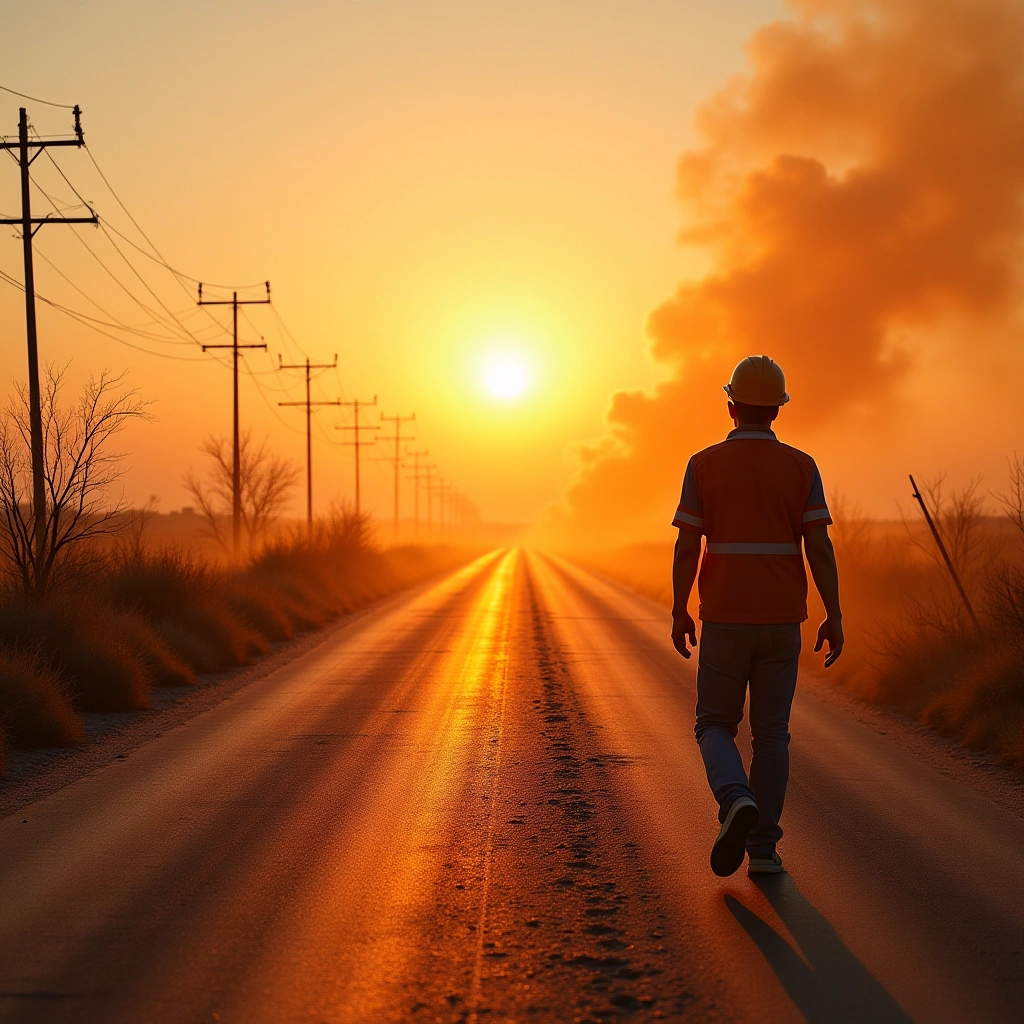
Ebi said that health officials have failed to keep up with the pace of change, such as more heat waves occurring outside of the traditional mid-May to mid-September season, and have overlooked extreme scenarios such as the record-breaking heat waves seen in Western Europe this summer. “The temperatures were just so high, much higher than the heat wave early warning systems were designed to manage,” Ebi said. The fact that the world is struggling to adapt to the amount of warming that’s already arrived is a troubling sign.
Summer is coming, and if you live in a place that gets hot, you know what that means: sweat, sunscreen, and the eternal debate of whether to crank up the AC or just embrace the heat like a true warrior. But let’s face it, the world is heating up faster than your car in a parking lot on a sunny day, and we’re not adapting nearly as quickly as we should be.
According to a recent discussion on Reddit, the global response to extreme heat is like that one friend who shows up late to the party with a half-eaten pizza: not adequate. While some regions have started to implement measures to combat rising temperatures, the pace at which we’re adapting is about as quick as a sloth on a lazy day.
So, what does adapting to extreme heat look like? Well, it can range from practical solutions like improved infrastructure and heat-resistant crops to more whimsical ideas like trying to convince the sun to chill out. Spoiler alert: the sun isn’t returning our calls.
In urban areas, cities are starting to install heat-reflective materials and green roofs, which is great because who doesn’t want to live in a city that resembles a giant greenhouse? We’re also seeing more public cooling centers popping up, which are basically air-conditioned havens for those of us who can’t handle the heat. But let’s be honest, these solutions are just band-aids on a much larger problem.
The reality is that many countries, particularly those with fewer resources, are struggling to keep up. Developing nations are often left in the dust, with inadequate infrastructure to handle extreme weather. It’s like trying to run a marathon in flip-flops while others are in high-tech running shoes. Spoiler alert: they’re going to win.
Then there’s agriculture, which is facing its own challenges. Crops are not exactly fans of extreme heat, and with climate change, farmers are finding it increasingly difficult to grow food. It’s like Mother Nature decided to throw a tantrum, and we’re all just trying to pick up the pieces. We need to invest in climate-resilient crops, but that takes time, funding, and a bit of luck—three things that seem to be in short supply.
And let’s talk about the elephant in the room: climate policy. While some countries are making strides to address climate change (shout out to the ones actually taking this seriously), others are still lagging behind. It’s like watching a race where some contestants are sprinting while others are still tying their shoes. We need global cooperation to tackle this issue, but it often feels like herding cats.
So, what can we do? Well, for starters, we can raise awareness and push for more aggressive climate policies. We can support local initiatives that aim to combat heat and promote sustainable practices. And yes, we can all invest in a good fan because, let’s face it, we’re going to need it.
In conclusion, while the world is slowly waking up to the reality of extreme heat, we’re still hitting the snooze button more often than we should. It’s time to step up our game and adapt faster because, spoiler alert, summer isn’t going anywhere. So, grab your ice-cold drink, find a shady spot, and let’s get to work—because the heat is on, and it’s not just in the weather forecast.
Inspired by: “The world is adapting to extreme heat — but not nearly fast enough” (r/climatechange)