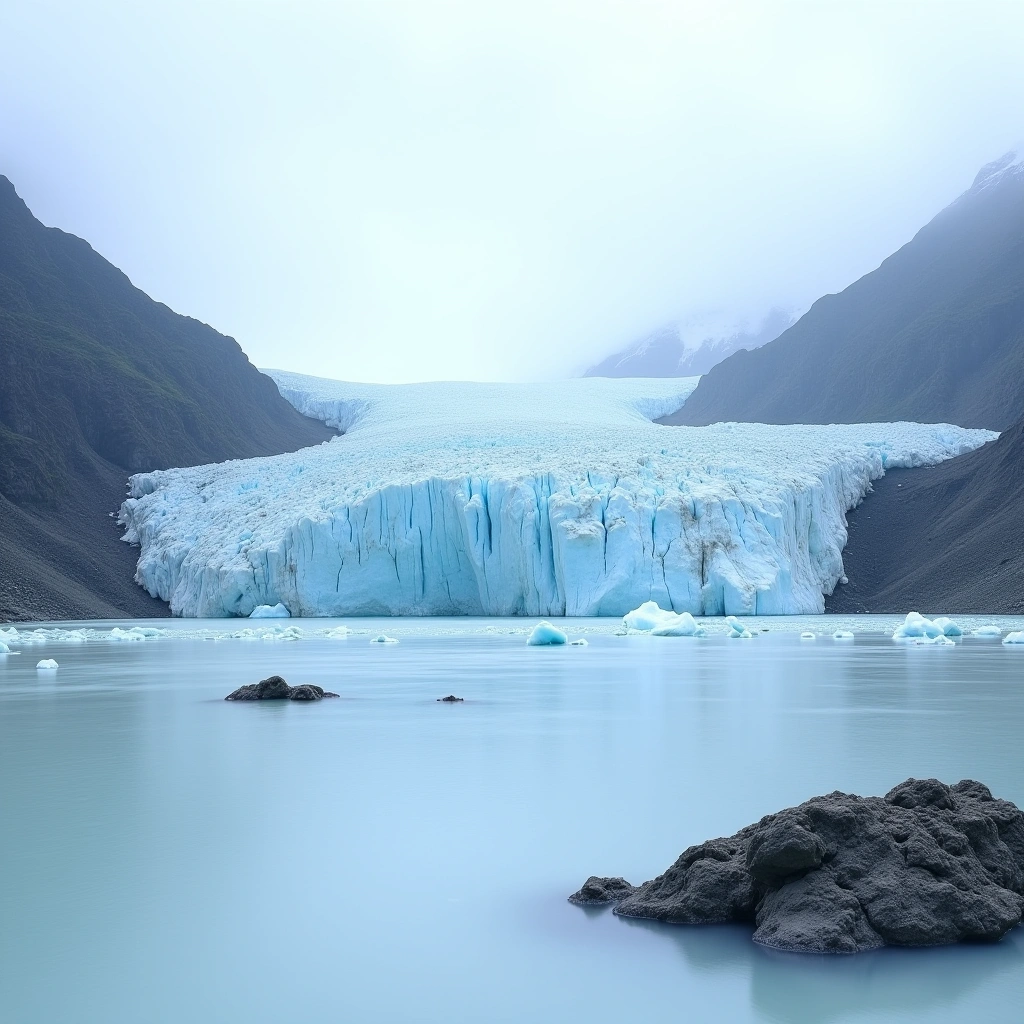
As of August 27, the glacier involved in the disaster does not appear to have a widely recognized or officially reported name in the international coverage of the event. It is located high above the Lhende River, or Lhende Khola , near the …
Ah, glaciers. Those majestic rivers of ice that have been around longer than your great-grandparents’ stories about walking uphill both ways to school. But in a plot twist that would make even the most seasoned soap opera writer raise an eyebrow, one of these magnificent ice giants in Nepal has decided to call it quits and collapse. If you haven’t seen the satellite images circulating around—don’t worry, I’m here to guide you through this chilly drama.
Thanks to a recent Reddit post in the climatechange subreddit, we’ve been treated to a visual timeline of the glacier’s demise, featuring images from Google Earth that span over a decade. You know, just in case you thought glaciers were invincible or something. Spoiler alert: they’re not.
The images reveal a striking transformation, showcasing the glacier’s slow but sure melt over the years. If glaciers had feelings, this one would probably be saying, “Why me?” while it’s surrounded by rocks and debris, which have become its new fashionable accessory as it melts away. And let’s be honest, it’s not a great look.
Now, some folks on Twitter—those ever-reliable sages of the internet—are claiming climate change had nothing to do with this collapse. Because, of course, they know better than the thousands of scientists who have dedicated their lives to studying climate. It’s almost as if they think the fossil fuel industry is just a misunderstood group of friends trying to throw a party without any regard for the environment.
But here’s the kicker: there’s been a wealth of information regarding melting glaciers in this region of the world, particularly in Tibet, which is practically a stone’s throw from Nepal. So when you hear someone dismissing the link between climate change and glacier collapse, just nod politely and think of it as their version of a conspiracy theory—one that’s as solid as the remaining ice on that glacier.
This summer has seen record heat in China, which is like saying the sun is hot. And while we’re not entirely sure about the weather in Tibet or northern Nepal, the images show that the surroundings of the glacier are in a rather sorry state. It’s as if Mother Nature is slowly peeling away the layers of a sad, sunburnt onion.
So, what does this mean for us? Beyond the obvious concerns about rising sea levels and the potential for more natural disasters, it’s a reminder that we can’t just sit back and ignore the signs. The glacier’s collapse is not just a pretty picture; it’s a wake-up call with a side of urgency. It’s time to take climate change seriously, folks. Because if we don’t, we might find ourselves living in a world where glaciers are nothing but a memory—and no one wants to be the last person to remember a glacier.
In conclusion, while we all love a good ice sculpture, let’s make sure we’re not turning our planet into one big melting mess. Keep an eye on those satellite images, because they tell a story we can’t afford to ignore. And who knows? Maybe one day we’ll look back and say, “Remember when glaciers were a thing?” Let’s hope that day is a long way off.
Inspired by: “Four satellite images of glacier that collapsed in Nepal” (r/climatechange)