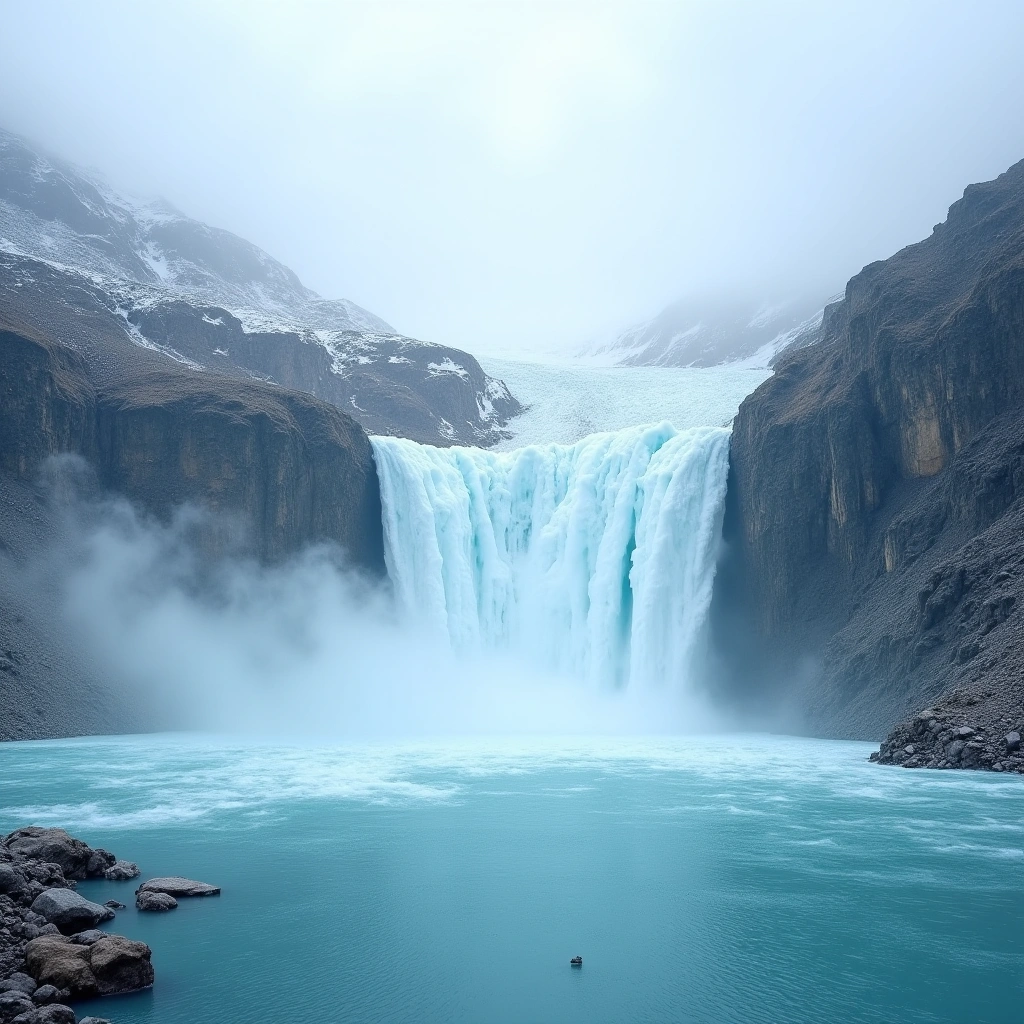
A devastating GLOF swept through Nepal-Tibet border, causing mudslides that killed dozens and left hundreds missing .
Let’s talk about the Himalayas, the majestic, snow-capped giants that look like they’re straight out of a postcard. But behind that picturesque beauty lies a ticking time bomb—glacial lakes that are growing faster than your to-do list on a Monday morning. Recent research by Chinese scientists has shed light on the expanding glacial lakes in the Gyirong port region, which sits snugly on the China-Nepal border. Spoiler alert: it’s not good news.
In a study that sounds like it could be the plot of a disaster movie, scientists have warned about the potential for glacial lake outburst floods (GLOFs). Think of it as nature’s way of saying, “Surprise!” to the unsuspecting villages and infrastructure downstream. These floods can be as destructive as your neighbor’s loud music at 2 AM, only with significantly more water.
The researchers mapped glacial lakes larger than 0.01 km² in the Zhangmu and Gyirong port regions from 1988 to 2019, and what they found was alarming. Over this period, these lakes have expanded by more than 150%, with some lakes growing by an astonishing 500%. That’s right; while we’ve been busy perfecting our sourdough bread recipes during lockdown, these lakes have been bulking up like they’re training for the glacial Olympics.
A particular lake of concern is the Cirenmaco, a moraine-dammed lake that’s as unstable as your friend who can’t decide where to go for dinner. It’s prone to overtopping due to ice avalanches or the melting of dead ice in the dam. Just imagine—one minute you’re admiring the view, and the next, you’re being swept away by a wall of ice-cold water. Not the kind of excitement most people are looking for on their weekend getaway.
Other lakes like Jialongco, Gangxico, and Galongco are also on the scientists’ radar. They’re expected to follow suit, with ice avalanches possibly leading to catastrophic bursts. It’s like a game of Jenga, but instead of wooden blocks, we’re dealing with massive amounts of water and ice. And let’s not forget about the Youmojianco glacial lakes, which are predicted to increase their potential danger in the future. Honestly, it’s like they’re all in on a secret plot to wreak havoc.
The researchers predict that by the end of the 21st century, a whopping 113 new glacial lakes larger than 0.01 km² will form in this area, totaling an area of 11.88 km² and a volume of 6.37 billion cubic meters. If you’re scratching your head wondering how much water that is, just know it’s enough to fill a lot of swimming pools—definitely more than your average backyard party can handle.
So, what’s the cause of this impending doom? Drumroll, please—global warming! Yes, the culprit we all know and love (not really). As temperatures rise, glaciers melt, and these lakes grow larger, which in turn increases the risk of GLOFs. It’s a vicious cycle, much like the one you find yourself in when you say, “I’ll just have one more slice of cake” and end up polishing off the entire thing.
In conclusion, while the Himalayas may look beautiful from afar, they are harboring some serious risks beneath their snowy peaks. The research by Qi, Miaomiao, Liu, Shiyin, and Gao, YongPeng serves as a stark reminder of the consequences of climate change, and it’s clear that we need to pay attention. So, the next time you’re planning a trip to the mountains, make sure to pack your swimming gear—just in case you need to paddle your way to safety!
Inspired by: “Chinese scientists warned about the floods in Gyirong port region in the Tibet Autonomous Region on…” (r/climatechange)